EdX

Energía: pasado, presente y futuro (edX)

Energía: pasado, presente y futuro (edX)

Presenta una panorámica histórica y prospectiva sobre cómo la energía es un factor de cambio en el desarrollo de la sociedad. Nuestras economías están sedientas de energía. Sin energía la economía mundial simplemente se detendría en seco; no habría generación suficiente de electricidad, combustibles para los automóviles, transporte público, transporte terrestre de mercancías, ya sea por ferrocarril o autobús.

Class Deals by MOOC List - Click here and see EdX's Active Discounts, Deals, and Promo Codes.

No se podrían mover las mercancías por vía marítima, la producción alimenticia sufriría de problemas, el suministro de agua potable se vería comprometido.
La energía ha permitido desde finales del Siglo XVIII, un desarrollo sin igual en los ámbitos científico, tecnológico y económico de nuestra sociedad. Hemos gozado, hasta ahora, de un suministro relativamente barato de energía a través de los combustibles fósiles, generando un impacto ambiental negativo.

La trayectoria seleccionada de consumo de combustibles fósiles hasta el momento, no es sostenible a largo plazo. De ahí el reto que no debemos esquivar, aun cuando lo podríamos negar: ¿qué debemos hacer para lograr una supervivencia futura hacia una economía de bajo carbono con una menor dependencia de los combustibles fósiles, y así asegurar que las generaciones futuras tengan la posibilidad de disfrutar una mejor calidad de vida?
Estamos ante un hito histórico sobre cómo debemos usar y apropiarnos de los recursos naturales, así como trabajar en disminuir la pobreza y desigualdad social.
Este curso te permitirá adentrarte al fascinante mundo de la energía. Los contenidos del curso, además de brindarte herramientas para la interpretación y manejo de información básica sobre la energía, te llevarán a través de los cambios históricos ligados con la energía que han sido fundamentales en el desarrollo de la sociedad moderna. Los contenidos del curso te ayudarán a la resolución de preguntas como: ¿ha sido siempre la energía un factor de cambio en el desarrollo de la sociedad? ¿la era del petróleo se terminará antes de que se termine el petróleo? ¿cuál es la importancia actual de los energéticos en la economía? ¿te imaginas cómo se obtendrá la energía necesaria para mantener nuestra calidad de vida en el futuro?

What you'll learn:
A través de este curso lograrás:

  • Explicar cómo impacta la forma en que la sociedad obtiene energía a través de una revisión histórica para entender la relación entre la disponibilidad del recurso energético y su aprovechamiento.
  • Discriminar entre alternativas para una transición energética sostenible mediante el análisis de su evolución para contribuir en el uso más eficiente de la energía.

Syllabus

Tema 1. Introducción

  1. Combustibles: contenido calorífico y densidad energética
  2. Intensidad energética en la economía
  3. Combustibles usados por la humanidad a lo largo de la historia
  4. Recurso energético: entorno y contexto

Tema 2. La era preindustrial

  1. Fuerza y trabajo: tracción animal y trabajo humano
  2. Energía cinética y potencia: energía del viento y corrientes de agua
  3. Energía térmica: madera y carbón de leña
  4. Energía eléctrica

Tema 3. Primera revolución industrial

  1. Uso de carbón de piedra, producción de coque y gas de coque

2.Tecnologías y medios de comunicación de la época: máquinas térmicas, comunicación a distancia.

  1. Desarrollo científico vinculado a la primera revolución industrial: conservación de la energía, irreversibilidad de los procesos, bases para electricidad y magnetismo
  2. Cambios demográficos ocasionados por la primera revolución industrial

Tema 4. Segunda revolución industrial

  1. Explotación del petróleo: combustibles líquidos
  2. Avances en ciencia y tecnología de la energía a finales del Siglo XIX y su impacto en el Siglo XX
  3. Desarrollo del sector transporte, comunicaciones y masificación de la electrificación
  4. Transición en la balanza de energéticos: gas natural

Tema 5. Tercera revolución industrial

  1. Los cinco pilares de la tercera revolución industrial
  2. Transición del uso intensivo del carbón de piedra al petróleo y gas natural: implicaciones tecnológicas y científicas
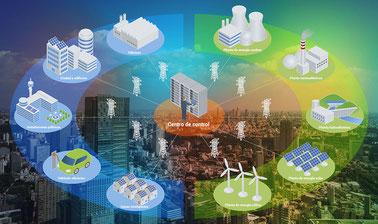
  3. Integración energética inteligente: el reto de las energías renovables y el almacenamiento de energía
  4. Ciudades y comunidades inteligentes: hacia una infraestructura sostenible

Tema 6. Sostenibilidad energética

  1. Eficiencia energética: límites tecnológicos y límites físicos
  2. Evolución en el desempeño energético de tecnologías
  3. Sistemas para la adecuada administración de los recursos energéticos
  4. Transición hacia una economía de bajo carbono posterior a los combustibles fósiles
Go to Class
MOOC List is learner-supported. When you buy through links on our site, we may earn an affiliate commission.

Related Courses

Electric Cars: Policy (edX) EdX
Delft University of Technology,DelftX

Electric Cars: Policy (edX)

Learn about the role of public policy in steering technological innovation and infrastructural change toward zero-emission mobility. Electric cars are more than a novel means of mobility. They have been recognized as an essential building block of the energy transition. Fulfilling their promise will imply a significant change in the technical, digital and social dimensions of transport and energy infrastructure.

Self Paced
Self-Paced
Electric Cars: Introduction (edX) EdX
Delft University of Technology,DelftX

Electric Cars: Introduction (edX)

Get a basic understanding of electric cars and learn about leading technologies, development of profitable business models and effective policies. Electric vehicles are the future of transportation. Electric mobility has become an essential part of the energy transition, and will imply significant changes for vehicle manufacturers, governments, companies and individuals.

Self Paced
Self-Paced
Understanding Nuclear Energy (edX) EdX
Delft University of Technology,DelftX

Understanding Nuclear Energy (edX)

Learn the science and technology behind nuclear energy and the special features of this energy source. In this nuclear energy course, we will tackle provocative questions such as: Is nuclear energy a good substitute for fossil fuels to reduce our CO2 emission or not?; Can nuclear reactors operate safely without any harm to the public and environment?; How much nuclear waste is produced and how long does it need to be stored safely?; How can we make nuclear energy clean and more sustainable?; How much are nuclear energy costs?

Self Paced
Self-Paced
Using Photovoltaic (PV) Technology in Desert Climates (edX) EdX
Hamad Bin Khalifa University - HBKU,HBKUx

Using Photovoltaic (PV) Technology in Desert Climates (edX)

Learn how to mitigate the challenges related to PV technology and enhance the performance of solar cells and PV modules in desert climates. The high insolation in desert regions can result in a lower cost of solar energy. While this may be a key motivation to deploying PV in desert climates, there are also several challenges related to the technology that must be considered.

Self Paced
Self-Paced
Solar Energy: Photovoltaic (PV) Energy Conversion (edX) EdX
Delft University of Technology,DelftX

Solar Energy: Photovoltaic (PV) Energy Conversion (edX)

Learn how solar cells generate electricity, and about the semiconductor physics and optics required to design and manufacture solar cells. The key factor in getting more efficient and cheaper solar energy panels is the advance in the development of photovoltaic cells. In this course you will learn how photovoltaic cells convert solar energy into useable electricity. You will also discover how to tackle potential loss mechanisms in solar cells.

Self Paced
5-12 Weeks
Energy Economics and Policy (edX) EdX
MIT,MITx

Energy Economics and Policy (edX)

Learn the economics of real-world energy markets, and how various policies can address the impact of rising global energy demand on the environment and climate. With renewable sources playing an increasing role in meeting global energy demand and mitigating climate change, electric power systems and the related markets are changing. To prepare for a career in the future energy landscape, industry professionals, policymakers, and academics must understand these changes and develop specific, relevant skills to drive this energy transition within the necessary timeframe. In this course, you will learn to apply economic and socio-political analysis to real-world regulatory policy questions in a set of extremely important, interrelated energy markets.

Sep 17th 2024
5-12 Weeks
Energy-The Technology You Must Know in the 21st Century | 能源─21世紀你必須了解的科技! (edX) EdX
OECx

Energy-The Technology You Must Know in the 21st Century | 能源─21世紀你必須了解的科技! (edX)

A comprehensive introduction to existing and emerging energy technologies and their applications. (Taught in Mandarin). Energy technology is a highly multidisciplinary subject, which extends from engineering (e.g. mechanical, chemical, civil, environmental and electrical) to economy and ecology.

No sessions available
4 Weeks
Climate Change Science and Negotiations (edX) EdX
SDGAcademyX,SDG Academy

Climate Change Science and Negotiations (edX)

Humanity is up against a tight timeline to address climate change. Learn how we can deeply decarbonize the global energy systems, and put the world on a 2°C pathway. In this course, learn solutions to mitigate the effects of the global greenhouse gas emissions causing temperature rise, and how to apply these solutions in different national contexts improvements.

Self Paced
Self-Paced
Energía eléctrica: conceptos y principios básicos (edX) EdX
Tecnológico de Monterrey,TecdeMonterreyX

Energía eléctrica: conceptos y principios básicos (edX)

Aprende los conceptos básicos de la electricidad, para comprenderla, saber medirla y utilizarla de manera eficiente. Actualmente el uso de la electricidad es algo cotidiano, sin embargo, muy pocas personas conocen los conceptos y principios básicos que permiten comprender como funciona, cuáles son sus parámetros básicos, cómo se miden o cómo hacer un mejor uso de la energía. Este curso de electricidad presenta conceptos básicos como voltaje, corriente y resistencia que te permitirán comprender cómo se mide la potencia y el consumo de energía.En este curso entenderás que es la energía eléctrica y su importancia.

Self Paced
Self-Paced
Introduction to Environmental Science (edX) EdX
DartmouthX,Dartmouth College

Introduction to Environmental Science (edX)

A scientific study of the natural world and how it is influenced by people. Major topics include: food, energy, human population, biodiversity and global change. Environmental science is the study of patterns and processes in the natural world and their modification by human activity. To understand current environmental problems, we need to consider physical, biological and chemical processes that are often the basis of those problems.

Self Paced
4 Weeks