EdX

Zero-Energy Design: an approach to make your building sustainable (edX)

Zero-Energy Design: an approach to make your building sustainable (edX)

Learn how to get to a net zero energy use of an existing building. Reduction of energy consumption of buildings is an important step in the move towards a sustainable economy. How can buildings be made net zero energy, in different climates?

Class Deals by MOOC List - Click here and see EdX's Active Discounts, Deals, and Promo Codes.

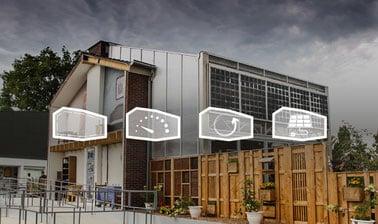
This course introduces you to zero energy design. It will teach you a stepped approach to design a zero energy climate concept for existing buildings: homes, schools, offices, shops etc. It will demonstrate how an integrated approach, which takes into account both passive measures (such as thermal insulation and sun shading) and active measures (such as heat pumps and photovoltaic panels), can deliver the best results.
It will do so by providing you with an overview of possible measures, and through reviewing several case studies of zero energy buildings in the Netherlands, with lessons for other climates as well. Thus, you will learn which measures are most suitable for individual buildings under local climate conditions.
This course is for anyone interested in making buildings more energy efficient, who already possess basic technical knowledge.

What you'll learn

  • Apply a stepped approach to find energy reducing measures
  • Analyse the energy use of a building
  • Analyse the local climate and select appropriate measures
  • Develop an integrated net-zero-energy concept for the building

Syllabus

Week 1 Energy in the built environment
Introduction to Zero Energy Design
Analyse the energy consumption of a selected building

Week 2 REDUCE: Passive measures
Analyse the local climate and choose passive measures to reduce the energy demand, like thermal insulation and sun shading.

Week 3 REDUCE: Active measures
Overview of active measures to reduce the energy demand, like demand-controlled heating and ventilation.

Week 4 REUSE
Overview of the opportunities to reuse energy flows in buildings, like heat recovery from ventilation air and warm waste water

Week 5 PRODUCE
Overview of the opportunities to produce heat and electricity in the building, like PV-systems, ground source heat pumps.

Week 6 INTEGRATE
Apply all the measures from the previous weeks in an integrated net zero energy concept for the selected building

Week 7 Wrap up
Go to Class
MOOC List is learner-supported. When you buy through links on our site, we may earn an affiliate commission.

Related Courses

Solar Energy: Photovoltaic (PV) Energy Conversion (edX) EdX
Delft University of Technology,DelftX

Solar Energy: Photovoltaic (PV) Energy Conversion (edX)

Learn how solar cells generate electricity, and about the semiconductor physics and optics required to design and manufacture solar cells. The key factor in getting more efficient and cheaper solar energy panels is the advance in the development of photovoltaic cells. In this course you will learn how photovoltaic cells convert solar energy into useable electricity. You will also discover how to tackle potential loss mechanisms in solar cells.

Self Paced
5-12 Weeks
Introduction to Energy Management Powered by RETScreen (edX) EdX
HECMontrealX,HEC Montréal

Introduction to Energy Management Powered by RETScreen (edX)

The objective of this MOOC is to help organizations combat climate change through effective energy management. It explains proven strategies to reduce greenhouse gases and encourage the transition to a low carbon economy. It also provides an introduction to RETScreen Expert – the world’s leading software to empower cleaner energy decisions.

Self Paced
Self-Paced
Climate Change Education (edX) EdX
Inter-American Development Bank - IDB,IDBx

Climate Change Education (edX)

Learn how to work with your students to help them explore climate change through the use of interactive and engaging activities. These activities are designed for students at the primary and secondary levels. Our climate is changing rapidly, and now more than ever we need to be ready to act and prepare the next generation to take care of our planet. This course explores the basic science behind climate change and presents the tools to teach it in a positive, engaging and participatory way. The course also introduces some of the ethical and social issues around climate change.

Self Paced
Self-Paced
Introduction to Environmental Science (edX) EdX
DartmouthX,Dartmouth College

Introduction to Environmental Science (edX)

A scientific study of the natural world and how it is influenced by people. Major topics include: food, energy, human population, biodiversity and global change. Environmental science is the study of patterns and processes in the natural world and their modification by human activity. To understand current environmental problems, we need to consider physical, biological and chemical processes that are often the basis of those problems.

Self Paced
4 Weeks
Understanding Nuclear Energy (edX) EdX
Delft University of Technology,DelftX

Understanding Nuclear Energy (edX)

Learn the science and technology behind nuclear energy and the special features of this energy source. In this nuclear energy course, we will tackle provocative questions such as: Is nuclear energy a good substitute for fossil fuels to reduce our CO2 emission or not?; Can nuclear reactors operate safely without any harm to the public and environment?; How much nuclear waste is produced and how long does it need to be stored safely?; How can we make nuclear energy clean and more sustainable?; How much are nuclear energy costs?

Self Paced
Self-Paced
Planetary Boundaries (edX) EdX
SDGAcademyX,SDG Academy

Planetary Boundaries (edX)

Can our planet continue to support the current scope of human activity? A thriving global society relies on the stability of the Earth and its resilience across oceans, forests, waterways, biodiversity, the atmosphere and more. So how do we shape sustainability at a global scale? The boundaries set by the planet’s natural resources, the resilience of those resources, and the human activities that impact sustainability all come into play.

Self Paced
Self-Paced
Comfort and Health in Buildings (edX) EdX
Delft University of Technology,DelftX

Comfort and Health in Buildings (edX)

Learn how to realize thermally comfortable and healthy buildings and how energy technologies impact comfort. Even in the well-accepted indoor temperature range of 20-24°C (68-75°F), people can experience thermal discomfort. Complaints about the indoor thermal environment are one of the major complaints building and facility managers have to deal with, and they spend a large amount of their time and money to solve them. People spend more than 80% of their time in buildings. Therefore a good thermal comfort and quality of the indoor environment are essential for their wellbeing, health and productivity.

Self Paced
Self-Paced
SDG: Moving Towards Sustainable Work (edX) EdX
Universidad Carlos III de Madrid - UC3M,UC3Mx

SDG: Moving Towards Sustainable Work (edX)

Decent work is thecritical engine of sustainable development. This course explores the United Nations' Sustainable Development Goals and mechanisms for developing decent and sustainable work. The United Nations' Sustainable Development 2030 Agenda gives us the opportunity to change and improve the lives of millions of people. These widespread efforts won't juststem from organizations in the formal public or private sectors (governments, corporations, trade unions, etc.) but will also require participation from ordinary people and civil society as a whole.

Self Paced
Self-Paced
Energy Subsidy Reform (edX) EdX
International Monetary Fund - IMF,IMFx

Energy Subsidy Reform (edX)

A course on energy subsidies, their costs, and the design of a successful reform based on country case studies. In the first part of the course, economists from the IMF will introduce the definition and measurement of subsidies, and then describe the economic, social, and environmental implications of subsidies.

Self Paced
Self-Paced
Circular Economy: An Introduction (edX) EdX
Delft University of Technology,DelftX

Circular Economy: An Introduction (edX)

Ready to make a difference? Learn how to contribute to a sustainable economic system by implementing novel business and design approaches! Our global society is not sustainable. We all know about the challenges we’re facing: waste, climate change, resource scarcity, loss of biodiversity. At the same time, we want to sustain our economies and offer opportunities for a growing world population. This course is about providing solutions we really believe in: a Circular Economy.

Self Paced
Self-Paced
Environmental Protection and Sustainability (edX) EdX
IsraelX

Environmental Protection and Sustainability (edX)

Uncover better solutions to help manage a wide range of environmental problems and challenges facing our world today. Do you want to understand more about the environmental problems we currently face? Do you want to learn ways we can reduce the negative effects of these problems, and keep our environment more sustainable? If so, this course is for you.

Self Paced
Self-Paced
Energy Within Environmental Constraints (edX) EdX
HarvardX,Harvard University

Energy Within Environmental Constraints (edX)

A quantitative introduction to the energy system and its environmental impacts. Humanity faces an immense challenge: providing abundant energy to everyone without wrecking the planet. If we want a high-energy future while protecting the natural world for our children, we must consider the environmental consequences of energy production and use. But money matters too: energy solutions that ignore economic costs are not realistic, particularly in a world where billions of people currently can’t afford access to basic energy services. How can we proceed?

Self Paced
Self-Paced