EdX

Energy Subsidy Reform (edX)

Energy Subsidy Reform (edX)

A course on energy subsidies, their costs, and the design of a successful reform based on country case studies. In the first part of the course, economists from the IMF will introduce the definition and measurement of subsidies, and then describe the economic, social, and environmental implications of subsidies.

Class Deals by MOOC List - Click here and see EdX's Active Discounts, Deals, and Promo Codes.

The second part of the course has two principal purposes: first, to review what works best in energy subsidy reform, in light of country experiences globally; and second, to illustrate successes and failures in particular country contexts by summarizing some case studies.

Whether you are a civil servant working on economic issues for your country or simply interested in better understanding issues related to energy subsidies, this course will provide hands-on training on the design of successful reforms of energy subsidies.
You are welcome to join us in this exciting course!
Energy Subsidy Reform is offered by the IMF with financial support from the Managing Natural Resource Wealth Trust Fund (MNRW).
The IMF’s online learning program receives financial support from the Government of Japan.

What you'll learn

  • How to measure energy subsidies
  • Economic, social and environmental implications of energy subsidies
  • Successful energy subsidy reform measures
  • Rules that allow countries to phase out subsidies over time
  • How to measure the impact of energy subsidies in your own country
Go to Class
MOOC List is learner-supported. When you buy through links on our site, we may earn an affiliate commission.

Related Courses

Powering Resilient Communities: A Holistic Approach to Food, Energy, and Water Security (edX) EdX
University of Alaska Fairbanks,AlaskaX

Powering Resilient Communities: A Holistic Approach to Food, Energy, and Water Security (edX)

A research-based course on resilient renewable energy solutions, with an emphasis on microgrids, and Food, Energy, and Water (FEW) security. This course provides research-based and on-the-ground tools for community planners, grid designers, and business leaders to improve and implement stronger and more resilient renewable energy systems in Arctic communities.

Self Paced
Self-Paced
Introduction to Environmental Science (edX) EdX
DartmouthX,Dartmouth College

Introduction to Environmental Science (edX)

A scientific study of the natural world and how it is influenced by people. Major topics include: food, energy, human population, biodiversity and global change. Environmental science is the study of patterns and processes in the natural world and their modification by human activity. To understand current environmental problems, we need to consider physical, biological and chemical processes that are often the basis of those problems.

Self Paced
4 Weeks
Electric Cars: Policy (edX) EdX
Delft University of Technology,DelftX

Electric Cars: Policy (edX)

Learn about the role of public policy in steering technological innovation and infrastructural change toward zero-emission mobility. Electric cars are more than a novel means of mobility. They have been recognized as an essential building block of the energy transition. Fulfilling their promise will imply a significant change in the technical, digital and social dimensions of transport and energy infrastructure.

Self Paced
Self-Paced
AP® Physics 1 - Part 4: Exam Prep (edX) EdX
Rice University,RiceX

AP® Physics 1 - Part 4: Exam Prep (edX)

The fourth of four courses in a dynamic, comprehensive series that provides a solid base in introductory physics and helps prepare you for the AP Physics 1 Exam. Free textbook included! In this four-part series, we will explore AP Physics 1 concepts and prepare for the AP Physics 1 Exam in an exciting and entirely new way. Increase your skills – and your readiness – for the AP Exam though quality videos, inquiry labs, Hollywood-style Concept Trailers™, Direct Measurement Videos, AP problem-solving sessions and more!

No sessions available
4 Weeks
Solar Energy: Photovoltaic (PV) Energy Conversion (edX) EdX
Delft University of Technology,DelftX

Solar Energy: Photovoltaic (PV) Energy Conversion (edX)

Learn how solar cells generate electricity, and about the semiconductor physics and optics required to design and manufacture solar cells. The key factor in getting more efficient and cheaper solar energy panels is the advance in the development of photovoltaic cells. In this course you will learn how photovoltaic cells convert solar energy into useable electricity. You will also discover how to tackle potential loss mechanisms in solar cells.

Self Paced
5-12 Weeks
Energy-The Technology You Must Know in the 21st Century | 能源─21世紀你必須了解的科技! (edX) EdX
OECx

Energy-The Technology You Must Know in the 21st Century | 能源─21世紀你必須了解的科技! (edX)

A comprehensive introduction to existing and emerging energy technologies and their applications. (Taught in Mandarin). Energy technology is a highly multidisciplinary subject, which extends from engineering (e.g. mechanical, chemical, civil, environmental and electrical) to economy and ecology.

No sessions available
4 Weeks
Using Photovoltaic (PV) Technology in Desert Climates (edX) EdX
Hamad Bin Khalifa University - HBKU,HBKUx

Using Photovoltaic (PV) Technology in Desert Climates (edX)

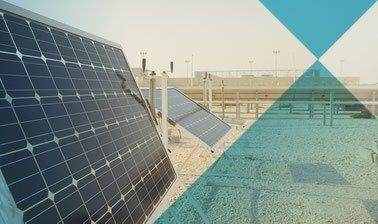
Learn how to mitigate the challenges related to PV technology and enhance the performance of solar cells and PV modules in desert climates. The high insolation in desert regions can result in a lower cost of solar energy. While this may be a key motivation to deploying PV in desert climates, there are also several challenges related to the technology that must be considered.

Self Paced
Self-Paced
The Transition to the Decarbonised Economy of Tomorrow (edX) EdX
Delft University of Technology,DelftX

The Transition to the Decarbonised Economy of Tomorrow (edX)

Dive into the economic strategies for promoting the energy transition: technologies, policies, pricing, emission trading and more. How can economic strategies bring our current, fossil fuel based energy system into a carbon neutral future? According to the International Panel on Climate Change, we have only limited time left to keep global temperatures below 1.50 C and to avoid a climate crisis. How do we go about decarbonizing our economy? What are the best renewable energy sources to bring about this transition? And how do we convince investors that renewables really are the best option?

Apr 30th 2024
5-12 Weeks
Climate Change Education (edX) EdX
Inter-American Development Bank - IDB,IDBx

Climate Change Education (edX)

Learn how to work with your students to help them explore climate change through the use of interactive and engaging activities. These activities are designed for students at the primary and secondary levels. Our climate is changing rapidly, and now more than ever we need to be ready to act and prepare the next generation to take care of our planet. This course explores the basic science behind climate change and presents the tools to teach it in a positive, engaging and participatory way. The course also introduces some of the ethical and social issues around climate change.

Self Paced
Self-Paced
Understanding Nuclear Energy (edX) EdX
Delft University of Technology,DelftX

Understanding Nuclear Energy (edX)

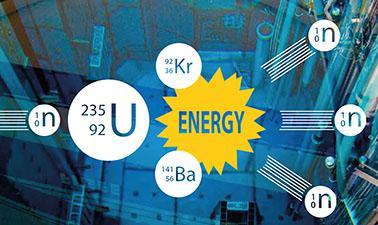
Learn the science and technology behind nuclear energy and the special features of this energy source. In this nuclear energy course, we will tackle provocative questions such as: Is nuclear energy a good substitute for fossil fuels to reduce our CO2 emission or not?; Can nuclear reactors operate safely without any harm to the public and environment?; How much nuclear waste is produced and how long does it need to be stored safely?; How can we make nuclear energy clean and more sustainable?; How much are nuclear energy costs?

Self Paced
Self-Paced