EdX

Energy Economics and Policy (edX)

Offered by MIT, MITx,
Energy Economics and Policy (edX)

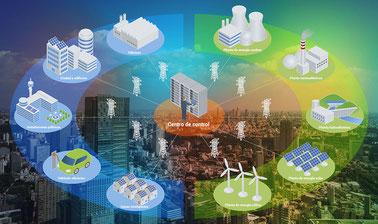
Learn the economics of real-world energy markets, and how various policies can address the impact of rising global energy demand on the environment and climate. With renewable sources playing an increasing role in meeting global energy demand and mitigating climate change, electric power systems and the related markets are changing. To prepare for a career in the future energy landscape, industry professionals, policymakers, and academics must understand these changes and develop specific, relevant skills to drive this energy transition within the necessary timeframe. In this course, you will learn to apply economic and socio-political analysis to real-world regulatory policy questions in a set of extremely important, interrelated energy markets.

Class Deals by MOOC List - Click here and see EdX's Active Discounts, Deals, and Promo Codes.

Specifically, by looking at real-world case studies and emerging research, you will explore key aspects of the oil, natural gas, electricity, and nuclear power sectors, and how policies such as carbon taxes and efficiency standards can drive reductions in the greenhouse gas emissions. You will also employ systems-level analysis to predict policy outcomes not only within energy markets but across transportation, building and development, employment, and health and social sectors. Overall, you will gain insights into how applied economics and policy tools can effectively move the global energy sector toward renewable and clean energy sources to mitigate climate change, while at the same time promoting economic development.
Learners who will benefit from this course include professionals, academics, graduate students, and advanced undergraduate students considering careers and/or further study in energy industry, government and policy, non-governmental organizations and nonprofits, private technology and investment firms, academia, and research and development.
This course is part of the Future Energy Systems XSeries.

What you'll learn

  • The economic principles and characteristics of various, interrelated energy markets
  • Overview and current issues of natural gas and international oil markets
  • Externalities associated with oil and gasoline
  • Challenges and opportunities of electricity markets
  • Policy options and market mechanisms to drive more sustainable and equitable energy access
  • The predicted effects of various policy outcomes on markets, as well as on the environment and social systems
  • Economic and socio-political dimensions of international commitments to carbon reduction

Prerequisites:

  • Strong English language skills recommended
  • Ability to perform mathematical operations, study of calculus is helpful
  • College-level study of physics, engineering, and/or environmental science is helpful
  • Familiarity with basic principles of microeconomics is helpful
Go to Class
MOOC List is learner-supported. When you buy through links on our site, we may earn an affiliate commission.

Related Courses

Why Move Towards Cleaner Power (edX) EdX
Imperial College London,ImperialX

Why Move Towards Cleaner Power (edX)

Learn why we need to clean up our power supply, and why is it urgent that we take action now. Gain the tools you need to present arguments in favour of a cleaner power sector in your part of the world. This course looks at how increasing greenhouse gases are warming the climate and what it means to decarbonise - reduce the greenhouse gas intensity of - the power sector. It will also provide a range of arguments in favour of decarbonisation, including consideration of ease of access to a secure and affordable energy supply and improvements to health and the environment.

Self Paced
Self-Paced
Energy Within Environmental Constraints (edX) EdX
HarvardX,Harvard University

Energy Within Environmental Constraints (edX)

A quantitative introduction to the energy system and its environmental impacts. Humanity faces an immense challenge: providing abundant energy to everyone without wrecking the planet. If we want a high-energy future while protecting the natural world for our children, we must consider the environmental consequences of energy production and use. But money matters too: energy solutions that ignore economic costs are not realistic, particularly in a world where billions of people currently can’t afford access to basic energy services. How can we proceed?

Self Paced
Self-Paced
Business Implications of Intelligent and Integrated Energy Systems (edX) EdX
Delft University of Technology,DelftX

Business Implications of Intelligent and Integrated Energy Systems (edX)

Learn how digital technologies help with the energy transition and then how to use this to develop future potential business models in various energy and energy-dependent sectors. This course focuses on the emerging digitalization-based business models in the energy systems field. You will study how digital technologies can aid practitioners and business leaders to reach more sustainable systems and operations and create modern and more sustainable business frameworks.

Self Paced
Self-Paced
The Hidden Side of Energy Access: Understanding Clean Cooking (Virtual Knowledge Exchange) (edX) EdX
World Bank Group,WBGx

The Hidden Side of Energy Access: Understanding Clean Cooking (Virtual Knowledge Exchange) (edX)

This course is based on the World Bank’s “ The Hidden Side of Energy Access: Understanding Clean Cooking ”. This course explores the hidden side of energy access by uncovering the reality that over 4 billion people around the world currently lack access to modern energy cooking services (MECS) for their daily cooking needs. Throughout the developing world, households still cook with firewood and charcoal on rudimentary stoves in poorly ventilated rooms, resulting in significant negative impacts for health, gender, the environment, and our climate.

Self Paced
Self-Paced
Transmisión de energía eléctrica (edX) EdX
Tecnológico de Monterrey,TecdeMonterreyX

Transmisión de energía eléctrica (edX)

Aprende cómo se transmite y se distribuye la electricidad y cómo este conocimiento puede ser aplicado para maximizar la transmisión de energía eléctrica. Caso de estudio en el sistema eléctrico mexicano. El conocer la manera en que funciona el sistema eléctrico mexicano como caso de estudio genera competencias importantes en el mundo actual y permite tener conocimientos de distribución eléctrica que se pueden usar en otros países.

Self Paced
Self-Paced
The Transition to the Decarbonised Economy of Tomorrow (edX) EdX
Delft University of Technology,DelftX

The Transition to the Decarbonised Economy of Tomorrow (edX)

Dive into the economic strategies for promoting the energy transition: technologies, policies, pricing, emission trading and more. How can economic strategies bring our current, fossil fuel based energy system into a carbon neutral future? According to the International Panel on Climate Change, we have only limited time left to keep global temperatures below 1.50 C and to avoid a climate crisis. How do we go about decarbonizing our economy? What are the best renewable energy sources to bring about this transition? And how do we convince investors that renewables really are the best option?

Apr 30th 2024
5-12 Weeks