EdX

Our Energetic Earth (edX)

Our Energetic Earth (edX)

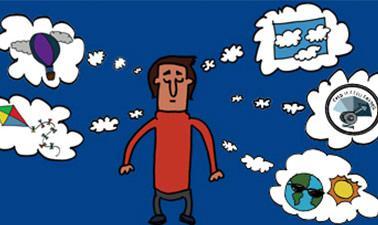
Learn how our world’s energy forces – from wind and waves to storms and currents – animate the Earth’s surface and allow our planet to support life.

Class Deals by MOOC List - Click here and see EdX's Active Discounts, Deals, and Promo Codes.

We live on the surface of a dynamic and yet paradoxically stable planet that experiences a remarkable range of energetic phenomena, from waves and currents in the ocean to wind and thunderstorms in the atmosphere. This course traces how the remarkable concept called energy is the natural way of describing, understanding and unifying these diverse phenomena. The course traces the cascade of energy from sunlight to its final destination in a thermal form, considering differential surface heating, the role of convection and buoyancy and the formation of the Earth’s circulation system, and the links to the ocean circulation system. We consider the curvature and rotation of the Earth as key constraints on a system driven by sunlight and energy transformations.


Go to Class
MOOC List is learner-supported. When you buy through links on our site, we may earn an affiliate commission.

Related Courses

Using Photovoltaic (PV) Technology in Desert Climates (edX) EdX
Hamad Bin Khalifa University - HBKU,HBKUx

Using Photovoltaic (PV) Technology in Desert Climates (edX)

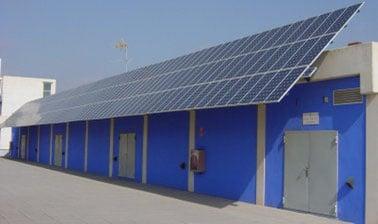
Learn how to mitigate the challenges related to PV technology and enhance the performance of solar cells and PV modules in desert climates. The high insolation in desert regions can result in a lower cost of solar energy. While this may be a key motivation to deploying PV in desert climates, there are also several challenges related to the technology that must be considered.

Self Paced
Self-Paced
The Transition to the Decarbonised Economy of Tomorrow (edX) EdX
Delft University of Technology,DelftX

The Transition to the Decarbonised Economy of Tomorrow (edX)

Dive into the economic strategies for promoting the energy transition: technologies, policies, pricing, emission trading and more. How can economic strategies bring our current, fossil fuel based energy system into a carbon neutral future? According to the International Panel on Climate Change, we have only limited time left to keep global temperatures below 1.50 C and to avoid a climate crisis. How do we go about decarbonizing our economy? What are the best renewable energy sources to bring about this transition? And how do we convince investors that renewables really are the best option?

Apr 30th 2024
5-12 Weeks
Energy Within Environmental Constraints (edX) EdX
HarvardX,Harvard University

Energy Within Environmental Constraints (edX)

A quantitative introduction to the energy system and its environmental impacts. Humanity faces an immense challenge: providing abundant energy to everyone without wrecking the planet. If we want a high-energy future while protecting the natural world for our children, we must consider the environmental consequences of energy production and use. But money matters too: energy solutions that ignore economic costs are not realistic, particularly in a world where billions of people currently can’t afford access to basic energy services. How can we proceed?

Self Paced
Self-Paced
Electric Cars: Policy (edX) EdX
Delft University of Technology,DelftX

Electric Cars: Policy (edX)

Learn about the role of public policy in steering technological innovation and infrastructural change toward zero-emission mobility. Electric cars are more than a novel means of mobility. They have been recognized as an essential building block of the energy transition. Fulfilling their promise will imply a significant change in the technical, digital and social dimensions of transport and energy infrastructure.

Self Paced
Self-Paced
Religious Symbols of the World (edX) EdX
Seoul National University,SNUx

Religious Symbols of the World (edX)

This course is the third and final course in the series following “Understanding Religious Symbolism” and “Myths, Rituals, and Cosmos.” Through the theories and patterns that you learned in these three courses, I hope that you will be able to interpret the various religious phenomena in different cultures, and through this gain a better understanding of culture and human beings.

Self Paced
Self-Paced
Further Mathematics Year 13 course 2: Applications of Differential Equations, Momentum, Work, Energy & Power, The Poisson Distribution, The Central Limit Theorem, Chi Squared Tests, Type I and II Errors (edX) EdX
Imperial College London,ImperialX

Further Mathematics Year 13 course 2: Applications of Differential Equations, Momentum, Work, Energy & Power, The Poisson Distribution, The Central Limit Theorem, Chi Squared Tests, Type I and II Errors (edX)

Develop your thinking skills, fluency and confidence in the applied mathematics content of A-level further maths and prepare for undergraduate STEM degrees. This course by Imperial College London is designed to help you develop the skills you need to succeed in your A-level further maths exams. You will investigate key topic areas to gain a deeper understanding of the skills and techniques that you can apply throughout your A-level study.

Self Paced
5-12 Weeks
Geology and Engineering Geology | 工程地质学 (edX) EdX
Tsinghua University,TsinghuaX

Geology and Engineering Geology | 工程地质学 (edX)

Learn the basics of geology and geological engineering as we explore ways to both protect and properly utilize the earth’s resources today and in the future. The earth is our home. The development of human civilization as we know it goes hand in hand with how we have used and continue to reshape the planet. This course will introduce the basic knowledge of geology and methods of engineering geology to help people protect and utilize our earth more effectively.

Self Paced
Self-Paced