EdX

AP® Environmental Science - Part 1: The Living World (edX)

Offered by Rice University, RiceX,
AP® Environmental Science - Part 1: The Living World (edX)

The first course in a comprehensive series designed to prepare you for the AP Environmental Science exam, focusing on the living world and evolution.

Class Deals by MOOC List - Click here and see EdX's Active Discounts, Deals, and Promo Codes.

Preparing for the AP Environmental Science exam requires a deep understanding of many different topics in environmental science as well as an understanding of the AP exam and the types of questions it asks. This course is Part 1 of our XSeries: AP Environmental Science and it is designed to prepare you for the AP exam.

In Part 1, you will be learning about the living world. You will examine environmental issues, look at the history of environmental problems, discuss evolution and its link to biodiversity, climates and biomes, ecosystems and the life found there.
As you work through this course, you will find lecture videos taught by expert AP Environmental Science teachers, practice multiple choice questions and free response questions that are similar to what you will encounter on the AP exam and tutorial videos that show you step-by-step how to solve problems. By the end of the course, you should be ready to take on the AP exam!
What you'll learn:

  • Prepare for the AP Environmental Science Exam
  • Learn about Environmental Problems and History, Ecosystems and the Living World
  • Get Multiple Choice, Free-Response and Exam Practice
  • Inquiry-based lab and field experiences
Go to Class
MOOC List is learner-supported. When you buy through links on our site, we may earn an affiliate commission.

Related Courses

Energy Within Environmental Constraints (edX) EdX
HarvardX,Harvard University

Energy Within Environmental Constraints (edX)

A quantitative introduction to the energy system and its environmental impacts. Humanity faces an immense challenge: providing abundant energy to everyone without wrecking the planet. If we want a high-energy future while protecting the natural world for our children, we must consider the environmental consequences of energy production and use. But money matters too: energy solutions that ignore economic costs are not realistic, particularly in a world where billions of people currently can’t afford access to basic energy services. How can we proceed?

Self Paced
Self-Paced
Sustainable Aviation: The Route to Climate-Neutral Aviation (edX) EdX
Delft University of Technology,DelftX

Sustainable Aviation: The Route to Climate-Neutral Aviation (edX)

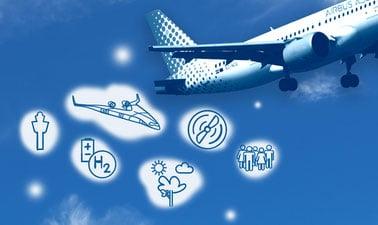
To reduce the environmental footprint of the aviation sector we need to start a clean sky revolution. Discover the latest developments in this field – from airplane design, energy carriers, operations – and learn how you can play a role. Sustainable aviation is a key area for climate action. In this course, we will introduce you to various aircraft technologies, and recent innovations and promising future developments in the field of aviation. All necessary mathematical and engineering concepts will explained.

Self Paced
Self-Paced
Planetary Boundaries (edX) EdX
SDGAcademyX,SDG Academy

Planetary Boundaries (edX)

Can our planet continue to support the current scope of human activity? A thriving global society relies on the stability of the Earth and its resilience across oceans, forests, waterways, biodiversity, the atmosphere and more. So how do we shape sustainability at a global scale? The boundaries set by the planet’s natural resources, the resilience of those resources, and the human activities that impact sustainability all come into play.

Self Paced
Self-Paced
Industrial Biotechnology (edX) EdX
Delft University of Technology,DelftX

Industrial Biotechnology (edX)

Learn the basics of sustainable processing for biobased products to further understand their impact on global sustainability. As fossil-based fuels and raw materials contribute to climate change, the use of renewable materials and energy as an alternative is increasingly important and common. This transition is not a luxury, but rather a necessity.

Self Paced
Self-Paced
Climate Change: Carbon Capture and Storage (edX) EdX
University of Edinburgh,EdinburghX

Climate Change: Carbon Capture and Storage (edX)

Explore the technology that can provide a long-term solution to protect our atmosphere from an excess of carbon dioxide, in the context of global energy, our use of fossil fuels, and climate change. The atmosphere is a shared resource and the amount of greenhouse gases it can absorb is a finite resource. This introductory course to the technology of Carbon Capture and Storage is designed for a wider audience with an interest in energy, sustainability and climate change.

Self Paced
Self-Paced
SDG: Moving Towards Sustainable Work (edX) EdX
Universidad Carlos III de Madrid - UC3M,UC3Mx

SDG: Moving Towards Sustainable Work (edX)

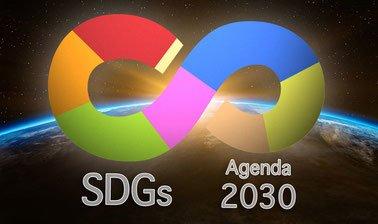
Decent work is thecritical engine of sustainable development. This course explores the United Nations' Sustainable Development Goals and mechanisms for developing decent and sustainable work. The United Nations' Sustainable Development 2030 Agenda gives us the opportunity to change and improve the lives of millions of people. These widespread efforts won't juststem from organizations in the formal public or private sectors (governments, corporations, trade unions, etc.) but will also require participation from ordinary people and civil society as a whole.

Self Paced
Self-Paced
Cities and the Challenge of Sustainable Development (edX) EdX
SDGAcademyX,SDG Academy

Cities and the Challenge of Sustainable Development (edX)

What is a sustainable city? Learn the basics here. According to the United Nations, urbanization and population growth could result in an increase of 2.5 billion people into urban populations by 2050, with associated impacts ranging from increased transportation needs to more building. How do we make cities sustainable to support this growth?

Self Paced
Self-Paced
Synchrotrons and X-Ray Free Electron Lasers (part 1) (edX) EdX
École Polytechnique Fédérale de Lausanne,EPFLx

Synchrotrons and X-Ray Free Electron Lasers (part 1) (edX)

The first MOOC to provide an extensive introduction to synchrotron and XFEL facilities and associated techniques. Are you interested in investigating materials and their properties with unsurpassed accuracy and fidelity? Synchrotrons and XFELs count as Science’s premier microscopic tool in scientific endeavours as diverse as molecular biology, environmental science, cultural heritage, catalytical chemistry, and the electronic properties of novel materials, to name but a few examples.

Self Paced
Self-Paced
L’eau et les sols - Hydrodynamique des milieux poreux (edX) EdX
LouvainX,Université Catholique de Louvain - UCL

L’eau et les sols - Hydrodynamique des milieux poreux (edX)

Ce cours de spécialisation vous donnera les clés pour comprendre, modéliser et mesurer les processus de transferts de l’eau dans le sol. Comment l’eau de pluie s'infiltre-t-elle dans le sol (et quelle partie ruisselle) ? Quelle est la recharge d’une nappe ? Quelle quantité d’eau un sol peut-il retenir ? Quelle sont les directions des flux de polluants dans un sol ?

Self Paced
Self-Paced
Environmental Protection and Sustainability (edX) EdX
IsraelX

Environmental Protection and Sustainability (edX)

Uncover better solutions to help manage a wide range of environmental problems and challenges facing our world today. Do you want to understand more about the environmental problems we currently face? Do you want to learn ways we can reduce the negative effects of these problems, and keep our environment more sustainable? If so, this course is for you.

Self Paced
Self-Paced
Introduction to Water and Climate (edX) EdX
Delft University of Technology,DelftX

Introduction to Water and Climate (edX)

Water is a crucial element in climate and for society. Find out about the latest engineering interventions for water management in rivers, coasts and the urban environment. Water is essential for life on Earth and of crucial importance for society. Water also plays a major role in affecting climate. Its natural cycle, from ocean to atmosphere by evaporation, then by precipitation back to land returning via rivers and aquifers to the oceans, has a decisive impact on regional and global climate patterns.

Self Paced
Self-Paced