EdX

Sustainable Building Design (edX)

Offered by MIT, MITx,
Sustainable Building Design (edX)

Learn and explore key scientific principles, technologies, and analysis techniques for designing comfortable indoor environments while reducing energy use and associated climate change effects. In this course, you'll be introduced to a range of technologies and analysis techniques for designing comfortable, resource-efficient buildings.

Class Deals by MOOC List - Click here and see EdX's Active Discounts, Deals, and Promo Codes.

Meeting growing global energy demand, while mitigating climate change and environmental impacts, requires a large-scale transition to clean, sustainable energy systems. Students and professionals around the world must prepare for careers in this future energy landscape, gaining relevant skills and knowledge to expedite the transformation in industry, government and nongovernmental organizations, academia, and nonprofits.
The building sector represents a large percentage of overall energy consumption, and contributes 40% of the carbon emissions driving climate change. Yet buildings also offer opportunities for substantial, economical energy efficiency gains. From retrofit projects to new construction, buildings require a context-specific design process that integrates efficiency strategies and technologies.
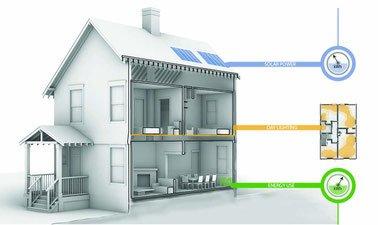
The primary focus of this course is the study of the thermal and luminous behavior of buildings. You'll examine the basic scientific principles underlying these phenomena, and use computer-aided design software and climate data to explore the role light and energy can play in shaping architecture.
These efficiency design elements are critical to the larger challenge of producing energy for a growing population while reducing carbon emissions.
This course is part of the Future Energy Systems XSeries.

Prerequisites

  • Strong English language skills
  • Ability to perform basic mathematical operations
  • Undergraduate study of architecture, physics, environmental science, sustainability, and/or engineering helpful
  • Some experience with computer-aided design helpful

What you'll learn

  • Understand the scientific principles underlying the thermal and luminous behavior of buildings
  • Learn to evaluate the advantages and disadvantages of a range of technologies for creating comfortable indoor environments

Syllabus

Week 1 - Energy Use in Buildings

  • Course Introduction
  • Assignment: Energy Benchmarking

Week 2 - Understanding Climate

  • Solar Radiation
  • Wind, Temperature, and Relative Humidity
  • Assignment: Direct Shading

Week 3 - Designing with Climate

  • Thermal Comfort
  • Assignment: Thermal Comfort

Week 4 - Daylighting

  • Active Solar
  • Light and Human Vision
  • Assignment: PV Study

Week 5 - Daylight Simulations

  • Daylight Simulations and Availability Metrics
  • Material Surfaces
  • Assignment: Daylight Availability

Week 6 - Electric Lighting

  • Visual Comfort
  • Electric Lighting and Occupant Behavior
  • Assignment: Glare and Electric Lighting

Week 7 - Heat Flow

  • Thermal Mass and Heat Flow
  • Insulation Materials and Window Technologies
  • Assignment: Thermal Mass

Week 8 - Thermal Loads

  • Shading and Integrated Façade Design
  • Ventilation
  • Assignment: Natural Ventilation

Week 9 - Thermal Simulations

  • Internal Gains and Load Calculations
  • Assignment: Internal Gains

Week 10 - Heating, Cooling, and Ventilation (HVAC)

  • HVAC for Small Buildings
  • HVAC for Large Buildings

Weeks 11 - 12 Designing a Sustainable Building

  • Assignment: Final project: Designing a Sustainable Building

Week 13 - Grading Final Project

  • Peer review final design projects
Go to Class
MOOC List is learner-supported. When you buy through links on our site, we may earn an affiliate commission.

Related Courses

Energy Economics and Policy (edX) EdX
MIT,MITx

Energy Economics and Policy (edX)

Learn the economics of real-world energy markets, and how various policies can address the impact of rising global energy demand on the environment and climate. With renewable sources playing an increasing role in meeting global energy demand and mitigating climate change, electric power systems and the related markets are changing. To prepare for a career in the future energy landscape, industry professionals, policymakers, and academics must understand these changes and develop specific, relevant skills to drive this energy transition within the necessary timeframe. In this course, you will learn to apply economic and socio-political analysis to real-world regulatory policy questions in a set of extremely important, interrelated energy markets.

Sep 17th 2024
5-12 Weeks
Climate Change Science and Negotiations (edX) EdX
SDGAcademyX,SDG Academy

Climate Change Science and Negotiations (edX)

Humanity is up against a tight timeline to address climate change. Learn how we can deeply decarbonize the global energy systems, and put the world on a 2°C pathway. In this course, learn solutions to mitigate the effects of the global greenhouse gas emissions causing temperature rise, and how to apply these solutions in different national contexts improvements.

Self Paced
Self-Paced
Solar Resource Assessment in Desert Climates (edX) EdX
Hamad Bin Khalifa University - HBKU,HBKUx

Solar Resource Assessment in Desert Climates (edX)

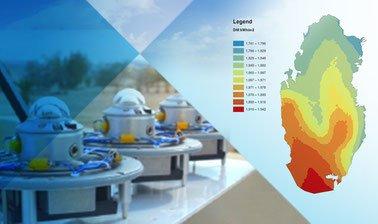
Learn how to use the components of solar radiation, solar spectrum, forecasting and meteorology to advocate and plan for deploying PV in desert climates. Desert regions may seem optimal for solar energy and the deployment of photovoltaic (PV) applications. However, the heat and dust experienced in the region poses a challenge for the optimal performance of PV modules and reliability of the applications.

Self Paced
Self-Paced
Energy Demand in Buildings (edX) EdX
Delft University of Technology,DelftX

Energy Demand in Buildings (edX)

Discover how building design and occupancy determines the energy demand in buildings and learn how to (re)design low energy buildings. Building design strongly influences the quantity of heating, cooling and electricity needed during building operation. Therefore, a correct thermal design is essential to achieve low energy and low carbon buildings, with good indoor air quality.

Self Paced
Self-Paced
The Transition to the Decarbonised Economy of Tomorrow (edX) EdX
Delft University of Technology,DelftX

The Transition to the Decarbonised Economy of Tomorrow (edX)

Dive into the economic strategies for promoting the energy transition: technologies, policies, pricing, emission trading and more. How can economic strategies bring our current, fossil fuel based energy system into a carbon neutral future? According to the International Panel on Climate Change, we have only limited time left to keep global temperatures below 1.50 C and to avoid a climate crisis. How do we go about decarbonizing our economy? What are the best renewable energy sources to bring about this transition? And how do we convince investors that renewables really are the best option?

Apr 30th 2024
5-12 Weeks
Powering Resilient Communities: A Holistic Approach to Food, Energy, and Water Security (edX) EdX
University of Alaska Fairbanks,AlaskaX

Powering Resilient Communities: A Holistic Approach to Food, Energy, and Water Security (edX)

A research-based course on resilient renewable energy solutions, with an emphasis on microgrids, and Food, Energy, and Water (FEW) security. This course provides research-based and on-the-ground tools for community planners, grid designers, and business leaders to improve and implement stronger and more resilient renewable energy systems in Arctic communities.

Self Paced
Self-Paced
Comfort and Health in Buildings (edX) EdX
Delft University of Technology,DelftX

Comfort and Health in Buildings (edX)

Learn how to realize thermally comfortable and healthy buildings and how energy technologies impact comfort. Even in the well-accepted indoor temperature range of 20-24°C (68-75°F), people can experience thermal discomfort. Complaints about the indoor thermal environment are one of the major complaints building and facility managers have to deal with, and they spend a large amount of their time and money to solve them. People spend more than 80% of their time in buildings. Therefore a good thermal comfort and quality of the indoor environment are essential for their wellbeing, health and productivity.

Self Paced
Self-Paced
Electric Cars: Policy (edX) EdX
Delft University of Technology,DelftX

Electric Cars: Policy (edX)

Learn about the role of public policy in steering technological innovation and infrastructural change toward zero-emission mobility. Electric cars are more than a novel means of mobility. They have been recognized as an essential building block of the energy transition. Fulfilling their promise will imply a significant change in the technical, digital and social dimensions of transport and energy infrastructure.

Self Paced
Self-Paced
Solar Energy: Photovoltaic (PV) Energy Conversion (edX) EdX
Delft University of Technology,DelftX

Solar Energy: Photovoltaic (PV) Energy Conversion (edX)

Learn how solar cells generate electricity, and about the semiconductor physics and optics required to design and manufacture solar cells. The key factor in getting more efficient and cheaper solar energy panels is the advance in the development of photovoltaic cells. In this course you will learn how photovoltaic cells convert solar energy into useable electricity. You will also discover how to tackle potential loss mechanisms in solar cells.

Self Paced
5-12 Weeks
Understanding Nuclear Energy (edX) EdX
Delft University of Technology,DelftX

Understanding Nuclear Energy (edX)

Learn the science and technology behind nuclear energy and the special features of this energy source. In this nuclear energy course, we will tackle provocative questions such as: Is nuclear energy a good substitute for fossil fuels to reduce our CO2 emission or not?; Can nuclear reactors operate safely without any harm to the public and environment?; How much nuclear waste is produced and how long does it need to be stored safely?; How can we make nuclear energy clean and more sustainable?; How much are nuclear energy costs?

Self Paced
Self-Paced