Doing Business in Europe (Coursera)

Offered by ESCP Europe,
Doing Business in Europe (Coursera)

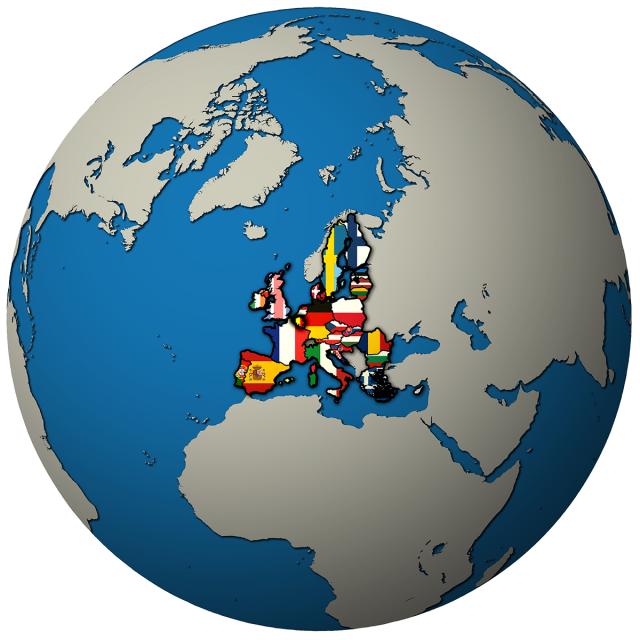
Europe is a major world trade partner as well as a place where to acquire significant business experience. This is the reason why this MOOC has been designed with the view to explaining and guiding you in doing business in Europe. Do you really know Europe? How should you consider and approach the European continent? What business lessons can be drawn in a European perspective?

Class Deals by MOOC List - Click here and see Coursera's Active Discounts, Deals, and Promo Codes.

With a dozen contributions from academics in the various domains of management (marketing, supply chain, finance, human resources management or strategy) and as many testimonials from business leaders operating in Europe, this course will help you enrich your knowledge and business competences within the European context.
The MOOC is divided into 5 topics corresponding to 5 major issues when doing business in Europe:

  1. Approaching the European market(s)
  2. Innovating in Europe
  3. Investing in Europe
  4. Building the value chain
  5. Integrating the diversity

There are no prerequisite for this course. At the end of the coursework, participants will be able to understand how to design a European-scale development strategy.

Syllabus

WEEK 1
Introduction
Approaching the European market(s)
The European market(s) are multiple yet increasingly integrated. That’s the reason why this first unit is dedicated to the topic “Approaching the European market (s)”. You will understand why Europe is the most important economic market in the world with an access to 600 millions of consumers and an accelerating growth. You will have an input on the Eurozone, which allows a fluent payments and transfers system with no currency costs and minimal administrative formalities. And you will get insights on the quality of business and life in Europe: Efficient transports, business friendly metropolis and beautiful cities…

WEEK 2
Innovating in Europe
Doing business in Europe should start with a reflexion on how to innovate from the very beginning. That is the topic of this second unit “Innovating in Europe”. You will discover why Europe is an outstanding place for creativity: with a long history of establishing relations between business and creative minds, relentlessly bringing creativity to the core of organizations. You will get insights on Digital marketing, a MUST for the European market as a great opportunity to reach European consumers and engage them in new offers; a real opportunity for SMEs!

WEEK 3
Investing in Europe
Where and how to invest in Europe? This unit “Investing in Europe” deals with location and entry mode choices in the European context. You will be trained to ask the right questions to choose the right location in Europe. You will discover that Europe is the largest market for franchising with a great potential for development, an opportunity to rapidly develop corporate positions in various European markets. And you will get insights on how to complete successfully a company acquisition process in Europe.

WEEK 4
Building the value chain
In this unit, we present the ways to reach out to European customers in terms of supply chain and retail management “Building the value chain”, a continent with a challenging geography and a vast diversity of providers and consumers. You will learn that supply chain management is a key factor of success in Europe but it requires developing strong competencies to deal with national singularities. You will learn that retail management in Europe is unique: notably innovation, streamlining the go-to-market process, driving the most advanced market in the world towards sustainability

WEEK 5
Integrating the diversity
Doing business in Europe unavoidably entails being confronted to its diversity. This unit on “Integrating the diversity” tries to make sense of this diversity and the ways to manage it. You will be better aware of the key challenges when managing European teams and notably key points as communication, conflict, cultural differences and diverse work styles. And you will also better understand why negotiation with European partners implies cultural intelligence and awareness.

Go to Class
MOOC List is learner-supported. When you buy through links on our site, we may earn an affiliate commission.

Related Courses

The hidden value - Lean in manufacturing and services (Coursera) Coursera
École des Ponts ParisTech,Boston Consulting Group - BCG

The hidden value - Lean in manufacturing and services (Coursera)

Lean is a powerful methodology that enables managers and employees to shift their mindset and helps companies to keep their business sustainable by creating competitive advantage. Today, in an increasingly complex and dynamic world, where companies struggle to maintain competitive advantage, Lean is more important than ever. This course combines the experience of many senior experts and practitioners from the Boston Consulting Group and École des Ponts, and brings perspectives on Lean in manufacturing and services. It offers strong topic foundation as well as deep practical insights into the art of continuous improvement.

Oct 5th 2026
4 Weeks
Successful Presentation (Coursera) Coursera
University of Colorado Boulder

Successful Presentation (Coursera)

Few kinds of communication can have the effect of a powerful presentation. Even a short speech can motivate people to change long-held beliefs or to take action, and a wonderfully delivered speech can transform a normal person into a leader. In this course, Prof. William Kuskin provides a series of pragmatic videos and exercises for successful public speaking and presentations.

Oct 5th 2026
4 Weeks
Business Implications of AI: A Nano-course (Coursera) Coursera
EIT Digital

Business Implications of AI: A Nano-course (Coursera)

In this course you will learn what Artificial Intelligence is, from a leaders point of view. How shall we, as leaders, understand it from a corporate strategy point of view? What is it and how can it be used? What are the crucial strategic decisions we have to make, and how to make them? What consequences can we expect if we decide on doing AI-projects and what kind of competences do we need? Where shall we start, and what could be a good second as well as third step? What implications for the organization can we expect? These are the questions answered in this course.

Oct 5th 2026
4 Weeks
Corporate Finance Essentials (Coursera) Coursera
IESE Business School

Corporate Finance Essentials (Coursera)

Corporate Finance Essentials will enable you to understand key financial issues related to companies, investors, and the interaction between them in the capital markets. By the end of this course you should be able to understand most of what you read in the financial press and use the essential financial vocabulary of companies and finance professionals.

Oct 5th 2026
5-12 Weeks
Las redes sociales en acción (Coursera) Coursera
Tecnológico de Monterrey

Las redes sociales en acción (Coursera)

Como un mercadólogo, tenemos claro que nuestra función principal en las empresas es identificar las necesidades del mercado y con base en ellas establecer estrategias de compra – venta que causen impacto y satisfagan las necesidades de los consumidores. Éste es un reto importante, pero además de ser creativos en la definición de estas estrategias, tenemos que tener en cuenta el desarrollo que a través de los últimos años ha tenido el Internet y atrás de él las redes sociales.

Oct 5th 2026
5-12 Weeks
¿Cómo convertir mi idea en empresa? (Coursera) Coursera
Universidad de los Andes

¿Cómo convertir mi idea en empresa? (Coursera)

Este curso te ofrece un entrenamiento para la tarea de descubrir quién será el consumidor de tu producto o servicio y cuáles serán los atributos y características del mismo. Al terminar el curso, habrás identificado una oportunidad de negocio que te permitirá utilizar tus fortalezas personales; habrás identificado un grupo de consumidores y sus necesidades; habrás creado un producto o servicio para atender esas necesidades y lo habrás prototipado con consumidores reales, obteniendo claridad con respecto a cuáles son los atributos del producto que el consumidor realmente desea y por los cuales está dispuesto a pagar.

Oct 5th 2026
5-12 Weeks
Modelos de empresa familiar: del capitán al grupo inversor (Coursera) Coursera
ESADE Business and Law School

Modelos de empresa familiar: del capitán al grupo inversor (Coursera)

Gracias a este curso iremos más allá en el análisis de la empresa familiar. En base a la teoría de 'Modelos de Empresa Familiar' creada por el Profesor Alberto Gimeno Sandig, aprenderemos a identificar cuáles son los distintos modelos de empresa familiar, qué los distingue y cómo un profesional encajará en cada uno de ellos.

Oct 5th 2026
4 Weeks
Developing Innovative Ideas for New Companies: The First Step in Entrepreneurship (Coursera) Coursera
University of Maryland, College Park

Developing Innovative Ideas for New Companies: The First Step in Entrepreneurship (Coursera)

This course assists aspiring and active entrepreneurs in developing great ideas into great companies. With strong economies presenting rich opportunities for new venture creation, and challenging economic times presenting the necessity for many to make their own job, the need to develop the skills to develop and act on innovative business opportunities is increasingly vital.

Oct 5th 2026
4 Weeks
Budgeting essentials and development (Coursera) Coursera
FIA Business School

Budgeting essentials and development (Coursera)

In this course, learners will have a deeper understanding of the budgeting process, its challenges, common issues, and approaches to mitigate the problems and improve the learning curve of budget planning. It is integrative by emphasizing the transition between the corporate strategy and the budget. It is practical by following a structured process of going through a framework that illustrates and demonstrates how to analyze, develop and control the budget.

Oct 5th 2026
5-12 Weeks
L'entrepreneuriat social: faire son business plan (Coursera) Coursera
ESSEC Business School

L'entrepreneuriat social: faire son business plan (Coursera)

Ce MOOC a pour vocation de vous aider à créer votre entreprise à but social ou environnemental en vous aidant à vous poser toutes les "bonnes questions" : besoin social, proposition de valeur, modèle économique, financement, statut juridique, mesure de l'impact social...Thierry Sibieude, professeur titulaire de la Chaire Innovation et Entrepreneuriat social et une vingtaine d'acteurs inspirants, entrepreneurs et intrapreneurs sociaux ou experts, vous apporteront leur éclairage inspirant

Oct 5th 2026
4 Weeks