EdX

The Divine Comedy: Dante's Journey to Freedom, Part 2 (Purgatorio) (edX)

The Divine Comedy: Dante's Journey to Freedom, Part 2 (Purgatorio) (edX)

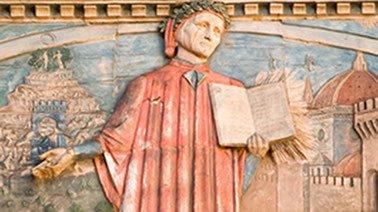
After his harrowing descent into the depths of despair, the Pilgrim Dante emerges with Virgil onto the Isle of Mount Purgatorio in the southern hemisphere. There he will be healed of sin and prepared for his climactic reunion with Beatrice.

Class Deals by MOOC List - Click here and see EdX's Active Discounts, Deals, and Promo Codes.

Now I shall sing the second kingdom,
there where the soul of man is cleansed,
made worthy to ascend to Heaven.
-Purgatorio, Canto I, lines 4-6
While Hell is “black, confined, stinking, noisy, and suffocating, the great Mountain of Purgatory rises in pure sunlit solitude out of the windswept southern sea.” (Sayers, Purgatorio; Introduction) Dante has undergone a conversion that has, literally, turned his world upside down.
Sadly, the majority of Dante’s readers do not accompany him beyond his escape from the Inferno, in part, perhaps, because of an instinctive anticipation that when the excitement of adventure is over, then the hard work of maturation must begin. Indeed, there is work aplenty on Mount Purgatorio, but there is also so much more. There is day and night, labor and rest, waking and dreaming, all the rhythms of diurnal living; but above all, there is the delight of hope. All that the penitent souls suffer here, they undergo in the eagerness of passionate yearning to be healed of the wounds of sin inflicted on them as part of the universal heritage of humanity. Purgatory is a “school of contemplation,” where the healing of wounds coincides with learning to suffer the weight of responsibility for one’s own identity as a person. For those willing to undertake the steep ascent of Dante’s seven-story Mountain, nowhere in the legacy of human culture is the process of becoming a “whole person” more closely observed or rendered with deeper psychological and social insight than in the cantos of Dante’s Purgatorio.
For us as modern readers, Mount Purgatorio is a steep ascent indeed, and if fewer of us accept this challenging invitation than do for the careen through Hell, then it should come as no surprise for us to learn of the untold years, centuries perhaps, that the souls whom Dante meets there require to complete their climb. A realistic willingness to suffer consciously and voluntarily, motivated by authentic hope, is hardly recognized as a possibility by most of us today for whom security and prosperity are accepted as the unqualified goals of our striving. Even to consider an alternative of the sort which Dante offers us in the Purgatorio is already a notable achievement, but one which the imaginative power of Dante’s poetry here places within our reach. Do not let the opportunity pass you by.
In this course, you will be asked to participate in learning activities on both edX and on MyDante, an innovative platform for deep reading that emphasizes mindfulness and contemplative reading habits as key to deriving lasting meaning from poetic texts. We begin on September 28 with an optional reading week. If you have not previously worked with the MyDante platform and are not familiar with the Contemplative Reading approach to the text which it is meant to support, the week offers a chance for you to become acquainted with MyDante and the practice of contemplative reading before we begin the course in earnest on October 5. Equally important, if you have not already read Inferno, we strongly suggest you do so before beginning Purgatorio. It is possible to read, understand and enjoy Purgatorio without having read the Inferno, but it is also true that familiarity with the first part of the journey will increase both your understanding and your enjoyment of the second. Finally, if you were with us for the Inferno, then we urge you to read through the Purgatorio in the reading mode of MyDante, or even as much as you can, during this week. The basic premise of contemplative reading is that re-reading is the best way to read. Try it; we are very sure you will agree.
What you'll learn:

  • Gain familiarity with the theory and practice of “Contemplative Reading” that constitutes one of the principal structural dynamics of Liberal Arts education.
  • Apply the general practice of “Contemplative Reading” to Dante’s Divine Comedy.
  • Demonstrate in-depth and relatively advanced familiarity with and knowledge of an epic poem of the highest cultural significance; in specific, Dante’s Divine Comedy.
  • Begin to articulate for themselves their own personal convictions in response to reflection questions about human dignity, freedom and responsibility with which the Divine Comedy inevitably confronts its readers.
  • Engage with the most fundamental goal of Liberal education, promoting the universal dignity of personhood.
  • Become acquainted with the specific contributions that the Christian, Catholic and Jesuit traditions of Georgetown University bring to the promotion of human dignity.

Go to Class
MOOC List is learner-supported. When you buy through links on our site, we may earn an affiliate commission.

Related Courses

Academic and Business Writing (edX) EdX
University of California, Berkeley,BerkeleyX

Academic and Business Writing (edX)

An introduction to academic and business writing for English Language Learners, focusing on grammar, vocabulary, structure, editing, and publication. College Writing 2.2x providesan introduction to academic and business writing for English Language Learners. In this course, students focus on understanding the demands of different styles of writing, andwork to improve grammatical correctness, vocabulary development, and revision and editing skills.

Self Paced
Self-Paced
Literati China: Examinations, Neo-Confucianism, and Later Imperial China (edX) EdX
HarvardX,Harvard University

Literati China: Examinations, Neo-Confucianism, and Later Imperial China (edX)

Explore China’s imperial period, with a focus on the Song dynasty and the role of the exam system in government. Fundamental changes in government, the economy, and broader society took place between the 8th and 11th centuries in China. The state aristocracy gave way to new literati elite: educated men who sought to enter government through competitive examinations. A new kind of Confucianism also took shape, which prized the moral autonomy of individuals. With this, the later imperial period of China’s history begins.

Self Paced
Self-Paced
Dante tra poesia e scienza (Federica Web Learning) Federica Web Learning
University of Naples Federico II

Dante tra poesia e scienza (Federica Web Learning)

La Commedia di Dante, una delle opere più importanti della letteratura di tutti i tempi, è endiadi di poesia e scienza. Certamente la cultura scientifica di Dante è vasta per i suoi tempi; essa è talmente fusa nel discorso poetico che non disturba l’orecchio e la mente del lettore; essa non è espressione di mera conoscenza, ma rientra sempre nel concetto del poeta di leggere unitariamente il mondo e le sue espressioni; e di sicuro essa è la manifestazione più alta della scienza del Medioevo, frutto di non poche letture di una cultura scientifica non solo europea, ma anche araba, conosciuta attraverso le traduzioni latine delle opere o dalla frequentazione, come appare dalle ultime ipotesi di ricerche, di musulmani residenti in paesi dell’Italia settentrionale.

Mar 6th 2017
5-12 Weeks
Dante (saylor.org) Saylor Academy
Saylor.org

Dante (saylor.org)

Many scholars consider Dante the ultimate Italian poet of his time. He introduced innovative stylistic techniques to the poetic tradition while also drawing from the philosophy, history, and mythology of the ancient world. As we will see in the course, he composed his works in the Italian vernacular, setting an important precedent in the literary world of his time, when most of his contemporaries wrote only in Latin.

Legacy Course
Self-Paced
Cantonese Language and Culture for Beginners (edX) EdX
The Hong Kong Polytechnic University,HKPolyUx

Cantonese Language and Culture for Beginners (edX)

The course aims to enable students to master the sounds of Cantonese and conduct basic conservations in Cantonese. It is suitable for learners of the following 3 categories: (1) People from Hong Kong who may be expatriates, international students, ethnic minorities; (2) People from the Guangdong-Hong Kong-Macao Greater Bay Area (GBA) who may be expatriates; (3) People from all over the world who may be heritage speakers of Cantonese, plan to study/work in Hong Kong/ the GBA, tourists… etc. In fact, anyone who is interested in learning Cantonese are welcomed to join this course!

Sep 1st 2023
4 Weeks
Anthropology of Current World Issues (edX) EdX
University of Queensland,UQx

Anthropology of Current World Issues (edX)

Learn to use anthropological ideas to see the world from a range of perspectives and points of view. This course will allow you to better understand the world around you through utilising the anthropological lens. You will learn about the way in which anthropology as a discipline can shed new perspectives on current world issues, from indigeneity to migration and material culture.

Self Paced
Self-Paced
A Global History of Architecture (edX) EdX
MIT,MITx

A Global History of Architecture (edX)

Learn about humanity’s rich architectural history on this journey around the globe – from 100,000 BCE to ca. 1,600 CE. How do we understand architecture? One way of answering this question is by looking through the lens of history, beginning with First Societies and extending to the 16th century. This course in architectural history is not intended as a linear narrative, but rather aims to provide a more global view, by focusing on different architectural "moments."

Oct 18th 2023
5-12 Weeks