Dante tra poesia e scienza (Federica Web Learning)

Dante tra poesia e scienza (Federica Web Learning)

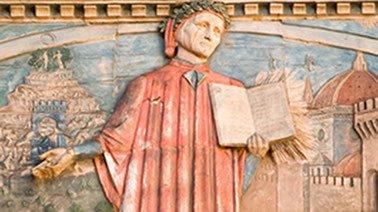
La Commedia di Dante, una delle opere più importanti della letteratura di tutti i tempi, è endiadi di poesia e scienza. Certamente la cultura scientifica di Dante è vasta per i suoi tempi; essa è talmente fusa nel discorso poetico che non disturba l’orecchio e la mente del lettore; essa non è espressione di mera conoscenza, ma rientra sempre nel concetto del poeta di leggere unitariamente il mondo e le sue espressioni; e di sicuro essa è la manifestazione più alta della scienza del Medioevo, frutto di non poche letture di una cultura scientifica non solo europea, ma anche araba, conosciuta attraverso le traduzioni latine delle opere o dalla frequentazione, come appare dalle ultime ipotesi di ricerche, di musulmani residenti in paesi dell’Italia settentrionale.

Tuttavia la parte scientifica dell’opera, quella che rientra più propriamente sotto la voce di scienza tout court, ha avuto in genere una minore frequentazione critica rispetto all’universo poetico. Essa, infatti, risulta scarsamente frequentata dal critico letterario, mentre è stata oggetto di studio da parte di scienziati di ieri e del nostro tempo. In queste lezioni viene, pertanto, proposta non solo la poesia presente nel percorso che il poeta-personaggio Dante ha tracciato nella sua opera quale viaggio dall’umano al "divino", ma anche la scienza come anticipazione di risultati scientifici raggiunti dai nostri studi ed evidenziati attraverso il ricorso a matematici e fisici del Novecento. In tal modo la Commedia riesce meglio a suggerire al lettore il valore del pensiero dantesco offrendo ai lettori del XXI secolo un esempio di come la poesia e la scienza non devono vivere in “camere separate”, ma costituiscono l’unità del sapere universale.
Go to Class
MOOC List is learner-supported. When you buy through links on our site, we may earn an affiliate commission.

Related Courses

Masterpieces of World Literature (edX) EdX
HarvardX,Harvard University

Masterpieces of World Literature (edX)

Embark on a global journey to explore the past, present, and future of World Literature. This literature course explores how great writers refract their world and how their works are transformed when they intervene in our global cultural landscape today. No national literature has ever grown up in isolation from the cultures around it; from the earliest periods, great works of literature have probed the tensions, conflicts, and connections among neighboring cultures and often more distant regions as well.

Self Paced
Self-Paced
Shakespeare’s Othello: The Moor (edX) EdX
HarvardX,Harvard University

Shakespeare’s Othello: The Moor (edX)

Explore acts of storytelling in Shakespeare's Othello alongside world-class artists who interpret Othello's story in new forms and contexts today. In this course, we'll read William Shakespeare’s Othello and discuss the play from a variety of perspectives. The goal of the course is not to cover everything that has been written on Othello.

Self Paced
Self-Paced
Writing and Disseminating Grey Literature (Coursera) Coursera
Indian Institute for Human Settlements

Writing and Disseminating Grey Literature (Coursera)

If you are a researcher, academic, student, development sector professional or a practitioner who is keen to reach the research-based knowledge you have created to a wider audience, this course is for you. Vast amounts of knowledge are produced by educational and research institutions through rigorous research and fieldwork. Yet, there is a dearth of access to this knowledge among non-academic communities (which includes practitioners, policymakers, and citizens) due to the language used. Researchers can bring visibility to grey literature if they engage with alternate public writing forms.

Aug 17th 2026
5-12 Weeks
Poetry: How to Read a Poem (FutureLearn) FutureLearn
University of York

Poetry: How to Read a Poem (FutureLearn)

Discover what poetry can tell us about human emotion and learn key ideas and techniques for understanding and interpreting verse. Dive into the wonderful world of poetry and learn how to analyse a poem. Humans have communicated their thoughts, ideas, and feelings through poetry throughout history. At its best, it tells us new truths about the human experience. However, it’s often presented as hard to understand without expert knowledge. On this course, you’ll build your confidence in reading and enjoying poetry.

Self Paced
4 Weeks
Latino: forme e circolazione nella pars Orientis dell’Impero (Federica Web Learning) Federica Web Learning
University of Naples Federico II

Latino: forme e circolazione nella pars Orientis dell’Impero (Federica Web Learning)

Se per l’Occidente mancano testimonianze che non siano quelle indirette di trattazioni specifiche come l’Institutio oratoria di Quintiliano, l’Oriente ha restituito una serie di testimoni diretti delle forme dell’insegnamento del latino,tra I a.C. e VI d.C.: favorita fondamentalmente dall’occupazione militare e dai bisogni dell’amministrazione per tutta la prima età imperiale, nelle province eccentriche dell’Impero, la circolazione del latino venne ulteriormente incentivata da una politica che lo identificava con la lingua dell’amministrazione (e del diritto) a partire dal III secolo. Continuo, infatti, è il contatto dei latinofoni con allofoni che, spesso, si misero alla prova con l’apprendimento della lingua di Roma.

Apr 12th 2017
5-12 Weeks
Letteratura latina 2 - L’idea dell’Altro in età imperiale (Federica Web Learning) Federica Web Learning
University of Naples Federico II

Letteratura latina 2 - L’idea dell’Altro in età imperiale (Federica Web Learning)

Nella letteratura latina affiorano costantemente l'idea della identità romana, il rapporto con il diverso, il relazionarsi con popoli altri da sé: basti pensare a Terenzio che nasce in Africa o a Cecilio Stazio, commediografo di origine gallica solo per citarne alcuni. Il problema si accentua in età tardoantica, quel periodo che si fa partire dal III sec. d. C. e che alcuni addirittura anticipano alla fine del II.

Sep 16th 2019
5-12 Weeks
The Spain of Don Quixote (edX) EdX
Universidad Autonoma de Madrid

The Spain of Don Quixote (edX)

An exploration of Spain depicted in Cervante’s historic novel, Don Quixote – a Golden Age in which Spanish arts and literature reached worldwide excellence. This MOOC focuses on Spanish history between the Renaissance and Baroque periods—a time when the Spanish culture set the tone in the Western world.

Self Paced
Self-Paced
Modern Masterpieces of World Literature (edX) EdX
HarvardX,Harvard University

Modern Masterpieces of World Literature (edX)

Examine how great modern writers capture the intricacies of our globalized world and how their works circulate within that world to find their own audiences. Based on the second half of the Masterpieces of World Literature edX MOOC, this short literature course examines how writers reach beyond national and linguistic boundaries as worldly readers and travelers, and how their modern fictions rise to the status of world literature.

Self Paced
Self-Paced
Old Norse Mythology in the Sources (Coursera) Coursera
University of Colorado Boulder

Old Norse Mythology in the Sources (Coursera)

This course is an introduction to the religion of the Vikings as it is recorded in Old Norse and Scandinavian literature from the medieval period. You will learn about the different written sources and what they can teach us about pre-Christian religion in northern Europe in the Viking Age. The course surveys the primary collection of Old Norse poetry about the pre-Christian Scandinavian gods, the Poetic Edda. We will also work with the main collections of stories about the Old Norse gods in prose: Snorri Sturluson's Edda and Saxo's History of the Danes.

Jul 27th 2026
4 Weeks