Latino: forme e circolazione nella pars Orientis dell’Impero (Federica Web Learning)

Latino: forme e circolazione nella pars Orientis dell’Impero (Federica Web Learning)

Se per l’Occidente mancano testimonianze che non siano quelle indirette di trattazioni specifiche come l’Institutio oratoria di Quintiliano, l’Oriente ha restituito una serie di testimoni diretti delle forme dell’insegnamento del latino,tra I a.C. e VI d.C.: favorita fondamentalmente dall’occupazione militare e dai bisogni dell’amministrazione per tutta la prima età imperiale, nelle province eccentriche dell’Impero, la circolazione del latino venne ulteriormente incentivata da una politica che lo identificava con la lingua dell’amministrazione (e del diritto) a partire dal III secolo. Continuo, infatti, è il contatto dei latinofoni con allofoni che, spesso, si misero alla prova con l’apprendimento della lingua di Roma.

L’analisi delle testimonianze dirette della circolazione della lingua e della letteratura latina nella pars Orientis dell’Impero - sostanzialmente papiri, frammenti da volumina o codices di pergamena, tavolette ed ostraka - imporrà una riflessione, da un lato, su fenomeni complessi quali quello del bilinguismo (latino-greco) e della diglossia e, dall’altro, sulle forme in cui il latino venne percepito ed insegnato come Lingua2 tra Antichità e Tarda Antichità.


Go to Class
MOOC List is learner-supported. When you buy through links on our site, we may earn an affiliate commission.

Related Courses

Think Again I: How to Understand Arguments (Coursera) Coursera
Duke University

Think Again I: How to Understand Arguments (Coursera)

In this course, you will learn what an argument is. The definition of argument will enable you to identify when speakers are giving arguments and when they are not. Next, you will learn how to break an argument into its essential parts, how to put them in order to reveal their connections, and how to fill in gaps in an argument by adding suppressed premises. By the end of this course, you will be better able to understand and appreciate arguments that you and other people present.

Nov 9th 2026
4 Weeks
Multilingual Practices: Tackling Challenges and Creating Opportunities (FutureLearn) FutureLearn
University of Groningen

Multilingual Practices: Tackling Challenges and Creating Opportunities (FutureLearn)

Learn about central aspects of multilingualism in today's globalised societies, such as cognition, policies and education. In a world of globalisation, people who do not share the same language meet more often every day. Being able to deal with these multilingual practices in an effective way can give you an advantage in your daily life and work.

Self Paced
4 Weeks
Ancient Masterpieces of World Literature (edX) EdX
HarvardX,Harvard University

Ancient Masterpieces of World Literature (edX)

Examine how cultures of the ancient world defined themselves through literature and how their vision of literature contributes to our understanding of civilization, culture, and literature today. This short literature course, based on the first half of the Masterpieces of World Literature edX MOOC, examines how civilizations and cultures of the ancient world defined themselves through literature and how that literature has continued to contribute to our understanding of those civilizations and cultures today.

Self Paced
Self-Paced
Dante tra poesia e scienza (Federica Web Learning) Federica Web Learning
University of Naples Federico II

Dante tra poesia e scienza (Federica Web Learning)

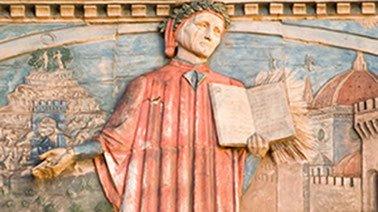
La Commedia di Dante, una delle opere più importanti della letteratura di tutti i tempi, è endiadi di poesia e scienza. Certamente la cultura scientifica di Dante è vasta per i suoi tempi; essa è talmente fusa nel discorso poetico che non disturba l’orecchio e la mente del lettore; essa non è espressione di mera conoscenza, ma rientra sempre nel concetto del poeta di leggere unitariamente il mondo e le sue espressioni; e di sicuro essa è la manifestazione più alta della scienza del Medioevo, frutto di non poche letture di una cultura scientifica non solo europea, ma anche araba, conosciuta attraverso le traduzioni latine delle opere o dalla frequentazione, come appare dalle ultime ipotesi di ricerche, di musulmani residenti in paesi dell’Italia settentrionale.

Mar 6th 2017
5-12 Weeks
The Talmud: A Methodological Introduction (Coursera) Coursera
Northwestern University

The Talmud: A Methodological Introduction (Coursera)

The Talmud is one of the richest and most complicated works of literature the world has ever known. Since being composed around 1500 years ago it has inspired not only religious reverence but significant intellectual engagement. In this course learners will be introduced to the unique characteristics of this text and the challenges that inhere in studying it while studying a chapter of the Talmud.

Nov 16th 2026
5-12 Weeks
Introduction to Academic Writing (Coursera) Coursera
O.P. Jindal Global University

Introduction to Academic Writing (Coursera)

Welcome to the Introduction to Academic Writing course! By the end of this course, you will gain an in-depth understanding of reading and writing as essential skills to conduct robust and critical research. This course introduces you to critical reading and writing skills within the conventions of academic writing.

Nov 9th 2026
4 Weeks
More Chinese for Beginners (Coursera) Coursera
Peking University

More Chinese for Beginners (Coursera)

This is an advanced course for Chinese for beginners. Learners will expand vocabularies about personal information, daily life, food and drink, healthy, and expressions about greeting, suggestion, agreement, comparison, complaint, prohibition, experience, plan, recommendation, etc. Learners can improve their listening and speaking and know much more about Chinese social cultures.

Nov 9th 2026
5-12 Weeks