Japanese Culture Through Rare Books (FutureLearn)

Offered by Keio University,
Japanese Culture Through Rare Books (FutureLearn)

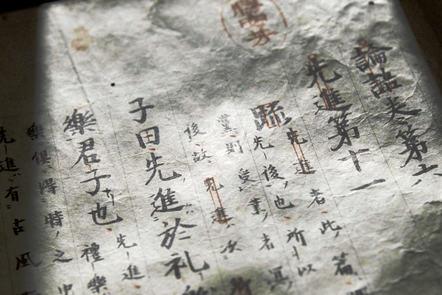
Explore the important roles that books have played in the cultural history of Japan. A book is a tool for preserving words and images. Through books, an abundance of information, including the knowledge and experiences of the people of the past, has been handed down to the present. But books are more than records of words and images.

Class Deals by MOOC List - Click here and see FutureLearn's Active Discounts, Deals, and Promo Codes.

Their form, appearance, and even the scripts and styles used tell us about the fashions and technologies of the times that produced them. By studying old books, we can learn a great deal about the geographical areas in which they were made, the historical background, and the individuals and groups involved in their making.
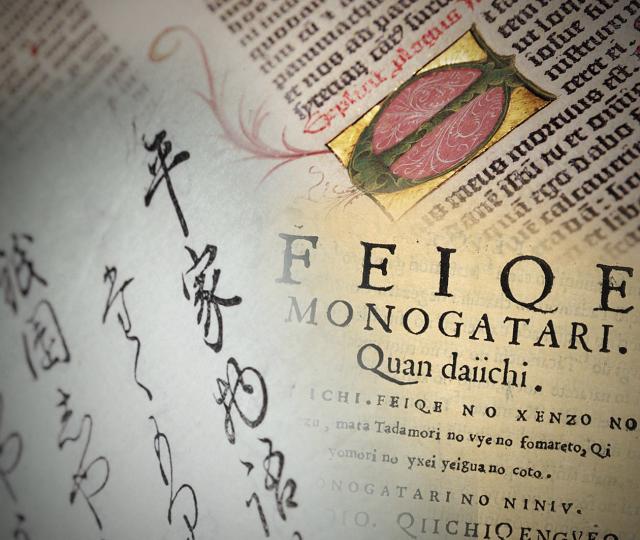
While displaying remarkable similarities with books produced in other areas of the Sinitic cultural sphere, Japanese books also possess some unique features, starting with their sheer diversity of form and appearance. Using a wealth of multimedia content, we will take a journey through the wonderful world of traditional Japanese books.

Keio University’s Book Collection
Keio University’s Institute of Oriental Classics is a unique institution specialized in rare East Asian books. The Institute’s extensive collection comprises 163,000 items, and is open to the public as a specialized library. In this course we will make use of this rich collection and rely on the expertise of specialists and researchers who have been working for the preservation and study of these resources. Using state of the art media resources, you will familiarize yourself with not only the content of traditional East Asian books, but also with their physical appearance, format, binding method, script, and cover style.

Learn about bookbinding styles and their influence on Japanese literature
In the first week of the course, you will be introduced to the main bookbinding methods used in traditional Asia, and to the practice of rebinding books. We will also discuss the influence of Chinese bookbinding methods on early Japanese books in all their various shapes and forms.

Explore old Japanese manuscripts and illustrated books in high-resolution images and videos
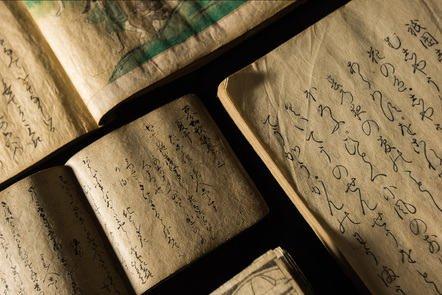
In the second week of the course, we will focus primarily on the different types of manuscripts and illustrated books that were used for waka (classical Japanese poetry) and prose tales (monogatari) from the 9th century through the 17th century. High quality images and video recordings of materials in Keio University’s book collection and beyond will give you a real sense of the look and feel of these precious objects.

Discover the role of book publishing in the development of Japanese literature and scholarship
In the final week of this course, we will look at how the introduction of movable-type and woodblock printing in the 17th and 18th centuries helped books spread widely across social classes, and how this democratization of books affected Edo culture and learning.

Develop your interests in Japan and rare books
By the end of this course, you will:

  • be inspired to further explore the field of rare books.
  • have a good understanding of the various types of traditional Japanese books and their history.
  • have developed a unique perspective on the origins and development of Japanese culture through book history.
  • be familiar with the role of universities and research institutions in preserving and studying rare books and manuscripts.

Requirements
This is an introductory course and is open to anyone with an interest in the history of Japanese books. A basic knowledge of the history of Japan and Japanese literature will be helpful but is not required. The course makes use of a number of visual resources which may unfortunately make some of the activities not accessible to learners with visual impairment.
Course videos will be in Japanese with English subtitles.

Go to Class
MOOC List is learner-supported. When you buy through links on our site, we may earn an affiliate commission.

Related Courses

Literature in the Digital Age: from Close Reading to Distant Reading (FutureLearn) FutureLearn
University of Basel

Literature in the Digital Age: from Close Reading to Distant Reading (FutureLearn)

Learn new ways of interpreting literary texts, from time-tested methods to computer-assisted practices such as distant reading. As we make sense of what we read, we construe meaning using the ancient cultural technique of interpretation. Only rarely do we actually reflect this process: what are the means that help us to understand literary texts? How does interpretation work? And how has our increasing use of e-books and tablets changed the way we read and interpret literature?

Available now
5-12 Weeks
Literature and Mental Health: Reading for Wellbeing (FutureLearn) FutureLearn
The University of Warwick

Literature and Mental Health: Reading for Wellbeing (FutureLearn)

Find out how poems, plays and novels can help us understand and cope with deep emotional strain in this free online course. The great 18th century writer Dr Samuel Johnson, who suffered from severe bouts of depression, said “the only end of writing is to enable the reader better to enjoy life or better to endure it.” This free online course will explore how enjoying literature can help us to endure life.

No sessions available
5-12 Weeks
Words Spun Out of Images: Visual and Literary Culture in Nineteenth Century Japan (Coursera) Coursera
The University of Tokyo

Words Spun Out of Images: Visual and Literary Culture in Nineteenth Century Japan (Coursera)

In their ambition to capture “real life,” Japanese painters, poets, novelists and photographers of the nineteenth century collaborated in ways seldom explored by their European contemporaries. This course offers learners the chance to encounter and appreciate behavior, moral standards and some of the material conditions surrounding Japanese artists in the nineteenth century, in order to renew our assumptions about what artistic “realism” is and what it meant.

Oct 5th 2026
4 Weeks
Jane Austen: Myth, Reality and Global Celebrity (FutureLearn) FutureLearn
University of Southampton

Jane Austen: Myth, Reality and Global Celebrity (FutureLearn)

Discover the fascinating story of author Jane Austen, from her own life in Hampshire to what she means to a global audience today. Jane Austen went from being a moderately successful anonymous novelist in her own time to a global celebrity in ours. On this course you will explore how that happened, exploring Austen’s own literary influences, and her reputation over time.

Self Paced
3 Weeks
Travelling Books: History in Europe and Japan (FutureLearn) FutureLearn
British Library,Keio University

Travelling Books: History in Europe and Japan (FutureLearn)

Discover how travelling books sparked cultural exchanges between Europe and Japan, and how they live on in the digital era. Unlock the history of travelling books in Europe and Japan. Books are cultural artefacts that are easily transported and translated. As such, they have been important in fostering relationships between countries for hundreds of years. On this three-week course presented by Keio University and the British Library, you’ll learn more about the history of European and Japanese literature promoting cultural exchange, how this continues in the digital era, and how vital this exchange is.

Self Paced
3 Weeks
Shakespeare and his World (FutureLearn) FutureLearn
The University of Warwick

Shakespeare and his World (FutureLearn)

Together with the Shakespeare Birthplace Trust, Professor Jonathan Bate explores Shakespeare, his works and the world he lived in. William Shakespeare is one of the most famous authors of all time. 2014 marks the 450th anniversary of his birth. His words have inspired and moved people from around the globe for centuries.

No sessions available
5-12 Weeks
Reasoning Across the Disciplines (Coursera) Coursera
University of North Carolina

Reasoning Across the Disciplines (Coursera)

Critical reasoning skills are a key success factor for students entering their first year of college. They must be able to think logically and form arguments. This course, designed with incoming college freshmen in mind but open to anyone, provides an essential grounding in critical reasoning skills. Faculty from multiple disciplines at the University of North Carolina at Chapel Hill offer guidance on applying critical thinking skills in the context of specific disciplines. By developing these skills, students will learn more, enjoy their courses more, and experience greater academic success.

Oct 5th 2026
5-12 Weeks
Humphry Davy: Laughing Gas, Literature, and the Lamp (FutureLearn) FutureLearn
Lancaster University,Royal Institution - RI

Humphry Davy: Laughing Gas, Literature, and the Lamp (FutureLearn)

Discover Humphry Davy and his contribution to science and the arts. Before culture was divided into the sciences and the arts there was a chemist who was also a poet. Sir Humphry Davy (1778-1829) is one of the best known men of science of the nineteenth century: he was the first person to inhale nitrous oxide; he isolated nine chemical elements; and he invented the miners’ safety lamp known as the Davy lamp. This course will consider Davy’s life and career using manuscript sources held at the Royal Institution of Great Britain.

Oct 9th 2023
4 Weeks
The Talmud: A Methodological Introduction (Coursera) Coursera
Northwestern University

The Talmud: A Methodological Introduction (Coursera)

The Talmud is one of the richest and most complicated works of literature the world has ever known. Since being composed around 1500 years ago it has inspired not only religious reverence but significant intellectual engagement. In this course learners will be introduced to the unique characteristics of this text and the challenges that inhere in studying it while studying a chapter of the Talmud.

Sep 21st 2026
5-12 Weeks