Travel Books: History in Europe and Japan (FutureLearn)

Travel Books: History in Europe and Japan (FutureLearn)

Discover how travelling books sparked cultural exchanges between Europe and Japan, and how they live on in the digital era. Unlock the history of travelling books in Europe and Japan. Books are cultural artefacts that are easily transported and translated. As such, they have been important in fostering relationships between countries for hundreds of years. On this three-week course presented by Keio University and the British Library, you’ll learn more about the history of European and Japanese literature promoting cultural exchange, how this continues in the digital era, and how vital this exchange is.

Class Deals by MOOC List - Click here and see FutureLearn's Active Discounts, Deals, and Promo Codes.

Delve into the history of travelling books
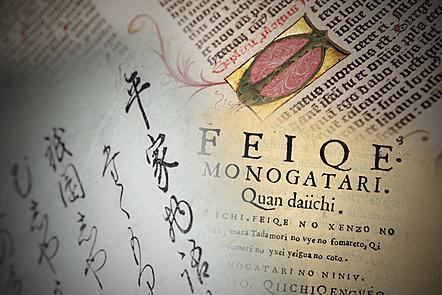
To start you’ll find out how books moved between Europe and Japan, beginning in the 16th century.
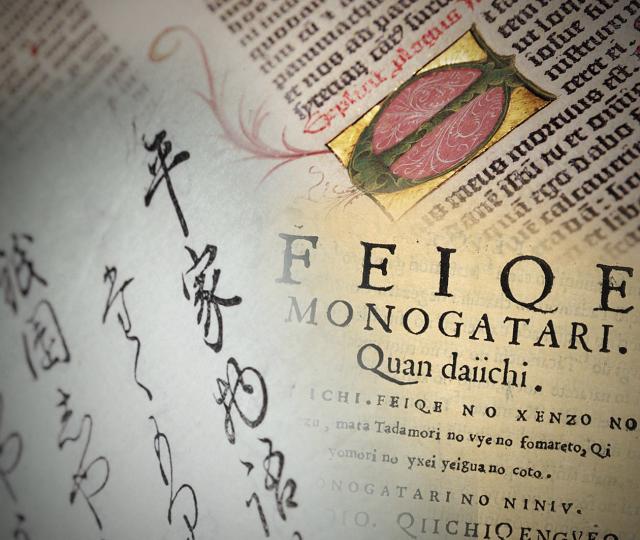
Discover how the books were received, compare printing styles, and find out about the role that Jesuit priests played in these book-sharing interactions.

Explore the rich heritage of travelling books and travel books
In the second and third weeks of the course, you’ll get to appreciate how travelling books influenced individuals, society, and European and Japanese literature.
Besides explaining the importance of rare and illustrated books, the course shows you how to trace physical signs on the pages that show what life was like for readers and collectors in the past.
Finally, you’ll learn about the way travel books led to great cultural exchange by allowing people to learn about places that they would never otherwise have experienced. The way these books exist in the digital era will be examined throughout.

Expand your history know-how with leading experts
The course is jointly produced by Japan’s Keio University and the British Library, which are both recognised in their own countries and abroad.
With their rich resources and longtime friendship, these institutions will deepen your understanding and appreciation of European culture, Japanese culture, and how books brought (and bring) them together.
We would like to acknowledge the following experts for providing valuable contributions to this course:

  • Kristian Jensen, Former Head of Collections and Curation, the British Library / Chair of the Consortium of European Research Libraries
  • Karen Limper-Herz, Lead Curator, Incunabula & Sixteenth Century Printed Books, Western Heritage Collections, the British Library
  • Hamish Todd, Head of East Asian Collections, the British Library
  • Alessandro Bianchi, Bodleian Japanese Librarian, Bodleian Libraries, University of Oxford

Syllabus

Week 1: West Met East
Week 2: Travelling Books
Week 3: Travel Books

What will you achieve?
By the end of the course, you‘ll be able to...

  • Explain how books from different cultures interacted and promoted a cultural exchange between the East and the West.
  • Summarise the role of Jesuit missionaries in exchanging book cultures between the East and the West in 16th century.
  • Compare the European-type books printed in Japan in the 16th-century and their European counterparts.
  • Identify the traces in the early books that can tell you about past readers and collectors.
  • Identify the similarities and differences in the physical features of the travel books that make them easy to carry on a journey.
  • Explore the value of the illustrations in the rare books to imagine the places that we have never been to or can visit only in fantasy.
  • Discuss the materiality of the books in the digital era.

Who is the course for?
This course is designed for anyone interested in European and Japanese literature, printing and historical books. Those who want to explore the lessons that can be learned by comparing books from different cultures will especially enjoy it.

Go to Class
MOOC List is learner-supported. When you buy through links on our site, we may earn an affiliate commission.

Related Courses

Japanese Business Management (edX) EdX
Waseda University,WasedaX

Japanese Business Management (edX)

Learn about Japanese business management and start down a path to becoming a global leader. The Japanese economy was once described as the “rising sun,” overcoming all odds to become an economic superpower. In the late 1980s and early 1990s, many of the largest companies in the world with the highest capitalization were Japanese. Often, the key to Japan's success was attributed to its unique business model, strategies and practices.

Self Paced
Self-Paced
The Art of Washi Paper in Japanese Rare Books (FutureLearn) FutureLearn
Keio University

The Art of Washi Paper in Japanese Rare Books (FutureLearn)

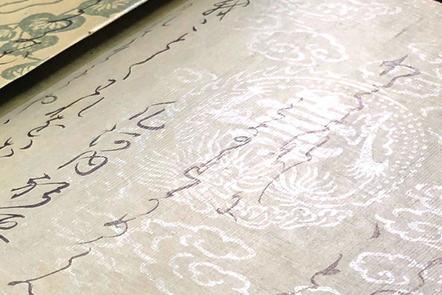
Learn about the history, production and design of papers used inside Japanese rare books. Deepen your understanding of rare books and Japanese culture. The papers inside books can last hundreds of years if cared for correctly. This course will look at the history of papers used inside Japanese rare books, and in other cultures across the world.

Self Paced
2 Weeks
Steps in Japanese for Beginners2 Part3 (edX) EdX
Waseda University,WasedaX

Steps in Japanese for Beginners2 Part3 (edX)

Learn how to explain a troubling situation, and how to ask for assistance from people. Andy explains the symptoms of his illness at hospital and describes some problems he has with his room at the dormitory. He also asks for assistance. He asks for help from his friend with a presentation he has to do in Japanese and gets some good advice. He solves his problems using his Japanese.

Self Paced
Self-Paced
An Introduction to Japanese Subcultures (FutureLearn) FutureLearn
Keio University

An Introduction to Japanese Subcultures (FutureLearn)

Explore Japanese subcultures and learn about their history from the 1970s to today. Subcultures have existed for a long time: the greasers of 1950s America, the mods and rockers of the 1960s and 70s in England, the grunge of the 1980s and 90s, to name a few. Each subculture sits within a broader ‘parent’ culture and can often give us an insight into cultural fears and hopes, especially in the youth of the population. On this course you will get an introduction to Japanese subcultures that have developed since the 1970s.

Self Paced
4 Weeks
Business Opportunities and Risks in a Globalized Economy (Coursera) Coursera
IE Business School

Business Opportunities and Risks in a Globalized Economy (Coursera)

This is the last of the three courses part of the Globalization, Economic Growth and Stability Specialization.¨Business Opportunities and Risks in a Globalized World¨ is the the 3rd and final course of the ¨Globalization, Economic Growth and Stability¨ Specialization taught by IE Business School's Professor Gayle Allard. This course is designed to help an investor, businessperson or economist approach macroeconomic, institutional and international data and derive information from the indicators that point to the types of opportunities and risks that they present.

Sep 14th 2026
5-12 Weeks
International migrations: a global issue (Coursera) Coursera
Sciences Po

International migrations: a global issue (Coursera)

The world is moving, but not all opinions and governments are willing to accept this poorly understood reality. The issue affects both states and the planet, in a process of globalization and of regionalization of migrations, and raises new questions for international relations, now including the South. This course aims at improving knowledge of the subject, addressing the key issues raised by international migration, and assessing the trends of tomorrow.

Sep 21st 2026
5-12 Weeks
Cultural Studies and Modern Languages: an Introduction (FutureLearn) FutureLearn
University of Bristol

Cultural Studies and Modern Languages: an Introduction (FutureLearn)

Explore the culture, language and national identity of eight countries through their books, images, slogans and monuments. Are you interested in other countries? Do you want to study and understand other cultures? This free online course will take you on a journey through a number of periods from the medieval to the modern day, from Russia to Europe and all the way to Latin America.

No sessions available
4 Weeks
Transnational Studies - Japan and the World (edX) EdX
The University of Tokyo,UTokyoX

Transnational Studies - Japan and the World (edX)

Learn to think ‘transnationally’ and understand the border-crossing flows of people, things and ideas. In this course, you will gain foundational knowledge about how to think transnationally. An initial module which introduces key concepts and approaches in transnational studies will be followed by four modules that use concrete case studies centered on Japan to spotlight how the transnational can be fruitfully employed across different disciplines, from history to sustainability studies. In doing so, the course offers foundational knowledge in how to navigate the complexities of our globalized world.

Self Paced
Self-Paced
Cross-border road transport in EU law context (Coursera) Coursera
Erasmus University Rotterdam

Cross-border road transport in EU law context (Coursera)

Have you ever wondered which legal rules are applicable to cross-border EU road transport? Are you interested in the issues revolving around EU employment law in the international road transport sector? Then, on behalf of the University of Antwerp, Erasmus University Rotterdam, University of Gdańsk, University of Luxembourg and Tilburg University, we would like to welcome you to this MOOC on Cross-border Road Transport in EU law context. This MOOC is a part of the Erasmus + Project funded by the European Commission. In this MOOC, you will not only learn what the current legal framework is, but also, how it is applied in the road transport sector.

Sep 21st 2026
5-12 Weeks
Doing Business in Europe (Coursera) Coursera
ESCP Europe

Doing Business in Europe (Coursera)

Europe is a major world trade partner as well as a place where to acquire significant business experience. This is the reason why this MOOC has been designed with the view to explaining and guiding you in doing business in Europe. Do you really know Europe? How should you consider and approach the European continent? What business lessons can be drawn in a European perspective?

Aug 24th 2026
5-12 Weeks