Developing a Systems Mindset (Coursera)

Developing a Systems Mindset (Coursera)

A Systems Mindset teaches learners how to interact effectively as service providers, consultants, researchers, developers, or other professionals providing a service or product to a person, group, or community. This course provides the basic foundations for policy makers, real estate developers, consultants, government agencies, engineers, and non-profit organizations the first steps in engaging complex problems where engagement with communities and stakeholders is necessary.

Class Deals by MOOC List - Click here and see Coursera's Active Discounts, Deals, and Promo Codes.

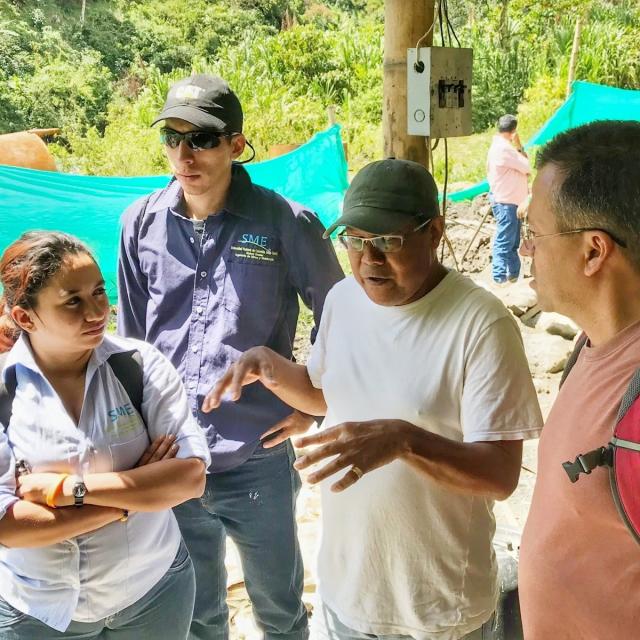
Being a successful professional requires creative, innovative, and entrepreneurial thinking, and to continually have a problem-solving mindset. Yes, absolutely! But you also need to be a listener. You need to truly value the community and stakeholders - the ones who have the most to gain and lose from your actions. It is important for you to listen, learn what is important, and then act. This course will highlight the urgency for you to have a systems mindset to engage complex problems for a systems perspective, meaning that you have approach problems from different angles, scales and perspectives. This class is the first step in creating that mindset and for you to effectively engage – from receiving the “ask” for “assistance”, to orienting yourself to the issue, understanding the community, and developing a project plan. Students will learn how to use a systems mindset to understand scaled systems, nested hierarchies, and the interactions between social and environmental systems. Students will also learn practical skills and techniques that build rapport, trust, and buy-in.
What You Will Learn

  • Build the core knowledge needed to build a systems mindset.
  • Develop the ability to operationalize systems thinking.
  • Learn how to understand communities and develop place based interest.

Course 1 of 3 in the Leading Sustainable Community Transformation Specialization.

Syllabus

WEEK 1: Introduction to Systems
WEEK 2: Operationalize Systems Thinking
WEEK 3: Understanding a Community

Go to Class
MOOC List is learner-supported. When you buy through links on our site, we may earn an affiliate commission.

Related Courses

Business Models for Innovative Care for Older People (Coursera) Coursera
University of Copenhagen,Copenhagen Business School

Business Models for Innovative Care for Older People (Coursera)

This course will introduce you to healthcare innovation within the field of healthy living and active aging. By following two specific cases on diabetes and rehabilitation, this interdisciplinary course will provide you with key theories, tools and concepts for analyzing and developing viable innovative solutions for aging populations. The lectures will cover demographic, biological, economic, social and cultural aspects of active aging and healthy living, along with lectures on current innovation theories and methods.

Aug 17th 2026
5-12 Weeks
Systems Thinking In Public Health (Coursera) Coursera
Johns Hopkins University

Systems Thinking In Public Health (Coursera)

This course provides an introduction to systems thinking and systems models in public health. Problems in public health and health policy tend to be complex with many actors, institutions and risk factors involved. If an outcome depends on many interacting and adaptive parts and actors the outcome cannot be analyzed or predicted with traditional statistical methods. Systems thinking is a core skill in public health and helps health policymakers build programs and policies that are aware of and prepared for unintended consequences.

Aug 10th 2026
4 Weeks
Iniciando e planejando projetos (Coursera) Coursera
University of California, Irvine

Iniciando e planejando projetos (Coursera)

Os cursos de Introdução aos Princípios de Gerenciamento de Projetos e Especialização em Práticas são um precursor recomendado para o Certificado de Gerenciamento de Projetos Aplicado da UCI. Os projetos bem-sucedidos requerem um planejamento inicial cuidadoso. Neste curso, você aprenderá as principais funções e responsabilidades do gerente de projeto e da equipe do projeto.

Aug 3rd 2026
5-12 Weeks
Six Sigma Tools for Define and Measure (Coursera) Coursera
University System of Georgia

Six Sigma Tools for Define and Measure (Coursera)

This course is for you if you are looking to learn more about Six Sigma or refresh your knowledge of the basic components of Six Sigma and Lean. Six Sigma skills are widely sought by employers both nationally and internationally. These skills have been proven to help improve business processes and performance. This course will cover the Define phase and introduce you to the Measure phase of the DMAIC (Define, Measure, Analyze, Improve, and Control) process. You will learn about Six Sigma project development and implementation, you will become familiar with project management tools, you will be introduced to statistics and understand its significance to Six Sigma, and finally you will learn about data collection and its importance to an organization.

Aug 3rd 2026
4 Weeks
Pets, Politics and Pandemics (Coursera) Coursera
Columbia University

Pets, Politics and Pandemics (Coursera)

This course is designed to be a fun and accessible introduction to the topic of systems theory. Systems theory describes a number of fundamental concepts that undergird a broad array of phenomena across many different social, political and natural arenas. It is from this broad applicability that the course derives its title: Pets (social), politics (political and economic) and Pandemics (natural).

Aug 10th 2026
5-12 Weeks
Innovation & Entrepreneurship - From Basics to Open Innovation (Coursera) Coursera
EIT Digital

Innovation & Entrepreneurship - From Basics to Open Innovation (Coursera)

This Innovation and Entrepreneurship course focuses on the interconnection between entrepreneurial thinking and innovation. Specifically, we look at models used in Silicon Valley to grow both start-up companies as well as innovation inside large organizations. Bringing together top Haas School of Business, UC Berkeley faculty, this course addresses critical areas for successful growth, including design thinking, open innovation, business models, product-market fit, and financing. This course will teach you how to think like an entrepreneur and provides the models, tools and frameworks to further develop your business or idea. An emphasis will be placed on the IT space.

Aug 3rd 2026
5-12 Weeks
Managing Project Risks and Changes (Coursera) Coursera
University of California, Irvine

Managing Project Risks and Changes (Coursera)

This course will help you manage project risk effectively by identifying, analyzing, and communicating inevitable changes to project scope and objectives. You will understand and practice the elements needed to measure and report on project scope, schedule, and cost performance. You will be equipped with the tools to manage change in the least disruptive way possible for your team and other project stakeholders.

Aug 3rd 2026
5-12 Weeks
Technology Commercialization, Part 1: Setting up your Idea Filtering System (Coursera) Coursera
University of Rochester

Technology Commercialization, Part 1: Setting up your Idea Filtering System (Coursera)

New ideas based on high-technology research have a high failure rate because they hit the ground running with lopsided priorities and misalignments. Students complete this course with an Innovation Creed (“Why are you doing this?”) and a customized Idea Filter (“Are you working on the right priorities?”)—2 simple tools that steer concept-stage commercialization to success.

Aug 10th 2026
4 Weeks
Environmental Health: the Foundation of Global Public Health (Coursera) Coursera
University of Michigan

Environmental Health: the Foundation of Global Public Health (Coursera)

The first course of the Impacts of the Environment on Global Public Health specialization will provide you with a foundation in environmental health sciences (EHS). We will explore four main topics. The first is an introduction to EHS and the exposure-disease model – a very useful framework for understanding the influence of the environment on human health.

Aug 3rd 2026
4 Weeks
Innovation & Entrepreneurship - From Design Thinking to Funding (Coursera) Coursera
EIT Digital

Innovation & Entrepreneurship - From Design Thinking to Funding (Coursera)

This Innovation and Entrepreneurship course focuses on the interconnection between entrepreneurial thinking and innovation. Specifically, we look at models used in Silicon Valley to grow both start-up companies as well as innovation inside large organizations. Bringing together top Haas School of Business, UC Berkeley faculty, this course addresses critical areas for successful growth, including design thinking, open innovation, business models, product-market fit, and financing.

Aug 3rd 2026
5-12 Weeks
Working for a sustainable future: concepts and approaches (Coursera) Coursera
Lund University

Working for a sustainable future: concepts and approaches (Coursera)

In this course, participants are introduced to key notions and concepts evolving in sustainability science that are relevant to all, independent to one's work or field of interest. After having completed the course, participants will have a better understanding of the vocabulary used today and should demonstrate the ability to reflect critically to integrate different perspectives of environmental, social, and economic sustainability to their specific area of interest or research.

Aug 10th 2026
5-12 Weeks
Transforming Communities (Coursera) Coursera
University of Colorado Boulder

Transforming Communities (Coursera)

This course focuses on communities and organizations in transition, and using the skills and new knowledge you have to lead change. In this course, we will discuss fundamentals of sustainability and resilience. We then go over the essentials of being a change maker. This course will provide further opportunity for skill building. We will go over asset mapping and needs assessments, two important skills that will be used for you to work with your clients so understand community and organizational needs, and have broad engagement, and use a systems-based approach to so that that the community can define its own needs and identify its own assets. This course will have three modules.

Aug 3rd 2026
3 Weeks