Cultural and creative industries (Coursera)

Cultural and creative industries (Coursera)

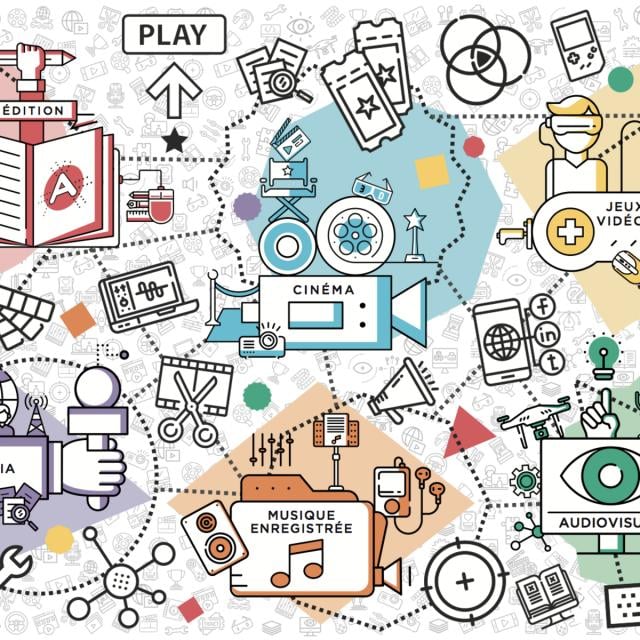
Main objective of this course is to trace the development of the Cultural and Creative Industries as an idea and as concept and to identify the key points of changes within it in relations with contemporary digital connected world. Another important task of this course is to provide the deep understanding of the difference between cultural and symbolic meaning products (such as films, recorded music, book and periodicals, online media content etc) and other kind of goods.

Class Deals by MOOC List - Click here and see Coursera's Active Discounts, Deals, and Promo Codes.

This course will help you to:

  • Identify main peculiarities of cultural and symbolic goods in their difference with other branches of economy in terms of production chain, risks, relationship between different stages of production.
  • Be able to analyze cultural products and symbolic goods from the organizational, economic, business model point of view.
  • Be able to invent new business models and analyze cultural products in terms of their productions risk.
  • Be able to analyze cultural policies and creative industries/clusters policies.

Main prerequisite to this course is to be able to produce analytical texts in humanities. Normally the course addresses all students of master level interested in peculiarities of media and cultural economy and management. This course is strongly not recommended for those who:

  • Analyse any market or industry only in microeconomic terms (supply and demand, level of competitions etc). This course is not about market but about peculiarities of symbolic goods;
  • Try to interpret culture only in terms of marketing and management (i.e. culture is considered like a simple good to be sold to the consumer). This course considers it more broadly like a human agency to produce meanings of everyday life. That’s why cultural goods are different and can not be interpreted exclusively in terms of consuming and need more or less state support;
  • Try to interpret culture like pure “art” and consequently are absolutely not preoccupied by organizational aspect of its working.

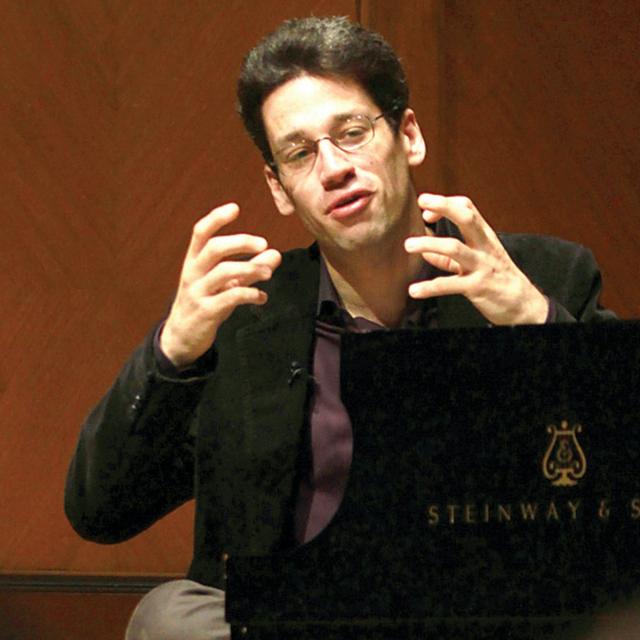
This course uses a large number of concepts coming from different fields of science: political economy of communications, cultural studies, sociology etc. Some aspects of the course are commented by known scholars in this field such as David Hesmondhalgh (University of Leeds), Phillipe Bouquillion (University Paris 13 Nord), Bernard Miege (Grenoble Alpes University).

Syllabus

Week 1
Theory of cultural industries
This module gives an overview of main theories of cultural industries. We'll also talk about theories of creative industries and notion of creativity in general. You will get “research optics” to analyze cultural goods.

Week 2
Main principles of classic cultural industries
We'll talk about peculiarities of cultural goods, models of their commercialization and risks of their production. You will also learn relationships between different actors of cultural production.

Week 3
History of reproducibility in media
During this week we'll consider historical context of industrialization of culture. In particular, industrialization of print media, audiovisual media and immaterial media will be studied.

Week 4
Evolution of cultural industries in digital age
During this week we'll learn transformations of cultural industries after digital revolution. We'll touch upon changes in business models, platforms and general logics shaping cultural industries in digital era.

Week 5
Concentration in the field of cultural industries
This week concerns concentration in cultural industries. We'll talk about the meaning of concentration processes for cultural industries. Also we'll trace the main changes in large media and cultural conglomerates.

Week 6
Creative industries and cultural industries
Theoretical concepts of creative industries will be covered during this week. We'll also operationalize such terms as creative class, creative economy and creative work. Some worrds will be said about different approaches to creative policy.

Week 7
Education as creative industry
Theories of creative industries will be applied for analysis of education. Using the concept of creativity we'll explore new forms of education in universities.

Week 8
Policies in the field of creative and cultural industries
During this week we'll talk about different approaches to policies in cultural and creative industries. You will learn main principles of regulation in such industries.
Go to Class
MOOC List is learner-supported. When you buy through links on our site, we may earn an affiliate commission.

Related Courses

The Kennedy Half Century (Coursera) Coursera
University of Virginia

The Kennedy Half Century (Coursera)

When John F. Kennedy entered the presidential limousine at Love Field in Dallas, Texas on November 22, 1963, he began his ride into history. That journey continues even today and we call it the Kennedy legacy. This course will explore the Presidency, assassination, and lasting legacy of President John F. Kennedy. Students will learn how JFK’s life, administration, and tragic death have influenced the general public, the media, and each of the nine U.S. presidents who followed.

May 25th 2026
4 Weeks
America Through Foreign Eyes (Coursera) Coursera
Rice University

America Through Foreign Eyes (Coursera)

The United States has always been a source of fascination — both attraction and repulsion — for the people of France, Mexico, China, and African countries such as Nigeria, Ghana, and Sudan. "America Through Foreign Eyes" is a rich, interdisciplinary, international course that features Rice University faculty from a variety of disciplines and area studies. Focused on perceptions of America abroad, the course is a cross between World Cultures and American Studies. The course features five core modules, each covering the perceptions and interactions of particular regions with America, Americans and Americanization.

Jun 1st 2026
5-12 Weeks
The History of Modern Israel – Part I: From an Idea to a State (Coursera) Coursera
Tel Aviv University

The History of Modern Israel – Part I: From an Idea to a State (Coursera)

How did the State of Israel come to be? How is it that an idea, introduced in 19th century Europe, became a reality? And how does that reality prevail in the harsh complexities of the Middle East? Presented by Professor Eyal Naveh, with additional units from Professor Asher Sussers' "The Emergence of the Modern Middle East" course, This course will take you on a journey through the history of Modern Israel. In this 1st part of the course we will explore: How did the 19th century idea of a Jewish state become a reality? So the next time you hear about Israel in the news, you will be informed enough about the history of this area to comprehend the many sides and narratives that interact to shape the complex reality of Israel today.

Jun 1st 2026
3 Weeks
The Ancient Greeks (Coursera) Coursera
Wesleyan University

The Ancient Greeks (Coursera)

This is a survey of ancient Greek history from the Bronze Age to the death of Socrates in 399 BCE. Along with studying the most important events and personalities, we will consider broader issues such as political and cultural values and methods of historical interpretation.

Jun 1st 2026
5-12 Weeks
Race, Gender, and Culture (Coursera) Coursera
University of Colorado Boulder

Race, Gender, and Culture (Coursera)

This course will explore baseball through the lenses of race, gender, and culture. For good and for ill, baseball has been at the forefront of how the United States has dealt with these issues. Does baseball leading the way with desegregation negate that the sport was at the forefront of segregation with its Gentlemen’s Agreements? What is the historical legacy of baseball providing opportunities for women during wartime, in a way that other North American professional sports leagues did not? These are some of the ideas that this course will explore as it shows baseball’s virtues and flaws.

Jun 1st 2026
4 Weeks
The Emergence of the Modern Middle East - Part I (Coursera) Coursera
Tel Aviv University

The Emergence of the Modern Middle East - Part I (Coursera)

This course will review the emergence of the modern Middle East from the fall of the Ottoman Empire, at the end of the First World War to the present. We will discuss the Ottoman legacy in the region and the Western imperial impact on the creation of the Arab state system. The course will review the rise and retreat of Arab nationalism, the problems of internal cohesion of the Arab states, issues of religion and state, and the evolution of Islamist politics. We will also focus on the evolution of the Arab-Israeli conflict and its impact on the region and will conclude with an in depth analysis of the “Arab Spring” by placing these contemporary revolutionary events in their historical context.

Jun 1st 2026
4 Weeks
The Holocaust: The Destruction of European Jewry (Coursera) Coursera
University of California, Santa Cruz

The Holocaust: The Destruction of European Jewry (Coursera)

The Holocaust: The Destruction of European Jewry is an adaptation of an on-campus course that has been co-taught by Murray Baumgarten, Distinguished Professor of English and Comparative Literature (Literature Department), and Peter Kenez, Professor Emeritus (History Department), for over 20 years at UC Santa Cruz. In this course, you will explore the Holocaust from the overlapping perspectives of literature and history—through memoirs, historical documents, poetry, documentary footage, filmic representations, and novels.

Jun 1st 2026
5-12 Weeks
Recovering the Humankind's Past and Saving the Universal Heritage (Coursera) Coursera
Sapienza University of Rome

Recovering the Humankind's Past and Saving the Universal Heritage (Coursera)

Archaeology has as its objective the recovery and revival of humankind past, and as its aim the rescue and preservation of cultural heritage. Archaeology is, among human sciences, the discipline with the strongest importance for the rediscovery, but also for the preservation and protection of cultural heritage, as Humankind’s universal patrimony. You will be introduced to the way we ourselves reflect on and are engaged with the study of human past: from the practical and material recovery of ancient traces in the field to the study and interpretation. On the other hand, the discovery of human past implies the correct conservation and presentation for both experts and general public: the study and protection of the past we share every day prevent from any possible destruction, misuse, abuse and thus cancellation of human memory.

Jun 1st 2026
5-12 Weeks
The Holocaust - An Introduction (I): Nazi Germany: Ideology, The Jews and the World (Coursera) Coursera
Tel Aviv University,Yad Vashem

The Holocaust - An Introduction (I): Nazi Germany: Ideology, The Jews and the World (Coursera)

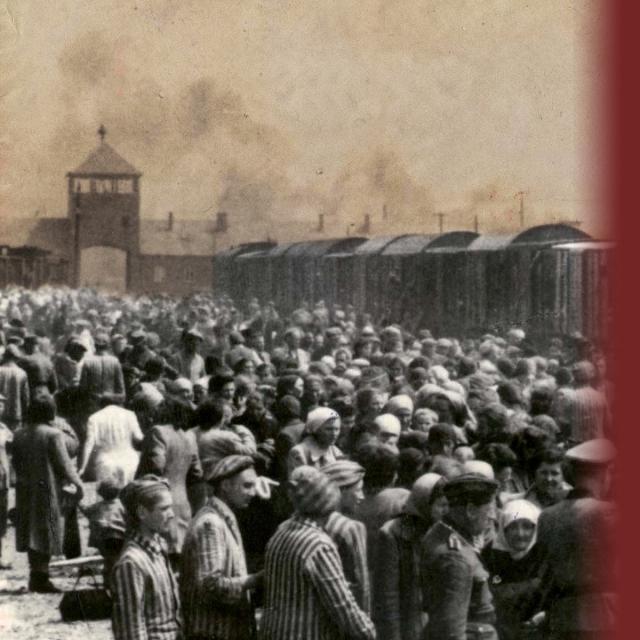
The Holocaust was an inconceivable historical event, which forever robbed Western culture of its innocence. As civilized human beings, we fail to understand how events of such horror could have taken place, and how an idea so inhumanly warped could have spread like wildfire through an entire continent, instigating the systematic annihilation of millions of Jews. This free online course was produced jointly by Tel Aviv University and Yad Vashem – the World Holocaust Remembrance Center. The course tracks the history of the Holocaust and has two parts.

Jun 1st 2026
3 Weeks
Leading Innovation in Arts and Culture (Coursera) Coursera
Vanderbilt University,National Arts Strategies - NAS

Leading Innovation in Arts and Culture (Coursera)

Developed by David Owens at Vanderbilt University and customized for the cultural sector with National Arts Strategies, this course will help arts and culture leaders create an environment where new ideas are constantly created, shared, evaluated and the best ones are successfully put to work. One of the toughest challenges for any leader is getting traction for new ideas. Winning support can be a struggle. As a result, powerful new ideas often get stuck. This is especially true in the cultural sector. People involved in arts and culture often have little time and even less money for experimentation and risks. This course will help those in the performing arts, museums, zoos, libraries and other cultural organizations build environments where new management and program ideas flourish.

Jun 1st 2026
5-12 Weeks
The Talmud: A Methodological Introduction (Coursera) Coursera
Northwestern University

The Talmud: A Methodological Introduction (Coursera)

The Talmud is one of the richest and most complicated works of literature the world has ever known. Since being composed around 1500 years ago it has inspired not only religious reverence but significant intellectual engagement. In this course learners will be introduced to the unique characteristics of this text and the challenges that inhere in studying it while studying a chapter of the Talmud.

Jun 1st 2026
5-12 Weeks