Terrorism and Counterterrorism: Comparing Theory and Practice (Coursera)

Offered by Leiden University,
Terrorism and Counterterrorism: Comparing Theory and Practice (Coursera)

Terrorism has arguably been one of the defining factors of our age. It frequently makes headlines, threatening or attacking governments, private business and ordinary citizens. And in many parts of the world, it has been one of the most important threats to peace, security and stability. But what does this exactly mean? What is the nature of this threat? Who or what is threatened, how, by whom and why? What can be done about it or how can we at least limit the impact of terrorism and make sure that terrorists do not make headlines and manage to scare us? These are just a handful of questions that will be addressed in this course that consists of three parts.

Class Deals by MOOC List - Click here and see Coursera's Active Discounts, Deals, and Promo Codes.

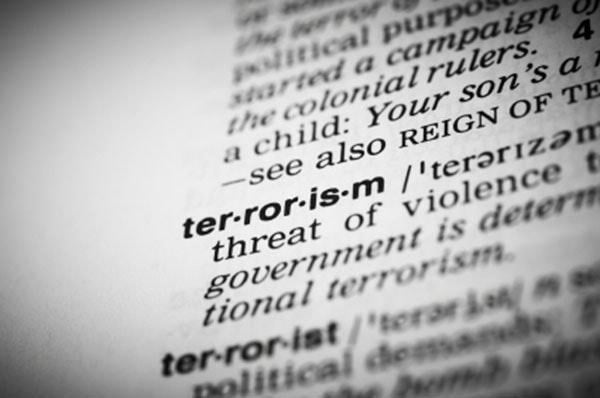
First it focuses on the essence of terrorism as an instrument to achieve certain goals, in addition to an exploration of this phenomenon and the difficulties in defining it.
The second part provides an overview of the state of the art in (counter) terrorism studies. Since ‘9/11’ terrorism studies have grown exponentially, reflecting the rise in perceived threats. But what has academia come up with? What theories, assumptions and conventional wisdom has it produced that could be of help in understanding terrorism and dealing with it? The most interesting results are examined and compared with empirical evidence with the aim to either stress their importance or to debunk them as myths.
The final part looks into the implications and possibilities for policy making. The course ends with a module specifically designed to address one of today's most topical issue: the foreign fighter phenomenon.

Syllabus

WEEK 1
Welcome & the essence of terrorism
In this module, you can find all the information you need in order to be able to successfully complete the course.
After you have familiarised yourself with the course, we move to the content of week 1. You will learn about the definition of terrorism. What exactly is terrorism? Who and where are its victims? After completing this module, you will understand why it is so difficult to arrive at a generally accepted definition of this term.

WEEK 2
Researching Terrorism and Counterterrorism
In this module, you will learn more about terrorism and counterterrorism studies. It is a relatively new field of study that owes much to research in related disciplines. You will get an overview of where the key centres and scholars are located. Also, you will understand the three main approaches that are used in this academic field and recognize their strengths and weaknesses.

WEEK 3
5 Assumptions on Terrorism
The subject of terrorism often falls prey to unfounded assumptions. Media, politicians, but also scholars frequently make far-reaching claims about this topic, such as the notion that terrorism is caused by poverty. In this module, we will critically investigate some of these assumptions to see if they are indeed true, partly true, false or perhaps even a myth (a widely held belief that is nevertheless still false).

WEEK 4
5 Assumptions on Counterterrorism
In this module, we will continue the work of module 3 and look into five assumptions on counterterrorism. It is highly relevant to keep investigating assumptions that underlie CT-policy, both from an effectiveness perspective (is it really countering terrorism?) but also because these policies often have a large impact on societies and might also have unintended consequences.

WEEK 5
Dealing with Terrorism and the Future
After having tested these assumptions, we will make up the balance sheet. What are some of the remaining “un- and underresearched” topics in (counter)terrorism studies? We will also explore the concepts of fear management and resilience. Finally, we will look into the future of terrorism: what can we expect in the years to come?

WEEK 6
Making Headlines Today - Foreign Fighters
The final module of this course will look into a highly topical and politically sensitive issue of today: foreign fighters. Since the beginning of the civil war, high numbers of foreign fighters have joined the struggle, including many from Western countries. In this module, we will see who these people are and why they are going. Also, we will discuss to what extent these fighters pose a threat and which policy options are available to address this phenomenon.

Go to Class
MOOC List is learner-supported. When you buy through links on our site, we may earn an affiliate commission.

Related Courses

Earth Economics (Coursera) Coursera
Erasmus University Rotterdam

Earth Economics (Coursera)

After this course you will be an Earth Economist that can provide evidence-based advise on the best global policy. As an Earth Economist you will better understand the behavior and advice of economists, have become a better economist yourself and know where to find Earth's data and how to analyze these world observations. Our planet is too important: we need you to get engaged!

Aug 17th 2026
5-12 Weeks
Magic in the Middle Ages (Coursera) Coursera
University of Barcelona

Magic in the Middle Ages (Coursera)

Magical thought has always attracted human imagination. In this course we will introduce you to the Middle Ages through a wide conception of magic. Students will have an approach to medieval culture, beliefs and practices from the perspective of History and History of Science. Popular magic, as well as learned magic (alchemy, geomancy and necromancy) will be addressed. Moreover, we will also deal with how eastern practices and texts influenced western culture. In July 2016, the course will contain a brand-new module devoted to astrology. Magic in the Middle Ages offers a captivating overview of medieval society and promotes reflection about certain stereotypes associated with this period.

Aug 17th 2026
5-12 Weeks
Web Connectivity and Security in Embedded Systems (Coursera) Coursera
EIT Digital

Web Connectivity and Security in Embedded Systems (Coursera)

In this course, we will explore several technologies that bring modern devices together, facilitating a network of connected things and making devices internet enabled. We will discuss rules, protocols, and standards for these devices to communicate with each other in the network. We will also go through security and privacy issues and challenges in cyber physical systems (CPS). We will explore measures and techniques for securing systems from different perspectives. Possible attack models are introduced and solutions to tackle such attacks are discussed. Moreover, some basic concepts related to privacy in cyber physical systems are presented.

Aug 17th 2026
5-12 Weeks
Usable Security (Coursera) Coursera
University of Maryland, College Park

Usable Security (Coursera)

This course focuses on how to design and build secure systems with a human-centric focus. We will look at basic principles of human-computer interaction, and apply these insights to the design of secure systems with the goal of developing security measures that respect human performance and their goals within a system.

Aug 10th 2026
5-12 Weeks
Cybersecurity Job Search and Interviews: Getting Started (Coursera) Coursera
University System of Georgia

Cybersecurity Job Search and Interviews: Getting Started (Coursera)

Are you planning to have a career in cybersecurity? This course can help you plan your preparation for such a career as well as give some advice on finding positions and landing a position. What you will learn: the process and resources for finding the perfect cybersecurity job; the cybersecurity professional’s role in an organization’s cybersecurity effort; the knowledge preparation for the cybersecurity professional from an education versus training perspective.

Aug 17th 2026
5-12 Weeks
Søren Kierkegaard - Subjectivity, Irony and the Crisis of Modernity (Coursera) Coursera
University of Copenhagen

Søren Kierkegaard - Subjectivity, Irony and the Crisis of Modernity (Coursera)

In this course created by former associate professor at the Søren Kierkegaard Research Centre, Jon Stewart, we will explore how Kierkegaard deals with the problems associated with relativism, the lack of meaning and the undermining of religious faith that are typical of modern life. His penetrating analyses are still highly relevant today and have been seen as insightful for the leading figures of Existentialism, Post-Structuralism and Post-Modernism.

Aug 17th 2026
5-12 Weeks
Introduction to Applied Cryptography (Coursera) Coursera
University of London

Introduction to Applied Cryptography (Coursera)

This course is a non-mathematical introduction to the role that cryptography plays in providing digital security for everyday applications such as the internet, mobile phones, wireless networks and cryptocurrency. In this introductory course you will develop an understanding of the functionality and purpose of the main cryptographic tools we use today. You will learn how to make decisions about which cryptographic tools are most appropriate to deploy in specific settings. You will also explore the wider infrastructure surrounding cryptography and how this impacts the overall security of systems deploying cryptography.

Aug 17th 2026
4 Weeks
The History of Modern Israel - Part II: Challenges of Israel as a sovereign state (Coursera) Coursera
Tel Aviv University

The History of Modern Israel - Part II: Challenges of Israel as a sovereign state (Coursera)

This course deals with the Israeli politics, economy, society and culture, since its creation in 1948 till today. It analyzes the construction of the Israeli historical narrative as an identity-building narrative, intending to inculcate a collective memory to a diverse society. We will focus on key events and essential components that shaped the Israeli society from the fifties till the present. We will also discuss the changes that the Israeli society experiences in its almost seventy years of existence and how it affects its politics and culture.

Aug 17th 2026
5-12 Weeks
SQL for Security Specialist (Coursera) Coursera
Codio

SQL for Security Specialist (Coursera)

This course is designed specifically for SQL Security Specialists with a focus on PostgreSQL. It assumes a solid foundation in SQL and guides learners through advanced topics specific to PostgreSQL. You'll explore crucial concepts, such as complex queries, performance optimization, and database administration tasks unique to PostgreSQL.

Aug 17th 2026
3 Weeks
Tencent Cloud Solutions Architect Associate (Coursera) Coursera
Tencent Cloud

Tencent Cloud Solutions Architect Associate (Coursera)

This course is primarily aimed at cloud professionals that are interested in learning about Tencent Cloud‘s cloud architectures. The course equips learners with a foundational knowledge in cloud architecture design and prepares them to take the Tencent Cloud Solutions Architect Associate examination. After completing this course, learners will be able to design cloud solutions that incorporate the principles of high availability, high security, high scalability, and cost optimization.

Aug 17th 2026
5-12 Weeks
What Is Contemporary Art? (Coursera) Coursera
The Museum of Modern Art

What Is Contemporary Art? (Coursera)

What is contemporary art? In this course, you’ll consider this question through more than 70 works of art made between 1980 and the present, with a focus on art from the past decade. You’ll hear directly from artists, architects, and designers from around the globe about their creative processes, materials, and inspiration.

Aug 17th 2026
5-12 Weeks
The Modern and the Postmodern (Part 2) (Coursera) Coursera
Wesleyan University

The Modern and the Postmodern (Part 2) (Coursera)

This course examines how the idea of "the modern" develops at the end of the 18th century in European philosophy and literature, and how being modern (or progressive, or hip) became one of the crucial criteria for understanding and evaluating cultural change. Are we still in modernity, or have we moved beyond the modern to the postmodern?

Aug 10th 2026
5-12 Weeks