Understanding Korean Politics (Coursera)

Offered by Yonsei University,
Understanding Korean Politics (Coursera)

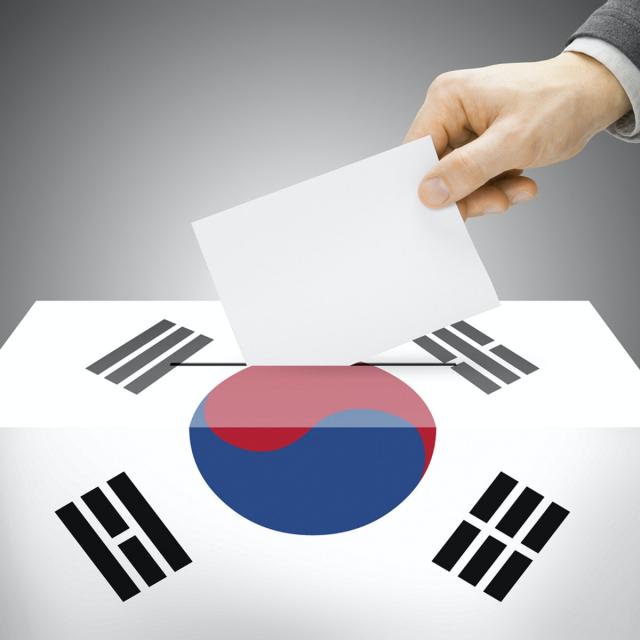
This course will select six most outstanding issues in contemporary Korean politics and will engage in an in-depth, interactive inquiry of those issue. They include Korean politics in history, institutional setting of Korean politics, and dynamics of political culture in Korea, profiles of political leadership, myth and reality of the developmental state and the Korean economic miracle, and debates on Korean unification. The course will expose students to contending theories and empirical reality at first hand.

Class Deals by MOOC List - Click here and see Coursera's Active Discounts, Deals, and Promo Codes.

After completing this course, learners will be able to

  1. Grasp the most salient and timely aspects of Korean politics..
  2. Place South Korean politics in comparative perspectives.
  3. Digest a delicate mix of theory and practice regarding Korean politics.
  4. Come up with new interpretations of political development in South Korea.
  5. Most importantly renew their genuine interests in Korea and Korean politics.

Syllabus

Week 1
Korean Politics in Historical Perspective
During Week 1, leaners will have an overview of Korean Politics which includes past history, the presidents and the main historical events during the 1st to the 6th Republic, and the democratic transition in 1987. The first week will help learners develop a fundamental understanding of the historical development of Korean Politics and lead leaners to think what makes Korean Politics new and interesting.

Week 2
Dynamics of Democratic Transition in South Korea: Structure, Culture, and Leadership Choice
Week 2 will first summarizes the four legacies of South Korea’s politics from 1948 to 1987 and introduce the major concepts and models of democratic transition. Second, it will give a clear and detailed explanation about South Korea’s democratic transition which includes the transition dynamics, the determinants of democratic transition and the democratic consolidation.

Week 3
Political Institutions in South Korea
Week 3 will start with the explanation of institution including its concept, types and major issues. In the second part, the lecture will expound South Korea’s constitutional foundation and its evolution, focusing on its nine constitutional amendments. Then it will talk about the structure and features of South Korean government, also it will briefly introduce South Korea’s presidential system which will be further explained in next week.

Week 4
Profiles of political leadership
Week 4 will mainly talk about the political leadership. The lecture will first give the definition, types and evaluation criteria of political leadership. Then it will evaluate President Rhee Syngman, Park Chung-hee and Kim Dae-jung by using the criteria given in the first part and lead leaners to discuss the unique pattern of South Korean leadership.

Week 5
The Developmental State and the Korean Economic Miracle
Week 5 will give leaners a very clear explanation of South Korean economic development, including its original conditions, economic take-off and economic crisis. Then the lecture will talk about the limits of developmental state and lead leaners to discuss about the future of South Korean economy.

Week 6
Debates on Korean Unification
The main topic of week 6 is Korean unification. The lecture will start with explanation of inter-Korean relationship to help learners form a better understanding towards Korean unification. Then it will expound and evaluate the Sunshine policy. And the last part will have learners discuss about the future of Inter-Korean relations and unification.

Go to Class
MOOC List is learner-supported. When you buy through links on our site, we may earn an affiliate commission.

Related Courses

Women in Leadership: Inspiring Positive Change (Coursera) Coursera
Case Western Reserve University

Women in Leadership: Inspiring Positive Change (Coursera)

This course aims to inspire and empower women and men across the world to engage in purposeful career development and take on leadership for important causes - to lead change with more conviction and confidence - and improve our workplaces and communities for all. By offering more complex understandings of issues related to professional women and work, the course will help you increase self-knowledge about your own values and vision, as well as enhance your capabilities as a leader, manager, and team contributor. We will examine the opportunities, challenges, trade-offs, and organizational dynamics experienced by women in work organizations, as well as reflect on and practice effective individual behaviors.

Oct 5th 2026
5-12 Weeks
First Step Korean (Coursera) Coursera
Yonsei University

First Step Korean (Coursera)

This is an elementary-level Korean language course, consisting of 5 lessons with 4 units, and covers 4 skills: reading, writing, listening and speaking. The main topics include basic expressions used in everyday life, such as greetings, introducing yourself, talking about your family and a daily life and so on. Each lesson covers dialogues, pronunciation, vocabulary, grammar, quizzes and role-plays.

Oct 5th 2026
5-12 Weeks
L'innovation managériale en pratique (Coursera) Coursera
ESSEC Business School

L'innovation managériale en pratique (Coursera)

Hackathon, design thinking, codev, open innovation, co design, sociocratie, adhocratie, intelligence collective, shadow cabinet, atelier participatifs, entreprise libérante sont autant de dispositifs et pratiques qui illustrent les nouvelles manières de manager et de penser les fonctionnements collaboratifs des organisations.

Oct 5th 2026
3 Weeks
Hiring Practices (Coursera) Coursera
University of California, Irvine

Hiring Practices (Coursera)

Welcome to Hiring Practices. In this course, you will learn how to develop a strategic plan to attract, recruit and retain employees at every level, from those just entering the workforce through those at the executive level. We will explore each step of the recruitment, selection, and onboarding process, providing a thorough explanation of the uniqueness of the step and its fit and importance within the entire talent lifecycle. Special attention is paid to diversity and inclusion as it relates to each of these steps and how we can successfully harness these most valued practices.

Oct 5th 2026
4 Weeks
The Cycle: Management of Successful Arts and Cultural Organizations (Coursera) Coursera
University of Maryland, College Park

The Cycle: Management of Successful Arts and Cultural Organizations (Coursera)

What makes a successful arts and cultural organization? Led by DeVos Institute Chairman Michael M. Kaiser and President Brett Egan, this course will introduce you to a management theory called the Cycle which supports thriving arts and cultural organizations. Learning from our work with managers from over 80 countries around the world, the DeVos Institute developed the Cycle as a simple, but powerful tool to assist managers in their effort to respond to an increasingly complex environment and propel their institutions to excellence.

Oct 5th 2026
5-12 Weeks
Negotiation Fundamentals (Coursera) Coursera
ESSEC Business School

Negotiation Fundamentals (Coursera)

This course gives you access to negotiation practical tools and best practices gathered by Professor Aurélien Colson & his team from assignments in more than seventy countries and in a wide set of sectors, be they services, industry, high tech, or public organizations. In an interactive manner, this course will help you, among other topics: get prepared for any negotiation; avoid traps; know how to prompt value-creating partnerships; structure an effective negotiation sequence; bargain in an efficient and respectful manner; overcome deadlocks; and much more!

Oct 5th 2026
4 Weeks
Business Implications of AI: A Nano-course (Coursera) Coursera
EIT Digital

Business Implications of AI: A Nano-course (Coursera)

In this course you will learn what Artificial Intelligence is, from a leaders point of view. How shall we, as leaders, understand it from a corporate strategy point of view? What is it and how can it be used? What are the crucial strategic decisions we have to make, and how to make them? What consequences can we expect if we decide on doing AI-projects and what kind of competences do we need? Where shall we start, and what could be a good second as well as third step? What implications for the organization can we expect? These are the questions answered in this course.

Oct 5th 2026
4 Weeks
In Search for the Origins of Korean Philosophy (Coursera) Coursera
Sungkyunkwan University - SKKU

In Search for the Origins of Korean Philosophy (Coursera)

This course will give you an insight into the formative years of “Korean” culture and thought and uncover together who were the earliest people we could describe as being “Korean.” Korea is unique, but not of a single origin. Through this course, you will rediscover “Korea” today as a unique linguistic-cultural continuum. And from this, you may gain a deeper understanding of yourself by acknowledging the various factors that have influenced you to form your mature identity.

Oct 5th 2026
5-12 Weeks
Organizational Analysis (Coursera) Coursera
Stanford University

Organizational Analysis (Coursera)

In this introductory, self-paced course, you will learn multiple theories of organizational behavior and apply them to actual cases of organizational change. Organizations are groups whose members coordinate their behaviors in order to accomplish a shared goal. They can be found nearly everywhere in today’s society: universities, start-ups, classrooms, hospitals, non-profits, government bureaus, corporations, restaurants, grocery stores, and professional associations are some of many examples of organizations.

Sep 28th 2026
5-12 Weeks
Liderazgo para el Siglo XXI: proyecto final (Coursera) Coursera
Universidad de los Andes

Liderazgo para el Siglo XXI: proyecto final (Coursera)

Este curso está diseñado para acompañarte en seleccionar un desafío personal de liderazgo y aplicar herramientas con las cuales realizarás experimentos y evaluarás el ciclo de diagnóstico y acción en tu tema. Asimismo, serás consiente de cómo en el proceso, el fracaso y la resiliencia te ayudarán a avanzar en tus restos de liderazgo. Al finalizar este curso estarás en capacidad de: Utilizar herramientas de diagnóstico y acción para avanzar en un proyecto de liderazgo propio; Practicar y profundizar el uso de narrativas y otras herramientas de comunicación (con uno mismo y con otros) para fortalecer el ejercicio personal de liderazgo; Desarrollar resiliencia, una habilidad que permite perseverar en proyectos de liderazgo.

Oct 5th 2026
4 Weeks