In Search for the Origins of Korean Philosophy (Coursera)

In Search for the Origins of Korean Philosophy (Coursera)

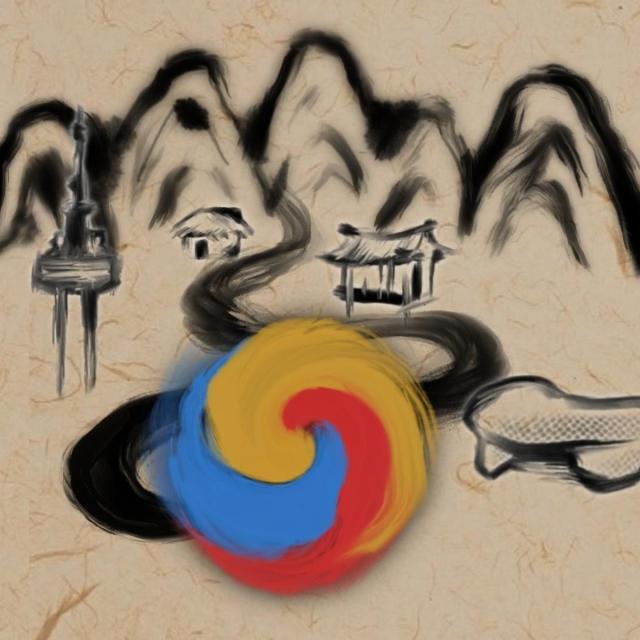
This course will give you an insight into the formative years of “Korean” culture and thought and uncover together who were the earliest people we could describe as being “Korean.” Korea is unique, but not of a single origin. Through this course, you will rediscover “Korea” today as a unique linguistic-cultural continuum. And from this, you may gain a deeper understanding of yourself by acknowledging the various factors that have influenced you to form your mature identity.

Class Deals by MOOC List - Click here and see Coursera's Active Discounts, Deals, and Promo Codes.

What You Will Learn

  • Understand the terms ‘Name, Language, and Religion’ in the context of Korean identity
  • Have a solid understanding of previous names of Korea
  • Have a basic understanding of the early written language Koreans used (prior to Hangeul) and spoken Korean language
  • Be able to recognize the harmonious co-existence of Confucianism and Buddhism in Korea

Syllabus

WEEK 1
Philosophizing through Primary Sources
This week, we will learn about the earliest written sources describing Koreans and through reading between the lines we glean insight into what those texts imply. We will also learn about ‘name, language, and religion’, and the importance of those terms in constructing an identity.

WEEK 2
Korean Identity through the Names Called by Others
This week, we go more in depth about the importance of names. These names could be self-referential or a name someone else calls you and each hold meaning and implications that both aid in forming an identity.

WEEK 3
Korean Language and Korean Thought
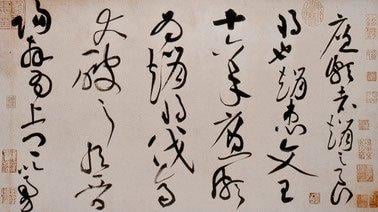
This week, we go into detail about the intriguing difference between the early written language Koreans used (prior to Hangeul) and spoken Korean language. The gap between these two modes of communication as well as the gap between Hanja (Korea's version of Chinese Characters) and Classical Chinese is lectured on in detail.

WEEK 4
Before Confucianism and Buddhism Introduced
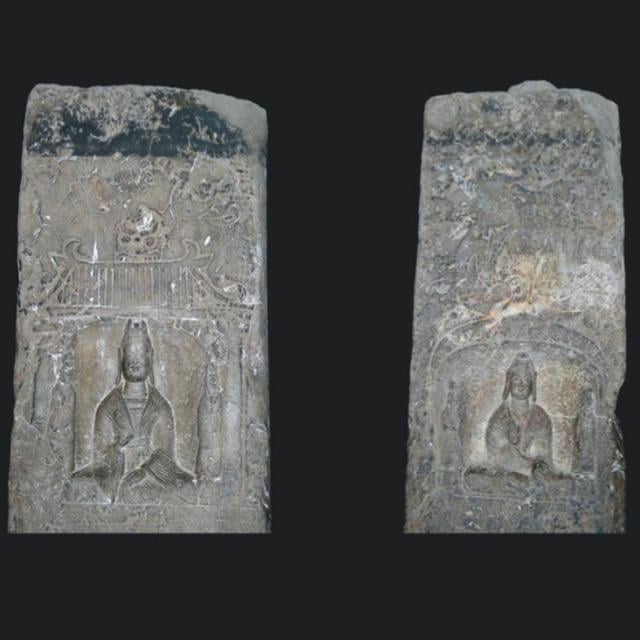
This week, we will explore ancient Korean religion and culture prior to the entrance of the Three Teachings (Confucianism, Buddhism, and Daoism). To do so we will look at myths, archeology, and keep in mind Chinese records which discuss Korean culture and religion.

WEEK 5
Confucianism and Buddhism Introduced into Korea
This week, keeping in mind the foundation of the prior weeks we will study how Korean thought and culture changed after accepting the Three Teachings. We will place special interest on how these teachings were transformed over time by Koreans into what we can call today ‘Korean Confucianism’ and ‘Korean Buddhism’.

WEEK 6
Development of Korean Spirituality through Buddhism
This week, we learn and think about how the history covered in this course shaped and was shaped by Korean culture. We will place special interest on buddhist contributions to Korean spirituality and the intellectual landscape of Korea.

Go to Class
MOOC List is learner-supported. When you buy through links on our site, we may earn an affiliate commission.

Related Courses

Understanding Korean Politics (Coursera) Coursera
Yonsei University

Understanding Korean Politics (Coursera)

This course will select six most outstanding issues in contemporary Korean politics and will engage in an in-depth, interactive inquiry of those issue. They include Korean politics in history, institutional setting of Korean politics, and dynamics of political culture in Korea, profiles of political leadership, myth and reality of the developmental state and the Korean economic miracle, and debates on Korean unification. The course will expose students to contending theories and empirical reality at first hand.

Aug 3rd 2026
5-12 Weeks
Learn to Speak Korean 1 (Coursera) Coursera
Yonsei University

Learn to Speak Korean 1 (Coursera)

Welcome to Learn to Speak Korean 1! This course is for beginner students who are familiar with the Korean alphabet, Hangeul. Through this course students will learn the skills essential for daily interactions with Koreans while living in Korea. This course consists of six modules, and each module is composed of five units.

Jul 27th 2026
5-12 Weeks
Why Religion Matters: Religious Literacy, Culture and Diversity (FutureLearn) FutureLearn
The Open University

Why Religion Matters: Religious Literacy, Culture and Diversity (FutureLearn)

Discover why religion is important for understanding and engaging with global challenges. Consider the ways religion affects personal and political decision-making. Religion not only influences personal behaviours and ethics, but it’s also relevant to international conflicts and domestic policy decisions. On this course, you will gain a broader understanding of why religion matters in society and in different cultures.

Self Paced
4 Weeks
The Rise of K-Culture: Discover the Korean Wave (Hallyu) (FutureLearn) FutureLearn
Hanyang University

The Rise of K-Culture: Discover the Korean Wave (Hallyu) (FutureLearn)

Discover the South Korean food, music, and entertainment trends taking the world by storm to become an expert in K-Culture. On this six-week course from Hanyang University, you’ll explore the historical and cultural origins of the Korean Wave. Through a blend of case studies, weekly readings, and in-class screenings, you’ll delve into the vibrant world of K-Culture.

Self Paced
5-12 Weeks
Culture and Law: The East Asian Perspective (edX) EdX
Waseda University,WasedaX

Culture and Law: The East Asian Perspective (edX)

Explore legal cultures in East Asia, Confucianism, apology, and Legal Orientalism. In most Western cultures, personal identification is based on the individual, whereas in East Asia, the family registry system has been used to identify individuals. “Confucianism” is one of the common ethical values in East Asia. Confucian values place much emphasis on an individual’s moral obligation to family members.

Self Paced
Self-Paced
Buddhism Through Its Scriptures (edX) EdX
HarvardX,Harvard University

Buddhism Through Its Scriptures (edX)

Learn about the rich and diverse beliefs and practices of Buddhists across time and place. Experience Buddhism through its scriptures, both relationally as well as academically. Whether you are new to the study of Buddhism or have been studying it or practicing it for years, this course will provide you with the opportunity to become acquainted with a variety of Buddhist teachings while guiding you to think about them, and yourself, in new ways.

Self Paced
Self-Paced
Buddhism and Modern Psychology (Coursera) Coursera
Princeton University

Buddhism and Modern Psychology (Coursera)

The Dalai Lama has said that Buddhism and science are deeply compatible and has encouraged Western scholars to critically examine both the meditative practice and Buddhist ideas about the human mind. A number of scientists and philosophers have taken up this challenge. There have been brain scans of meditators and philosophical examinations of Buddhist doctrines. There have even been discussions of Darwin and the Buddha: Do early Buddhist descriptions of the mind, and of the human condition, make particular sense in light of evolutionary psychology?

Aug 1st 2022
5-12 Weeks
East Asian Religions & Ecology (Coursera) Coursera
Yale University

East Asian Religions & Ecology (Coursera)

At first glance the fields of religion and ecology may seem and unlikely pairing, but a deeper consideration reveals the two have a great deal to contribute to one another and are indeed inextricably linked. Religions recognize the unity and interdependence of humans with nature. Ecological sciences affirm this deep interconnection with the natural world. This partnership can inspire work for the wellbeing of the Earth community

Jul 20th 2026
5-12 Weeks
The Korean Alphabet: An Introduction to Hangeul (Coursera) Coursera
Sungkyunkwan University - SKKU

The Korean Alphabet: An Introduction to Hangeul (Coursera)

This course introduces Korean characters,'Hangeul', and provides high-level knowledge related to Hangeul. In this course, the background of 'Hangul' is created, who made the Hangeul, and according to what principle it is systematically explained. It also introduces anecdotes related to Korean tourist destinations related to Hangeul and teaches how to write Hangeul. Learners can increase their understanding of Korea, learn Hangeul accurately, and cultivate high-level knowledge of Hangeul.

Jun 24th 2026
4 Weeks
Korean for Beginners 1 (Coursera) Coursera
Saint Petersburg State University

Korean for Beginners 1 (Coursera)

Modern South Korea is a country where you can see how the distinct culture and highly developed technologies, traditional and modern architecture, old traditions and elements of globalisation are intertwined in an amazing way. More and more young people are enjoying TV-dramas, K-pop music, movies and learning about modern life of Koreans and their traditions.

Aug 8th 2022
4 Weeks
Disaster Risk Management and Korean Policies (Coursera) Coursera
Yonsei University

Disaster Risk Management and Korean Policies (Coursera)

In the past, developing countries such as Korea lacked guidelines for exploring effective policies for disaster-resilient growth, resulting in unnecessary sacrifices in terms of time, resources, and human capital. Through the lessons learned by Korea, currently developing countries facing socio-economic development can build disaster resilience without sacrifices.

Aug 3rd 2026
5-12 Weeks
Korean for Beginners: Step 4 (Coursera) Coursera
Saint Petersburg State University

Korean for Beginners: Step 4 (Coursera)

This is the final course in the specialisation on the Korean language by St. Petersburg State University. We are delighted to welcome our learners on the final part of this wonderful journey. In this course learners are going to continue strengthening their vocabulary and grammar background, as well as enriching it with the new words and constructions.

May 9th 2022
4 Weeks