Climate Change and Health (iversity)

Climate Change and Health (iversity)

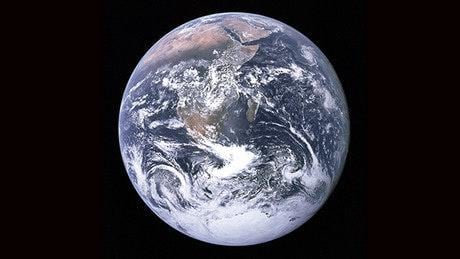
IPPC authors & experts from 10 countries answer the following questions: Which diseases will increase? Which populations are vulnerable? What can the world do to limit the impact of climate change on health? What policies are needed?

Climate change is currently at the center of the world’s attention, with delegations from more than 190 countries meeting in Paris for the COP21 to negotiate an agreement how to reduce greenhouse gas emissions to keep global warming under 2°C.
There are not many world citizens who do not have their children’s and their own health as a top priority. So why is health not more prominent topic in the debate on climate change and its impacts? We hear a lot about polar bears and smokestacks in the media, but very little on the many and the large health impacts of climate change. With this MOOC, we want to provide state-of-the art evidence of the link between climate change and the health of populations.

Go to Class
MOOC List is learner-supported. When you buy through links on our site, we may earn an affiliate commission.

Related Courses

Medical Neuroscience (Coursera) Coursera
Duke University

Medical Neuroscience (Coursera)

Medical Neuroscience explores the functional organization and neurophysiology of the human central nervous system, while providing a neurobiological framework for understanding human behavior. In this course, you will discover the organization of the neural systems in the brain and spinal cord that mediate sensation, motivate bodily action, and integrate sensorimotor signals with memory, emotion and related faculties of cognition. The overall goal of this course is to provide the foundation for understanding the impairments of sensation, action and cognition that accompany injury, disease or dysfunction in the central nervous system. The course will build upon knowledge acquired through prior studies of cell and molecular biology, general physiology and human anatomy, as we focus primarily on the central nervous system.

Jun 22nd 2026
13-24 Weeks
HPV-Associated Oral and Throat Cancer: What You Need to Know (Coursera) Coursera
Icahn School of Medicine at Mount Sinai

HPV-Associated Oral and Throat Cancer: What You Need to Know (Coursera)

This course, offered by the Department of Otolaryngology – Head and Neck Surgery at the Icahn School of Medicine at Mount Sinai, is designed to inform primary care physicians and otolaryngologists (general and head and neck surgeons), as well as medical students, residents, nurses, physician assistants, medical assistants, about HPV-associated oral and throat cancers. It is also applicable to individuals who wish to broaden their knowledge and vernacular about this disease process, especially those who may have been diagnosed with HPV and/or HPV-associated oropharyngeal cancers.

Jun 22nd 2026
5-12 Weeks
Epidemics - the Dynamics of Infectious Diseases (Coursera) Coursera
Pennsylvania State University

Epidemics - the Dynamics of Infectious Diseases (Coursera)

Not so long ago, it was almost guaranteed that you would die of an infectious disease. In fact, had you been born just 150 years ago, your chances of dying of an infectious disease before you've reached the tender age of 5 would have been extremely high. Since then, science has come a long way in understanding infectious diseases - what they are, how they spread, and how they can be prevented. But diseases like HIV/AIDS, Malaria, Tuberculosis, or the flu are still major killers worldwide, and novel emerging diseases are a constant threat to public health. In addition, the bugs are evolving. Antibiotics, our most potent weapon against bacterial infections, are losing their power because the bacteria are becoming resistant. In this course, we'll explore the major themes of infectious diseases dynamics.

Jun 22nd 2026
5-12 Weeks
Clinical Kidney, Pancreas and Islet Transplantation (Coursera) Coursera
Leiden University,Leiden University Medical Center

Clinical Kidney, Pancreas and Islet Transplantation (Coursera)

Kidney transplantation is a major advance of modern medicine which provides high-quality of life for patients with end-stage renal disease. What used to be an experimental, risky, and very limited treatment option more than 50 years ago is now routinely performed in many countries worldwide. The number of renal transplants is expected to rise sharply in the next decade since the proportion of patients with end stage renal disease is increasing.

Jun 22nd 2026
4 Weeks
Diabetes - a Global Challenge (Coursera) Coursera
University of Copenhagen

Diabetes - a Global Challenge (Coursera)

Diabetes and obesity are growing health problems in rich and poor countries alike. With this course you will get updated on cutting-edge diabetes and obesity research including biological, genetic and clinical aspects as well as prevention and epidemiology of diabetes and obesity. All lectures are provided by high-profile scientists from one the world's leading universities in diabetes research.

Jun 22nd 2026
5-12 Weeks
Health for All Through Primary Health Care (Coursera) Coursera
Johns Hopkins University

Health for All Through Primary Health Care (Coursera)

This course explores why primary health care is central for achieving Health for All. It provides examples of how primary health care has been instrumental in approaching this goal in selected populations and how the principles of primary health care can guide future policies and actions. Two of the most inspiring, least understood, and most often derided terms in global health discourse are “Health for All” and “Primary Health Care.”

Jun 28th 2026
5-12 Weeks
Primeros Auxilios Psicológicos (PAP) (Coursera) Coursera
Universitat Autònoma de Barcelona

Primeros Auxilios Psicológicos (PAP) (Coursera)

Este curso on-demand (ABIERTO, se puede cursar en cualquier momento), impartido en castellano por la Universidad Autónoma de Barcelona y el Centro de Crisis de Barcelona, está destinado a entrenar en la aplicación de primeros auxilios psicológicos (PAP) a personas afectadas por situaciones altamente estresantes, abarcando tanto emergencias cotidianas (incidentes críticos estadísticamente frecuentes que afectan de manera muy intensa: un accidente de tráfico, una hospitalización, una agresión o la muerte traumática o repentina de una persona, etc.) como emergencias comunitarias y/o masivas (sucesos infrecuentes, que afectan a muchas personas o a una comunidad entera y que sobrepasan con mucho lo que sucede habitualmente en ella: una catástrofe natural, un accidente ferroviario o aéreo o un atentado).

Jun 22nd 2026
5-12 Weeks