Business Considerations for Edge Computing (Linux Foundations)

Offered by Linux Foundation,
Business Considerations for Edge Computing (Linux Foundations)

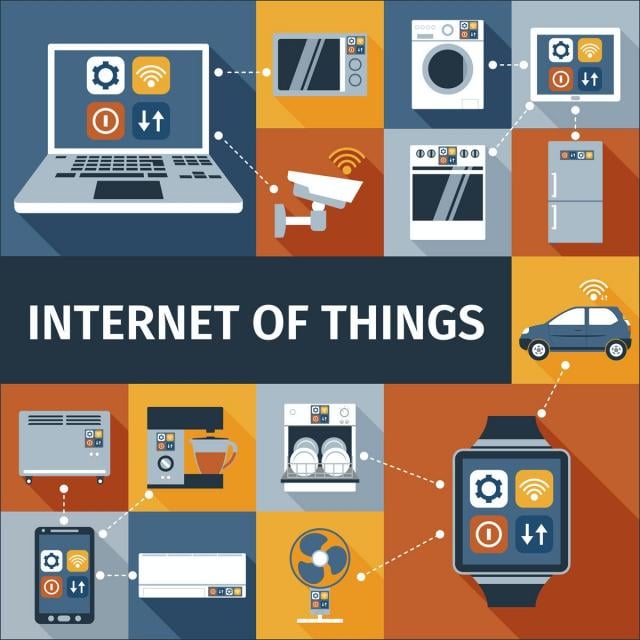
Edge Computing utilizes real-time processing and data analysis at the edge of the network – nearest the device or user – in order to enable digital transformation and power new technologies. From cars that drive themselves to robots that restock the warehouse and sensors that know when it’s time to water or fertilize crops, our world is changing right before our eyes. This is digital transformation and it includes the convergence of 5G, IoT, AI, machine learning and the Edge.

Edge Computing is part of the decentralized model of computing that focuses on real-time processing and analysis of data near the edge of the network, or nearest the device or user. It is considered the most significant enterprise trend since Cloud Computing.
In this course you will learn about what Edge Computing is, what problems it’s solving and how it is supporting the rise of 5G, AI and IoT. We’ll review the data privacy and security considerations and share examples of where we see business innovation with Edge. We’ll also review the influencers and open source projects that are defining the future of Edge and the hybrid computing world.

What you’ll learn:

  • What Edge Computing is and what is driving its adoption
  • How Edge Computing enables the digital business transformation and 5G
  • What are the data and privacy considerations for deploying Edge Computing networks
  • Understand what Edge Computing makes possible in business
  • Know the influencers and open source projects that are defining the future of Edge and the distributed computing world

Course Syllabus:

  • Welcome
  • Ch1. Edge Computing Overview
  • Ch 2. How 5G is Driving Edge Adoption
  • Ch 3. Edge Privacy and Security
  • Ch 4. Edge in the Wild: Use Cases
  • Ch 5. Influencers and Open Source Projects
  • Final Exam (Verified Track only)

Note: This course is currently not available.

Related Courses

Principles of fMRI 1 (Coursera) Coursera
Johns Hopkins University

Principles of fMRI 1 (Coursera)

Functional Magnetic Resonance Imaging (fMRI) is the most widely used technique for investigating the living, functioning human brain as people perform tasks and experience mental states. It is a convergence point for multidisciplinary work from many disciplines. Psychologists, statisticians, physicists, computer scientists, neuroscientists, medical researchers, behavioral scientists, engineers, public health researchers, biologists, and others are coming together to advance our understanding of the human mind and brain. This course covers the design, acquisition, and analysis of Functional Magnetic Resonance Imaging (fMRI) data, including psychological inference, MR Physics, K Space, experimental design, pre-processing of fMRI data, as well as Generalized Linear Models (GLM’s).

Jun 22nd 2026
4 Weeks
The Raspberry Pi Platform and Python Programming for the Raspberry Pi (Coursera) Coursera
University of California, Irvine

The Raspberry Pi Platform and Python Programming for the Raspberry Pi (Coursera)

The Raspberry Pi is a small, affordable single-board computer that you will use to design and develop fun and practical IoT devices while learning programming and computer hardware. In addition, you will learn how to set up up the Raspberry Pi environment, get a Linux operating system running, and write and execute some basic Python code on the Raspberry Pi. You will also learn how to use Python-based IDE (integrated development environments) for the Raspberry Pi and how to trace and debug Python code on the device.

Jun 22nd 2026
4 Weeks
Machine Learning With Big Data (Coursera) Coursera
University of California, San Diego

Machine Learning With Big Data (Coursera)

Want to make sense of the volumes of data you have collected? Need to incorporate data-driven decisions into your process? This course provides an overview of machine learning techniques to explore, analyze, and leverage data. You will be introduced to tools and algorithms you can use to create machine learning models that learn from data, and to scale those models up to big data problems.

Jun 22nd 2026
5-12 Weeks
Reproducible Research (Coursera) Coursera
Johns Hopkins University

Reproducible Research (Coursera)

This course focuses on the concepts and tools behind reporting modern data analyses in a reproducible manner. Reproducible research is the idea that data analyses, and more generally, scientific claims, are published with their data and software code so that others may verify the findings and build upon them. The need for reproducibility is increasing dramatically as data analyses become more complex, involving larger datasets and more sophisticated computations.

Jun 22nd 2026
4 Weeks
The Arduino Platform and C Programming (Coursera) Coursera
University of California, Irvine

The Arduino Platform and C Programming (Coursera)

The Arduino is an open-source computer hardware/software platform for building digital devices and interactive objects that can sense and control the physical world around them. In this class you will learn how the Arduino platform works in terms of the physical board and libraries and the IDE (integrated development environment). You will also learn about shields, which are smaller boards that plug into the main Arduino board to perform other functions such as sensing light, heat, GPS tracking, or providing a user interface display. The course will also cover programming the Arduino using C code and accessing the pins on the board via the software to control external devices.

Jun 22nd 2026
4 Weeks
Leadership Through Marketing (Coursera) Coursera
Northwestern University

Leadership Through Marketing (Coursera)

The success of every organization depends on attracting and retaining customers. Although the marketing concepts for doing so are well established, digital technology has empowered customers, while producing massive amounts of data, revolutionizing the processes through which organizations attract and retain customers. In this course, students will learn how to identify new opportunities to create value for empowered consumers, develop strategies that yield an advantage over rivals, and develop the data science skills to lead more effectively, allocate resources, and to confront this very challenging environment with confidence.

Jun 28th 2026
4 Weeks
Introduction to the Internet of Things and Embedded Systems (Coursera) Coursera
University of California, Irvine

Introduction to the Internet of Things and Embedded Systems (Coursera)

The explosive growth of the “Internet of Things” is changing our world and the rapid drop in price for typical IoT components is allowing people to innovate new designs and products at home. In this first class in the specialization you will learn the importance of IoT in society, the current components of typical IoT devices and trends for the future. IoT design considerations, constraints and interfacing between the physical world and your device will also be covered. You will also learn how to make design trade-offs between hardware and software. We'll also cover key components of networking to ensure that students understand how to connect their device to the Internet.

Jun 22nd 2026
4 Weeks
Effective Problem-Solving and Decision-Making (Coursera) Coursera
University of California, Irvine

Effective Problem-Solving and Decision-Making (Coursera)

Critical thinking – the application of scientific methods and logical reasoning to problems and decisions – is the foundation of effective problem solving and decision making. Critical thinking enables us to avoid common obstacles, test our beliefs and assumptions, and correct distortions in our thought processes. Gain confidence in assessing problems accurately, evaluating alternative solutions, and anticipating likely risks. Learn how to use analysis, synthesis, and positive inquiry to address individual and organizational problems and develop the critical thinking skills needed in today’s turbulent times. Using case studies and situations encountered by class members, explore successful models and proven methods that are readily transferable on-the-job.

Jun 22nd 2026
4 Weeks
Interfacing with the Raspberry Pi (Coursera) Coursera
University of California, Irvine

Interfacing with the Raspberry Pi (Coursera)

The Raspberry Pi uses a variety of input/output devices based on protocols such as HDMI, USB, and Ethernet to communicate with the outside world. In this class you will learn how to use these protocols with other external devices (sensors, motors, GPS, orientation, LCD screens etc.) to get your IoT device to interact with the real world.

Jun 22nd 2026
4 Weeks
Text Retrieval and Search Engines (Coursera) Coursera
University of Illinois at Urbana-Champaign

Text Retrieval and Search Engines (Coursera)

Recent years have seen a dramatic growth of natural language text data, including web pages, news articles, scientific literature, emails, enterprise documents, and social media such as blog articles, forum posts, product reviews, and tweets. Text data are unique in that they are usually generated directly by humans rather than a computer system or sensors, and are thus especially valuable for discovering knowledge about people’s opinions and preferences, in addition to many other kinds of knowledge that we encode in text.

Jun 22nd 2026
5-12 Weeks