Business Application of Machine Learning and Artificial Intelligence in Healthcare (Coursera)

Business Application of Machine Learning and Artificial Intelligence in Healthcare (Coursera)

The future of healthcare is becoming dependent on our ability to integrate Machine Learning and Artificial Intelligence into our organizations. But it is not enough to recognize the opportunities of AI; we as leaders in the healthcare industry have to first determine the best use for these applications ensuring that we focus our investment on solving problems that impact the bottom line.

Class Deals by MOOC List - Click here and see Coursera's Active Discounts, Deals, and Promo Codes.

Throughout these four modules we will examine the use of decision support, journey mapping, predictive analytics, and embedding Machine Learning and Artificial Intelligence into the healthcare industry. By the end of this course you will be able to:

  1. Determine the factors involved in decision support that can improve business performance across the provider/payer ecosystem.
  2. Identify opportunities for business applications in healthcare by applying journey mapping and pain point analysis in a real world context.
  3. Identify differences in methods and techniques in order to appropriately apply to pain points using case studies.
  4. Critically assess the opportunities to leverage decision support in adapting to trends in the industry.

What You Will Learn

  • Determine the factors involved in decision support that can improve business performance across the provider/payer ecosystem
  • Identify opportunities for business applications in healthcare by applying journey mapping and pain point analysis in a real world context
  • Identify differences in methods and techniques in order to appropriately apply to pain points using case studies
  • Critically assess the opportunities to leverage decision support in adapting to trends in the industry

Course 4 of 4 in the Healthcare Trends for Business Professionals Specialization.

Syllabus

WEEK 1
Decision Support and Use Cases
Rapid changes in technology are impacting every facet of modern society, and the healthcare industry is no exception. Navigating these changes is crucial, whether you are currently working in the industry, hoping to step into a new role, or are simply interested in how technology is being used in healthcare. No doubt you have heard the terms, “machine learning” and “artificial intelligence” more frequently in the last few years - but what does this mean for you, or the healthcare industry in general? Keeping up with the changing trends, examining the potential use of decision support, and identifying some of the pain points that can be addressed, are some of the topics we’ll be discussing in this Module.

WEEK 2
Predictive Modeling Basics
Let’s navigate through what it takes to predict health outcomes and cost. What if we could use machine learning in your organization to reduce the cost of care for both the organization and the members receiving that care? Have you thought about what data you need to collect? How you might need to enrich that data to gain more insight in to what is driving those outcomes and cost? Or what types of machine learning algorithms you might utilize in order to most effectively target patients who are likely to be high cost? We are going to look at not only the tech behind the predictions, but also examine the business and data relationships within the healthcare industry that ultimately impact your ability to deliver an effective solution.

WEEK 3
Consumerism and Operationalization
Now that we have discussed various types of predictive models, let’s take a look at which models are appropriate for the business case we are trying to address and how we can evaluate their performance. For example, is using the same performance metric appropriate to use when making predictions about individual vs. population health? In this module we'll discuss how layering appropriate decision support methods on top of predictive analytics and machine learning can lay the groundwork for significant improvements in overall outreach and productivity, as well as decrease costs. Finally, we will discuss the key to blending decision support into the existing ecosystem of your business workflow and technology infrastructure.

WEEK 4
Advanced Topics in Operationalization
Now that we know the importance of decision support and predictive modeling, we are going to take that one step further. Not only do we need to predict, but more importantly, we need to prescribe. It is not enough to just implement alerts and reminders - we need to offer guidance and recommendations for healthcare professionals. Let’s take a look at how analytics can improve the patient experience and their overall health status.

Go to Class
MOOC List is learner-supported. When you buy through links on our site, we may earn an affiliate commission.

Related Courses

GPT Vision: Seeing the World through Generative AI (Coursera) Coursera
Vanderbilt University

GPT Vision: Seeing the World through Generative AI (Coursera)

Imagine a world where your photos don't just capture memories, but also become intelligent assistants, helping you navigate and manage daily tasks. Welcome to "GPT Vision: Seeing the World Through Generative AI", a course designed to revolutionize how you interact with the world around you through the lens of Generative AI and photos.

Oct 5th 2026
2 Weeks
Navigating Healthcare Supply Chain Operations (Coursera) Coursera
Northeastern University

Navigating Healthcare Supply Chain Operations (Coursera)

This course is the continuation of "Introduction to Healthcare Supply Chain Operations". If you have not visited the first part yet, please check it out before starting this course. If you have finished the first part of this series: Introduction to Healthcare Supply Chain Operations, you will be able to apply what you learned to your own career. The foundational knowledge and project plan from the introduction are carried through in this deeper dive into healthcare supply chain operations.

Oct 5th 2026
4 Weeks
Community Awareness Course: Sexuality and Disability (Coursera) Coursera
University of Minnesota

Community Awareness Course: Sexuality and Disability (Coursera)

This community awareness course from the University of Minnesota Program on Human Sexuality will provide you with a solid introduction to human sexuality for those living with disabilities. Often there are assumptions that the disabled or differently abled people are not sexual, do not have sexual needs, or cannot be involved sexually. In this professionally produced one-hour course, you'll learn about the basics of disabilities and human sexuality.

Oct 5th 2026
5-12 Weeks
Violence Against Healthcare (Coursera) Coursera
University of Geneva

Violence Against Healthcare (Coursera)

At the global level, there are many countries marked by violence affecting health care. The 'Health care in danger' project aims to establish practical measures and recommendations that can be implemented on the ground by policy-makers, humanitarian organizations and health professionals. In view of the multiplicity of actors and latitudes concerned, it is essential to be able to make available the tools needed to make informed decisions, guide behaviour in high-risk areas and provide everyone the means to create and optimize the dialogue between humanitarian professionals and health on the one hand and relevant authorities or other armed actors.

Oct 5th 2026
5-12 Weeks
Introduction to Accounting Data Analytics and Visualization (Coursera) Coursera
University of Illinois at Urbana-Champaign

Introduction to Accounting Data Analytics and Visualization (Coursera)

Accounting has always been about analytical thinking. From the earliest days of the profession, Luca Pacioli emphasized the importance of math and order for analyzing business transactions. The skillset that accountants have needed to perform math and to keep order has evolved from pencil and paper, to typewriters and calculators, then to spreadsheets and accounting software. A new skillset that is becoming more important for nearly every aspect of business is that of big data analytics: analyzing large amounts of data to find actionable insights. This course is designed to help accounting students develop an analytical mindset and prepare them to use data analytic programming languages like Python and R.

Oct 5th 2026
5-12 Weeks
Foundations of Data Science: K-Means Clustering in Python (Coursera) Coursera
University of London,Goldsmiths, University of London

Foundations of Data Science: K-Means Clustering in Python (Coursera)

This MOOC, designed by an academic team from Goldsmiths, University of London, will quickly introduce you to the core concepts of Data Science to prepare you for intermediate and advanced Data Science courses. It focuses on the basic mathematics, statistics and programming skills that are necessary for typical data analysis tasks.

Oct 5th 2026
5-12 Weeks
Machine Teaching for Autonomous AI (Coursera) Coursera
University of Washington

Machine Teaching for Autonomous AI (Coursera)

Just as teachers help students gain new skills, the same is true of artificial intelligence (AI). Machine learning algorithms can adapt and change, much like the learning process itself. Using the machine teaching paradigm, a subject matter expert (SME) can teach AI to improve and optimize a variety of systems and processes. The result is an autonomous AI system.

Oct 5th 2026
4 Weeks
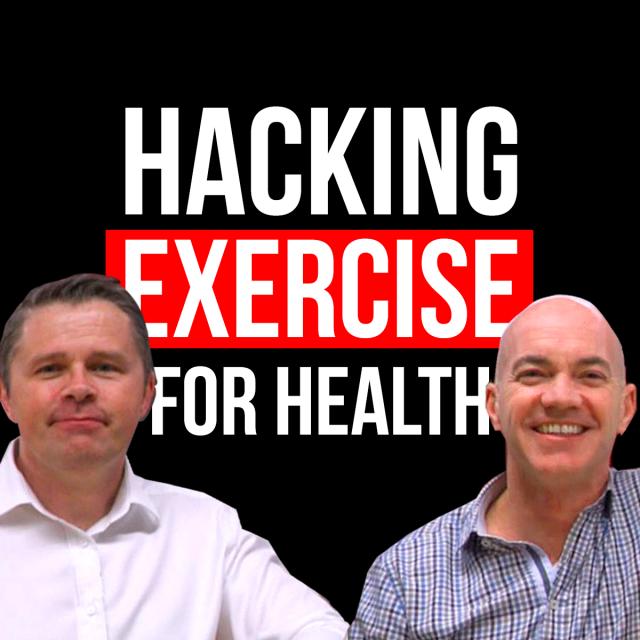
Hacking Exercise For Health. The surprising new science of fitness. (Coursera) Coursera
McMaster University

Hacking Exercise For Health. The surprising new science of fitness. (Coursera)

Renowned exercise physiologists Martin Gibala and Stuart Phillips of McMaster University teach the surprising new science of cardio fitness and strength-building—and then provide you with hacks to get fit and strong (and healthy!) in less time than you ever thought possible. What’s the right mix of exercise between cardio and strength? How do you know if you’re working out hard enough? What’s better, heavy or light weights? These questions and more are addressed through a course designed to provide even the most inexperienced of exercisers the tools you need to design time-efficient workouts that can be done virtually anywhere, from your own home to a city park or even at your workplace.

Oct 5th 2026
4 Weeks
PrEParing: PrEP for Providers and Patients (Coursera) Coursera
Johns Hopkins University

PrEParing: PrEP for Providers and Patients (Coursera)

Pre-Exposure Prophylaxis (PrEP) using the antiretroviral medication emtricitibine/tenofovir approved in countries around the world is a highly effective means of reducing transmission of HIV through sexual encounters and needle sharing. This Johns Hopkins University course PrEPares you with essential information, concepts and practical advice regarding PrEP from leaders in the field. A first of its kind learning opportunity, both providers and patients learn from the same experts through content that meets the needs of both audiences, while facilitating the opportunity for a shared community space.

Oct 12th 2026
5-12 Weeks
Business Implications of AI: Full course (Coursera) Coursera
EIT Digital

Business Implications of AI: Full course (Coursera)

In this course you will learn what Artificial Intelligence is, from a leaders point of view. How shall we, as leaders, understand it from a corporate strategy point of view? What is it and how can it be used? What are the crucial strategic decisions we have to make, and how to make them? What consequences can we expect if we decide on doing AI-projects and what kind of competences do we need? Where shall we start, and what could be a good second as well as third step? What implications for the organization can we expect? These are the questions answered in this course.

Oct 5th 2026
4 Weeks
Data Science in Stratified Healthcare and Precision Medicine (Coursera) Coursera
University of Edinburgh

Data Science in Stratified Healthcare and Precision Medicine (Coursera)

An increasing volume of data is becoming available in biomedicine and healthcare, from genomic data, to electronic patient records and data collected by wearable devices. Recent advances in data science are transforming the life sciences, leading to precision medicine and stratified healthcare. In this course, you will learn about some of the different types of data and computational methods involved in stratified healthcare and precision medicine.

Oct 5th 2026
5-12 Weeks