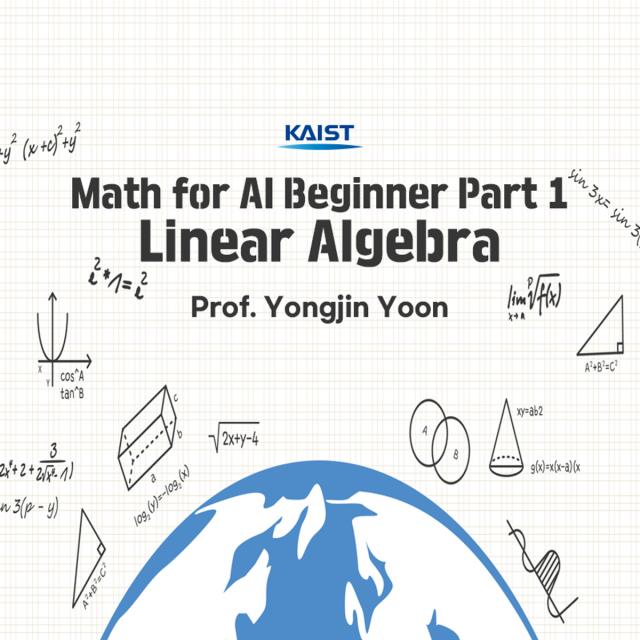
Math for AI beginner part 1 Linear Algebra (Coursera)

Math for AI beginner part 1 Linear Algebra (Coursera)

'Learn concept of AI such as machine learning, deep-learning, support vector machine which is related to linear algebra. Learn how to use linear algebra for AI algorithm. After completing this course, you are able to understand AI algorithm and basics of linear algebra for AI applications.

Class Deals by MOOC List - Click here and see Coursera's Active Discounts, Deals, and Promo Codes.

Syllabus

WEEK 1: Introduction to AI
WEEK 2: Introduction of Linear Algebra
WEEK 3: Low operation and linear combination
WEEK 4: Linearly independent and Inverse Matrix
WEEK 5: Determinant of Square Matrix and Eigenvalue Problem
WEEK 6: Diagonaliztion Problem and AI Applications

Go to Class
MOOC List is learner-supported. When you buy through links on our site, we may earn an affiliate commission.
Related Courses

Leveraging AI for Enhanced Content Creation (Coursera) Coursera
Coursera Instructor Network

Leveraging AI for Enhanced Content Creation (Coursera)

This course provides a foundation to assess, and apply, a series of Generative Artificial Intelligence (AI) tools, such as ChatGPT, Bing Chat, Google Bard, Midjourney, Runway, and Eleven Labs. This learning opportunity offers a hands-on experience through ideating, creating, and finalizing a mock advertising campaign using the combined strengths of these AI tools.

Oct 5th 2026
1 Week
AI for Efficient Programming: Harnessing the Power of LLMs (Coursera) Coursera
Fred Hutchinson Cancer Center

AI for Efficient Programming: Harnessing the Power of LLMs (Coursera)

This course on Artificial Intelligence (AI) for software development explores the use of AI large language models such as ChatGPT, Bard, and others and their potential benefits and challenges. Through examples and hands-on activities, you will develop an understanding of the ways in which AI can speed up software development tasks and free up time for more creative and strategic work.

Oct 5th 2026
4 Weeks
Calculus: Single Variable Part 3 - Integration (Coursera) Coursera
University of Pennsylvania

Calculus: Single Variable Part 3 - Integration (Coursera)

Calculus is one of the grandest achievements of human thought, explaining everything from planetary orbits to the optimal size of a city to the periodicity of a heartbeat. This brisk course covers the core ideas of single-variable Calculus with emphases on conceptual understanding and applications. The course is ideal for students beginning in the engineering, physical, and social sciences.

Sep 28th 2026
4 Weeks
AI, Business & the Future of Work (Coursera) Coursera
Lund University

AI, Business & the Future of Work (Coursera)

This course from Lunds university will help you understand and use AI so that you can transform your organisation to be more efficient, more sustainable and thus innovative. The lives of people all over the world are increasingly enhanced and shaped by artificial intelligence. To organisations there are tremendous opportunities, but also risks, so where do you start to plan for AI, business and the future of work?

Oct 5th 2026
4 Weeks
AI Materials (Coursera) Coursera
Korea Advanced Institute of Science and Technology - KAIST

AI Materials (Coursera)

Learn about the materials that have advanced the performance of artificial intelligence, and the machine learning models that could help accelerate the design and development of novel materials. This course defines artificial intelligence (AI) as a machine to which some or all of the functions of the human brain have been delegated. It highlights the need, and explains in an easy-to-understand way how machine learning from artificial intelligence can dramatically accelerate the development of new materials.

Oct 5th 2026
5-12 Weeks
Fundamentals of Engineering Exam Review (Coursera) Coursera
Georgia Institute of Technology

Fundamentals of Engineering Exam Review (Coursera)

The purpose of this course is to review the material covered in the Fundamentals of Engineering (FE) exam to enable the student to pass it. It will be presented in modules corresponding to the FE topics, particularly those in Civil and Mechanical Engineering. Each module will review main concepts, illustrate them with examples, and provide extensive practice problems.

Oct 5th 2026
5-12 Weeks
The Finite Element Method for Problems in Physics (Coursera) Coursera
University of Michigan

The Finite Element Method for Problems in Physics (Coursera)

This course is an introduction to the finite element method as applicable to a range of problems in physics and engineering sciences. The treatment is mathematical, but only for the purpose of clarifying the formulation. The emphasis is on coding up the formulations in a modern, open-source environment that can be expanded to other applications, subsequently.

Oct 5th 2026
13-24 Weeks
Business Implications of AI: A Nano-course (Coursera) Coursera
EIT Digital

Business Implications of AI: A Nano-course (Coursera)

In this course you will learn what Artificial Intelligence is, from a leaders point of view. How shall we, as leaders, understand it from a corporate strategy point of view? What is it and how can it be used? What are the crucial strategic decisions we have to make, and how to make them? What consequences can we expect if we decide on doing AI-projects and what kind of competences do we need? Where shall we start, and what could be a good second as well as third step? What implications for the organization can we expect? These are the questions answered in this course.

Oct 5th 2026
4 Weeks
Responsible AI - Principles and Ethical Considerations (Coursera) Coursera
Fractal Analytics

Responsible AI - Principles and Ethical Considerations (Coursera)

Welcome to "Responsible AI – Principles and Ethical Considerations"! Dive deep into the very essence of Responsible AI with us. Uncover the significance of key principles shaping technology's future. From ethical considerations to fairness, transparency, and accountability, we discuss these principles with real-world examples, putting them into the context of data science.

Oct 5th 2026
5-12 Weeks
Initiation à la théorie des distributions (Coursera) Coursera
École Polytechnique

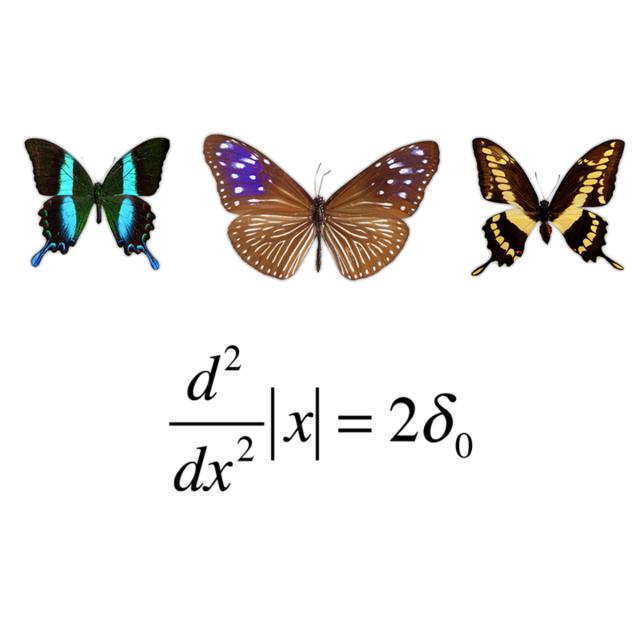
Initiation à la théorie des distributions (Coursera)

Une fonction discontinue peut-elle être solution d'une équation différentielle? Comment définir rigoureusement la masse de Dirac (une "fonction" d'intégrale un, nulle partout sauf en un point) et ses dérivées? Peut-on définir une notion de "dérivée d'ordre fractionnaire"? Cette initiation aux distributions répond à ces questions - et à bien d'autres.

Oct 5th 2026
5-12 Weeks