Single Variable Calculus (Coursera)

Single Variable Calculus (Coursera)

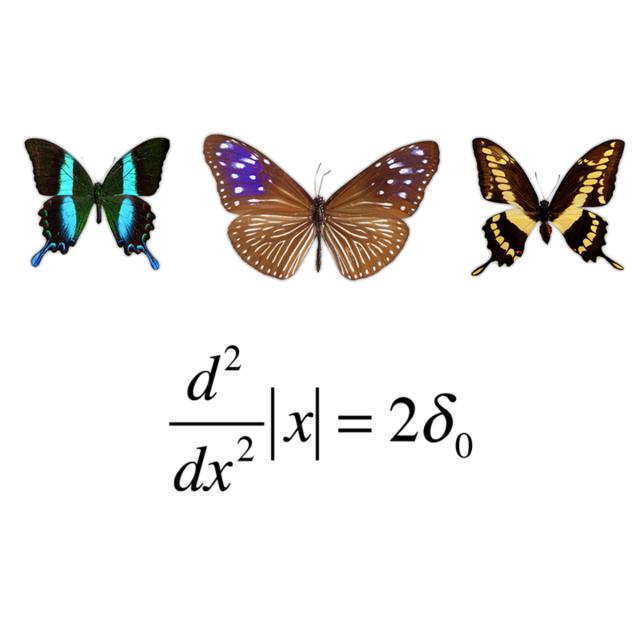
Calculus is one of the grandest achievements of human thought, explaining everything from planetary orbits to the optimal size of a city to the periodicity of a heartbeat. This brisk course covers the core ideas of single-variable Calculus with emphases on conceptual understanding and applications. The course is ideal for students beginning in the engineering, physical, and social sciences. Distinguishing features of the course include: 1) the introduction and use of Taylor series and approximations from the beginning; 2) a novel synthesis of discrete and continuous forms of Calculus; 3) an emphasis on the conceptual over the computational; and 4) a clear, dynamic, unified approach.

Class Deals by MOOC List - Click here and see Coursera's Active Discounts, Deals, and Promo Codes.

In this fifth part--part five of five--we cover a calculus for sequences, numerical methods, series and convergence tests, power and Taylor series, and conclude the course with a final exam. Learners in this course can earn a certificate in the series by signing up for Coursera's verified certificate program and passing the series' final exam.

Syllabus

WEEK 1
A Calculus for Sequences
It's time to redo calculus! Previously, all the calculus we have done is meant for functions with a continuous input and a continuous output. This time, we are going to retool calculus for functions with a discrete input. These are sequences, and they will occupy our attention for this last segment of the course. This first module will introduce the tools and terminologies for **discrete calculus.

WEEK 2
Introduction to Numerical Methods
That first module might have seemed a little...strange. It was! In this module, however, we will put that strangeness to good use, by giving a very brief introduction to the vast subjects of
numerical analysis, answering such questions as "how do we approximate solutions to differential equations?" and "how do we approximate definite integals?" Perhaps unsurprisingly, Taylor expansion plays a pivotal role in these approximations.

WEEK 3
Series and Convergence Tests
In "ordinary" calculus, we have seen the importance (and challenge!) of improper integrals over unbounded domains. Within discrete calculus, this converts to the problem of infinite sums, or
series**. The determination of convergence for such will occupy our attention for this module. I hope you haven't forgotten your big-O notation --- you are going to need it!

WEEK 4
Power and Taylor Series
This course began with an exploration of Taylor series -- an exploration that was, sadly, not as rigorous as one would like. Now that we have at our disposal all the tests and tools of discrete and continuous calculus, we can finally close the loop and make sense of what we've been doing when we Talyor-expand. This module will cover power series in general, from we which specify to our beloved Taylor series.

WEEK 5
Concluding Single Variable Calculus
Are we at the end? Yes, yes, we are. Standing on top of a high peak, looking back down on all that we have climbed together. Let's take one last look down and prepare for what lies above.

Go to Class
MOOC List is learner-supported. When you buy through links on our site, we may earn an affiliate commission.

Related Courses

Image and video processing: From Mars to Hollywood with a stop at the hospital (Coursera) Coursera
Duke University

Image and video processing: From Mars to Hollywood with a stop at the hospital (Coursera)

In this course, you will learn the science behind how digital images and video are made, altered, stored, and used. We will look at the vast world of digital imaging, from how computers and digital cameras form images to how digital special effects are used in Hollywood movies to how the Mars Rover was able to send photographs across millions of miles of space.

Oct 5th 2026
5-12 Weeks
Analytic Combinatorics (Coursera) Coursera
Princeton University

Analytic Combinatorics (Coursera)

Analytic Combinatorics teaches a calculus that enables precise quantitative predictions of large combinatorial structures. This course introduces the symbolic method to derive functional relations among ordinary, exponential, and multivariate generating functions, and methods in complex analysis for deriving accurate asymptotics from the GF equations. All the features of this course are available for free. It does not offer a certificate upon completion.

Oct 5th 2026
5-12 Weeks
Analysis of Algorithms (Coursera) Coursera
Princeton University

Analysis of Algorithms (Coursera)

This course teaches a calculus that enables precise quantitative predictions of large combinatorial structures. In addition, this course covers generating functions and real asymptotics and then introduces the symbolic method in the context of applications in the analysis of algorithms and basic structures such as permutations, trees, strings, words, and mappings.

Sep 28th 2026
5-12 Weeks
The Finite Element Method for Problems in Physics (Coursera) Coursera
University of Michigan

The Finite Element Method for Problems in Physics (Coursera)

This course is an introduction to the finite element method as applicable to a range of problems in physics and engineering sciences. The treatment is mathematical, but only for the purpose of clarifying the formulation. The emphasis is on coding up the formulations in a modern, open-source environment that can be expanded to other applications, subsequently.

Oct 5th 2026
13-24 Weeks
Fundamentals of Engineering Exam Review (Coursera) Coursera
Georgia Institute of Technology

Fundamentals of Engineering Exam Review (Coursera)

The purpose of this course is to review the material covered in the Fundamentals of Engineering (FE) exam to enable the student to pass it. It will be presented in modules corresponding to the FE topics, particularly those in Civil and Mechanical Engineering. Each module will review main concepts, illustrate them with examples, and provide extensive practice problems.

Oct 5th 2026
5-12 Weeks
Introduction à la théorie de Galois (Coursera) Coursera
École normale supérieure

Introduction à la théorie de Galois (Coursera)

Le cours expose la théorie de Galois, du classique critère de non-résolubilité des équations polynomiales aux méthodes plus avancées de calcul de groupes de Galois par réduction modulo un nombre premier. Le thème général de cette théorie est l'étude des racines d'un polynôme et concerne en particulier la possibilité de les exprimer à partir des coefficients de ce polynôme. Evariste Galois considère les symétries de ces racines et associe ainsi à ce polynôme un groupe de permutations de ses racines, que l'on appelle maintenant son groupe de Galois.

Sep 28th 2026
5-12 Weeks
English for Science, Technology, Engineering, and Mathematics (Coursera) Coursera
University of Pennsylvania

English for Science, Technology, Engineering, and Mathematics (Coursera)

Welcome to English for Science, Technology, Engineering, and Mathematics, a course created by the University of Pennsylvania, and funded by the U.S. Department of State Bureau of Educational and Cultural Affairs, Office of English Language Programs. This course is designed for non-native English speakers who are interested in improving their English skills in the sciences. In this course, you will explore some of the most innovative areas of scientific study, while expanding your vocabulary and the language skills needed to share scientific information within your community.

Sep 21st 2026
5-12 Weeks
Interest Rate Models (Coursera) Coursera
École Polytechnique Fédérale de Lausanne

Interest Rate Models (Coursera)

This course gives you an easy introduction to interest rates and related contracts. These include the LIBOR, bonds, forward rate agreements, swaps, interest rate futures, caps, floors, and swaptions. We will learn how to apply the basic tools duration and convexity for managing the interest rate risk of a bond portfolio. We will gain practice in estimating the term structure from market data. We will learn the basic facts from stochastic calculus that will enable you to engineer a large variety of stochastic interest rate models. In this context, we will also review the arbitrage pricing theorem that provides the foundation for pricing financial derivatives.

Sep 21st 2026
5-12 Weeks