Business Analytics and Digital Media (Coursera)

Business Analytics and Digital Media (Coursera)

The explosion in digital media - web, social and now mobile - represents a departure from how things were like in the last century. This proliferation of digital media is both a threat and an opportunity for many businesses. Business Analytics can be leveraged to process data, sentiment, buzz, contacts, context and other aspects of business interest in real time, for business performance and impact.

Class Deals by MOOC List - Click here and see Coursera's Active Discounts, Deals, and Promo Codes.

The course picks and uses use-cases from a variety of industries and geographies, to showcase the potential and impact that business analytics done properly (or not) can have on business performance.
Course 2 of 6 in the Business Technology Management Specialization.

Syllabus

WEEK 1
Introduction to Business Analytics
An overview of the what and the why Learning outcomes by the end of week 1 should normatively be that (a) Students grasp what is business analytics from the perspective of a business manager, (b) identify areas of interest, overlap, co-ordination and conflict with other business functions and processes in the firm, (c) and, develop an appreciation for the value of data, of analyses and of the components of analytics.

WEEK 2
Toolscape
An overview of the broad tools available for business analytics and the leveraging of digital media. Learning outcomes by the end of week 2 should normatively be that (a) Students have an understanding of the broad classes of analytics tools and platforms that currently dominate the market, (b) and, develop an appreciation for the pros and cons of the major groups of tools.

WEEK 3
Customer Analytics
Introduction to and the application of some important analytical processes in Marketing Analytics Learning outcomes by the end of week 3 should normatively be that (a) Students have an understanding of the major processes and procedures typically used in a customer analytics setting, in particular factor and cluster analyses (b) and, develop an appreciation for the possibilities that emerge from recombining procedures, data, algorithms and problem formulation perspectives in open source environments.

WEEK 4
Digital Media
An overview of the big questions, possibilities and challenges. Learning outcomes by the end of week 4 should normatively be that (a) Students have an understanding of the major types of digital media in use currently by people and firms, (b) and, develop an appreciation for the types of problem solving, data collection, prediction and optimization that can be enabled using digital media tools.
Go to Class
MOOC List is learner-supported. When you buy through links on our site, we may earn an affiliate commission.

Related Courses

Customer Analytics (Coursera) Coursera
University of Pennsylvania

Customer Analytics (Coursera)

Data about our browsing and buying patterns are everywhere. From credit card transactions and online shopping carts, to customer loyalty programs and user-generated ratings/reviews, there is a staggering amount of data that can be used to describe our past buying behaviors, predict future ones, and prescribe new ways to influence future purchasing decisions. In this brand new course, four of Wharton’s top marketing professors will dive deeper into the key areas of customer analytics: descriptive analytics, predictive analytics, prescriptive analytics, and their application to real-world business practices including Amazon, Google, and Starbucks to name a few.

Nov 9th 2026
5-12 Weeks
The AI Ladder: A Framework for Deploying AI in your Enterprise (Coursera) Coursera
IBM

The AI Ladder: A Framework for Deploying AI in your Enterprise (Coursera)

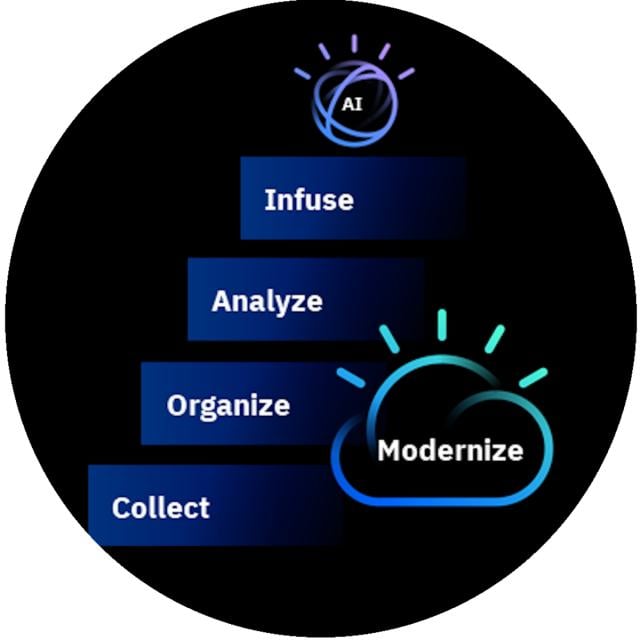
This course is intended for business and technical professionals involved in strategic decision-making focused on bringing AI into their enterprises. Through the use of a conceptual model called “The AI Ladder”, participants in this course will learn the requirements, terms and concepts associated with successfully developing and deploying AI solutions in their enterprises.

Nov 9th 2026
1 Week
Intro to Improving the Patient Experience Through Analytics (Coursera) Coursera
Northeastern University

Intro to Improving the Patient Experience Through Analytics (Coursera)

This course is best suited for individuals currently in the healthcare sector, as a provider, payer, or administrator. Individuals pursuing a career change to the healthcare sector may also be interested in this course. In this course, you will have an opportunity to explore concepts and topics related to improving the patient experience and reducing pain points in healthcare processes through analytic and decision support frameworks.

Nov 16th 2026
4 Weeks
Applying Data Analytics in Accounting (Coursera) Coursera
University of Illinois at Urbana-Champaign

Applying Data Analytics in Accounting (Coursera)

This course explores business analytic applications in accounting. First, it presents a survey of technology topics in accounting, including process mining, blockchain and applications in audit, tax, and assurance. Next, the course explores visualization and basic analytics in audit and control testing using R and Alteryx. Next, the course examines the uses of text analysis in accounting and conducts text analysis using R and RStudio. Finally, the course examines robot process automation in general using UiPath and its applications in accounting.

Nov 9th 2026
4 Weeks
Fandom, Social Media, and Authenticity in the Digital Age (Coursera) Coursera
University of Colorado Boulder

Fandom, Social Media, and Authenticity in the Digital Age (Coursera)

"Fandom, Social Media, and Authenticity in the Digital Age" focuses your attention on the interconnected dynamics of identity, representation, interpretation, and self-reflection. It asks the question: how, where, and with whom do we inhabit the worlds of fandom and popular culture in the digital age? We will explore the role of digital media in the production of celebrity and fandom, using social media tools and platforms as a running case study. More broadly, the course is about what media studies scholar Henry Jenkins has called “participatory culture,” the processes by which bring our selves into digital spaces, establish trust and authenticity (or challenge these concepts), and negotiate identity in and amongst others.

Nov 9th 2026
4 Weeks
Operations Research (2): Optimization Algorithms (Coursera) Coursera
National Taiwan University

Operations Research (2): Optimization Algorithms (Coursera)

Operations Research (OR) is a field in which people use mathematical and engineering methods to study optimization problems in Business and Management, Economics, Computer Science, Civil Engineering, Electrical Engineering, etc. The series of courses consists of three parts, we focus on deterministic optimization techniques, which is a major part of the field of OR. As the second part of the series, we study some efficient algorithms for solving linear programs, integer programs, and nonlinear programs.

Nov 23rd 2026
5-12 Weeks
Applied Analytics and Data for Decision Making (Coursera) Coursera
University at Buffalo,The State University of New York

Applied Analytics and Data for Decision Making (Coursera)

By the end of this course, learners are prepared to identify and test the best solutions for improving performance and integrating concepts from operational excellence methodologies for optimum data-driven decision making. The course begins with a focus on deciphering the root cause of problems through a variety of tools before determining and assessing best-fit solutions. Learners discover how to apply ISO, Lean and Six Sigma in the pursuit of aligning organizational operations data with performance standards. Hospitality, manufacturing and e-commerce case studies help illustrate how to build data literacy while ensuring privacy and data ethics measures are in place.

Nov 9th 2026
4 Weeks
Hands-on Text Mining and Analytics (Coursera) Coursera
Yonsei University

Hands-on Text Mining and Analytics (Coursera)

This course provides an unique opportunity for you to learn key components of text mining and analytics aided by the real world datasets and the text mining toolkit written in Java. Hands-on experience in core text mining techniques including text preprocessing, sentiment analysis, and topic modeling help learners be trained to be a competent data scientists.

Nov 16th 2026
5-12 Weeks
Framework for Data Collection and Analysis (Coursera) Coursera
University of Maryland, College Park

Framework for Data Collection and Analysis (Coursera)

This course will provide you with an overview over existing data products and a good understanding of the data collection landscape. With the help of various examples you will learn how to identify which data sources likely matches your research question, how to turn your research question into measurable pieces, and how to think about an analysis plan.

Nov 9th 2026
4 Weeks
Advanced Models for Decision Making (Coursera) Coursera
University of Minnesota

Advanced Models for Decision Making (Coursera)

Business analysts need to be able to prescribe optimal solution to problems. But analytics courses are often focused on training students in data analysis and visualization, not so much in helping them figure out how to take the available data and pair that with the right mathematical model to formulate a solution. This course is designed to connect data and models to real world decision-making scenarios in manufacturing, supply chain, finance, human resource management, etc. In particular, we understand how linear optimization - a prescriptive analytics method - can be used to formulate decision problems and provide data-based optimal solutions.

Nov 9th 2026
4 Weeks
Operations Research (1): Models and Applications (Coursera) Coursera
National Taiwan University

Operations Research (1): Models and Applications (Coursera)

Operations Research (OR) is a field in which people use mathematical and engineering methods to study optimization problems in Business and Management, Economics, Computer Science, Civil Engineering, Industrial Engineering, etc. This course introduces frameworks and ideas about various types of optimization problems in the business world. In particular, we focus on how to formulate real business problems into mathematical models that can be solved by computers.

Nov 23rd 2026
5-12 Weeks