EdX

Artful Medicine: Art’s Power to Enrich Patient Care (edX)

Offered by Brown University, BrownX,
Artful Medicine: Art’s Power to Enrich Patient Care (edX)

Discover how the medical community harnesses the power of art and empathy to improve patient care. What impact can art and the humanities have on patient care? Can art enhance medical caregivers’ powers of observation and humanize their interactions with patients? Through presence alone, can caregivers heal what they cannot cure?

Class Deals by MOOC List - Click here and see EdX's Active Discounts, Deals, and Promo Codes.

In Artful Medicine: Art’s Power to Enrich Patient Care, we will explore the meaning of medical professionalism, techniques for a humanistic approach to caregiving, and the positive impact of humanism on clinical outcomes.

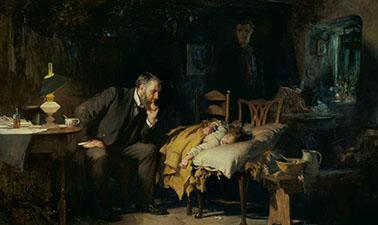
By looking closely at works of art that portray empathy in human interaction, caregivers can discover their common humanity with patients. Caregivers can also hone observation skills that help paint a portrait of a patient as a person and not a collection of symptoms, lab tests, and scans. Through presence at the patient’s side, unmediated by technology, a caregiver can make the patient feel cared for in addition to being treated.
One needn’t be a caregiver to benefit from this course—though all of us have probably been cared for at some point and can therefore easily relate to the importance of a humanistic approach to caregiving. Anyone interested in how art can be used to enhance observational and empathic skills will find this application to medical humanism fascinating.
We will:

  • Explore elements of professionalism and humanism, why they are critical to patient care, and how they are threatened by technology that increasingly distances caregivers from patients;
  • Analyze art for form, narrative, and technique;
  • Practice techniques used by art educators to enhance observation and improve diagnostic skills;
  • Examine works of art for the professional behaviors they exemplify;
  • Apply techniques to patient care that will help humanize interactions, so caregivers can refocus their attention on patients and families and enhance their understanding of behaviors critical to healing; and
  • Identify with both the caregiver’s and the patient’s points of view.

What you'll learn:

  • Appreciate how the elements of humanism and professionalism in medicine are essential to patient care and can be defined, learned, and applied.
  • Reflect on ways humanism and professionalism are under threat from electronic medical records and other technology.
  • Analyze works of art for form, narrative, technique, and the professional behaviors they exemplify.
  • Explore techniques that humanize interactions and enhance our understanding of what is critical to healing.
Go to Class
MOOC List is learner-supported. When you buy through links on our site, we may earn an affiliate commission.

Related Courses

Effects of Radiation: An Introduction to Radiation and Radioactivity (edX) EdX
OECx,Open Education Consortium - OEC

Effects of Radiation: An Introduction to Radiation and Radioactivity (edX)

There are many practical applications of radiation and radioactivity in various fields, including medical, scientific, and industrial activities. In some parts of Japan, people continue to experience environmental radioactivity caused by the nuclear accident at the Fukushima Daiichi Nuclear Power Plant on a daily basis. Understanding the basic science of radiation and radioactivity will form the base of the course, with specific examples from Japan and elsewhere in the world to illustrate concepts.

No sessions available
4 Weeks
Cosmopolitan Tang: Aristocratic Culture in China (edX) EdX
HarvardX,Harvard University

Cosmopolitan Tang: Aristocratic Culture in China (edX)

Explore the reunification of China under the Tang with a focus on aristocratic culture — from poetry to calligraphy to literature. By the Tang period, China was divided into northern and southern dynasties with different rulers and political systems. The north was conquered by relatively unsophisticated barbarians, but in the south, the aristocratic families established a refined appreciation of writing and literature.

Self Paced
Self-Paced
Inspiring and Motivating Arts and Culture Teams (edX) EdX
University of Michigan,MichiganX

Inspiring and Motivating Arts and Culture Teams (edX)

Learn critical leadership skills that enable you to inspire and motivate individuals and teams, specifically in Arts and Culture organizations. Offered by the Ross School of Business at the University of Michigan in collaboration with National Arts Strategies Senior Management Institute, this course focuses on equipping senior leaders of arts and culture organizations and/or nonprofits with the critical skills for inspiring employee engagement and performance while motivating people to adjust behavior and embrace change.

Self Paced
Self-Paced
Claves para leer imágenes (edX) EdX
Universidad Autonoma de Madrid,UAMx

Claves para leer imágenes (edX)

Vivimos en la era de la revolución icónica. Necesitamos métodos para comprender las imágenes. Los mapas, los paisajes, las obras de arte, los medios de masas, las películas de cine y las páginas de internet nos hablan, por lo que debemos conocer sus códigos para entenderlas. Conoce las claves para analizar las imágenes históricas que hemos producido los seres humanos. Tenemos dos objetivos: enseñar a utilizarlas como documentos históricos y emplearlas como recursos didácticos.

Self Paced
Self-Paced
Trasplante de órganos: desafíos éticos y jurídicos (edX) EdX
Universidad Autonoma de Madrid,UAMx

Trasplante de órganos: desafíos éticos y jurídicos (edX)

En este curso analizaremos algunos interrogantes éticos y jurídicos que suscita el trasplante de órganos. Desde que en 1954 se realizara el primer trasplante exitoso de un órgano, la cirugía de trasplantes se ha desarrollado espectacularmente brindando esperanza y calidad de vida a muchos enfermos.

Self Paced
Self-Paced
Introduction to Bioethics (edX) EdX
Georgetown University,GeorgetownX

Introduction to Bioethics (edX)

Introduction to Bioethics explores some of the most difficult - and fascinating - moral challenges we face in health, medicine, and emerging technologies. Should we clone humans? Who owns our DNA? How much control should we have over how and when we die? When does medical treatment turn into medical enhancement — and should we care? Is rationing health care good, bad, necessary — or all of the above? This course will explore fundamental moral issues that arise in medicine, health, and biotechnology.

No sessions available
13-24 Weeks