Adobe Illustrator for Beginners (Coursera)

Adobe Illustrator for Beginners (Coursera)

This course allows you to learn Adobe Illustrator from scratch, step by step. Adobe illustrator is a professional package for creating vector graphics, illustrating, and typesetting for print. The unique feature of the course is that it is practical and has been developed by a designer for designers. All the techniques and methods that are offered to students in the course are the result of hands-on professional experience.

Class Deals by MOOC List - Click here and see Coursera's Active Discounts, Deals, and Promo Codes.

What You Will Learn
You will learn all the basic technical skills needed to use Adobe Illustrator to realise your ideas.

Syllabus

WEEK 1
Raster and vector graphics
The first module gives a basic introduction to vector graphics. What it is, what principles are used to build a vector image in a graphic editor, and what application features it creates. We will discuss the differences between raster and vector image construction and the respective applications of both. We will talk about using vector graphics in design, consider examples of design projects made by means of vector graphics. We will also discuss the stylistics of modern vector and hybrid images.

WEEK 2
Creating and editing objects
In the second module, you will learn how to create objects in Adobe Illustrator. First, we will analyze what the program interface consists of. You will learn how to customize the workspace for yourself, create, copy, and scale artboards. We will talk about what viewing modes are available in Adobe Illustrator and what they are for. Let's look at the auxiliary elements: rulers, guides, grids. Then we will talk about different ways to organize the order of objects. You will learn how to create, transform, and align simple objects. We will study in detail the work with strokes, different ways of creating and editing closed and open paths. And also consider a variety of different tools for cutting and joining shapes.

WEEK 3
Working with colour in Adobe Illustrator
In the third module of our course, we will talk about working with colour. First, we'll explore the two most common colour models and learn the difference between them and what they're used for. We'll analyse the tools for working with colour, you'll learn how to create, edit, and copy colour fills. You'll learn how to organise colour groups and use ready-made colour libraries. Next, we'll explore what colour process and spot are and how these colour systems print the same swatch differently. Next, I'll tell you how to create harmonious colours quickly and easily using the automatic colour matching tools of Adobe Illustrator. At the end of this module, we'll talk about transparencies and gradient fills.

WEEK 4
Working with fonts in Adobe Illustrator
The fourth module focuses on working with fonts. You will learn that text in Adobe Illustrator exists in two states: framed and unframed. We'll go into detail about what both are used for. You will explore the layout and text editing tools. Next, we'll look at how to create text on an open path, inside and outside of a closed path. The second half of this module will focus on digital calligraphy and font drawing tools. I will show basic techniques for creating and editing digital calligraphy.

WEEK 5
Preparing the original layout
The fifth module of our course deals with the preparation of original layouts for submission to a prepress specialist or print shop. It contains several important topics. We'll talk about some useful effects in Adobe Illustrator that will make your graphics even more interesting and diverse. You will learn how to create clipping masks for bitmap and vector images. We'll explain how to insert raster images into a vector document, how to set up links, how to replace them easily, and how to edit them in Adobe Photoshop in parallel. Then we'll cover saving files for different purposes in detail. You'll also learn the basics of prepress. All of this will help you deliver your layouts to the print shop and communicate with the production staff in a professional manner.


Go to Class
MOOC List is learner-supported. When you buy through links on our site, we may earn an affiliate commission.

Related Courses

Practicing Collaborative, Continuous Improvement (Coursera) Coursera
University of Michigan

Practicing Collaborative, Continuous Improvement (Coursera)

Practicing Collaborative, Continuous Improvement supports local change agents in developing foundational capabilities for iterative analysis, design, implementation, and evaluation. Learn to address local needs, opportunities, and problems, with a focus on improvement science as a specific approach to collaborative, continuous improvement that is useful in classrooms, communities, schools, and systems.

Aug 3rd 2026
5-12 Weeks
Ergonomics in Design (edX) EdX
The Hong Kong University of Science and Technology - HKUST,HKUSTx

Ergonomics in Design (edX)

The course is designed to provide a basic understanding of ergonomics in design through the introduction of human anatomy, anthropometry, and modeling techniques with the aim of improving safety, productivity, comfort and health of people. Ergonomics is the application of scientific information about people in order to design products and systems so that they are safe, productive, comfortable and healthy for people to use.

Self Paced
Self-Paced
Creative Designing in Power BI (Coursera) Coursera
Microsoft

Creative Designing in Power BI (Coursera)

This course forms part of the Microsoft Power BI Analyst Professional Certificate. This Professional Certificate consists of a series of courses that offers a good starting point for a career in data analysis using Microsoft Power BI. In this course, you will learn how to creatively design dashboards, reports and charts that are easier for the audience to use.

Jul 27th 2026
4 Weeks
Human-Computer Interaction III: Ethics, Needfinding & Prototyping (edX) EdX
Georgia Institute of Technology,GTx

Human-Computer Interaction III: Ethics, Needfinding & Prototyping (edX)

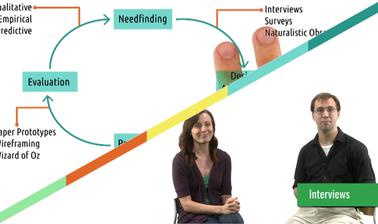
Build on your knowledge of HCI’s core principles by learning to design interfaces in the real world. Begin with the ethics of human subjects research, then learn critical methods for requirements gathering and brainstorming design alternatives. In this course, you’ll begin by learning the design life cycle. This is the process by which we investigate user needs, brainstorm potential designs, create prototypes, and evaluate those prototypes. This life cycle provides the structure for the third and fourth courses in this professional certificate.

Self Paced
Self-Paced
Enabling Community-Based Leadership in Design: Sustainable Development of Historic Faith Buildings (FutureLearn) FutureLearn
The Open University,UNESCO UNITWIN Complex Systems Digital Campus,The Glass-house

Enabling Community-Based Leadership in Design: Sustainable Development of Historic Faith Buildings (FutureLearn)

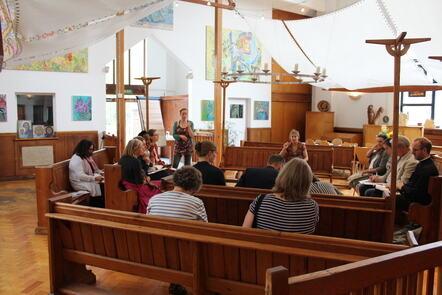
Mobilise the power of communities to re-imagine and shape their place. Learn how to enable communities to lead design initiatives in places of worship. Apart from being special places where people practise their faith, places of worship play an important role for the wider community by providing pastoral care and much-needed local services. Community-based design initiatives can enhance the value of these places as a sustainable resource for multiple communities.

Self Paced
5-12 Weeks
UX Design Fundamentals (Coursera) Coursera
California College of the Arts

UX Design Fundamentals (Coursera)

This hands-on course examines how content is organized and structured to create an experience for a user, and what role the designer plays in creating and shaping user experience. You will be led through a condensed process that acts as a roadmap for developing robust UI/UX design: from ideation and sitemapping, to the creation of paper and digital prototypes. Building on the design skills learned in Visual Elements of User Interface Design, you will apply this methodology to produce a digital prototype for a multi-screen app of your own invention.

Jul 27th 2026
4 Weeks
Design and Make Infographics (Project-Centered Course) (Coursera) Coursera
Michigan State University

Design and Make Infographics (Project-Centered Course) (Coursera)

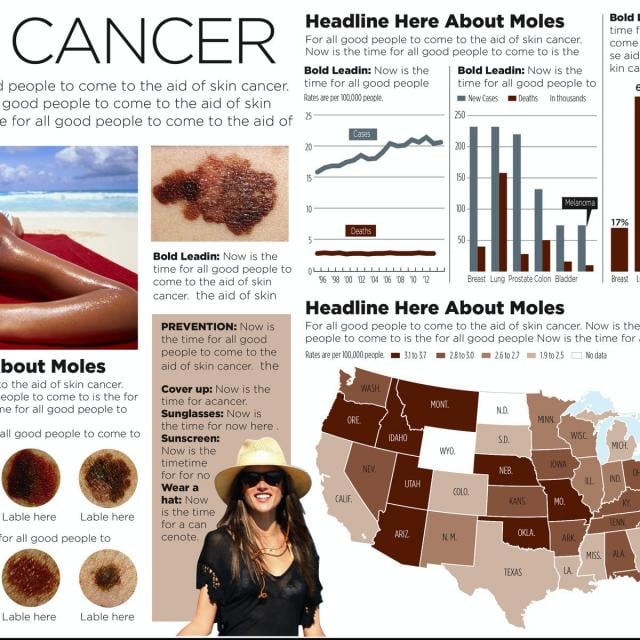
In this project-centered course*, you will create a content-rich infographic on a topic of your choice using Adobe Illustrator (which you can download for a free, 30-day trial). You might choose to create a visual representation of data from the world of sports, entertainment, politics, or science, to explain a business trend or environmental issue, or even to present a theme or development from your personal life. Your finished infographic will engage your target audience and convey information clearly through effective use of design elements such as typography, color, and structure.

Aug 3rd 2026
4 Weeks
Platform Thinking: designing a Platform (Coursera) Coursera
Politecnico di Milano

Platform Thinking: designing a Platform (Coursera)

Platforms changed the way we live and we do business. This module of the “Platform Thinking” series aims to help innovators in designing and building platforms. At first sight, it may seem that platforms "simply" connect different kinds of users, as Airbnb links travelers and hosts or as Uber links drivers and riders. Well, this is true: platforms link different kinds of users. Nevertheless, this is just the enabling factor to have a platform, definitely not enough to describe the wide range of activities they actually do.

Jul 27th 2026
4 Weeks
Design Basics of Steel Buildings (Coursera) Coursera
L&T EduTech

Design Basics of Steel Buildings (Coursera)

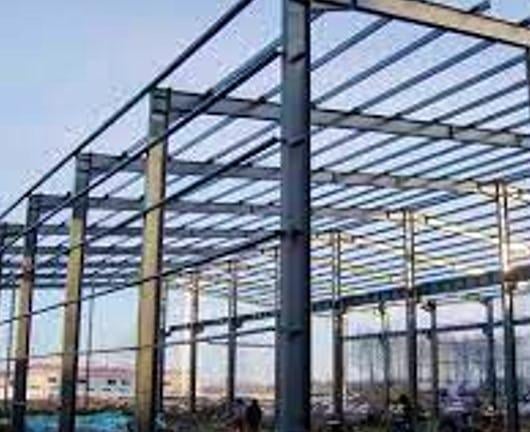
"Design Basics of Steel Buildings" is a comprehensive course that covers all fundamental aspects of designing steel structures. Participants delve into the foundational elements essential for successful building design, including understanding the basis for design through comprehensive reports and considering site location in conjunction with building functionality. Geometric parameters of the building are explored to ensure structural integrity and aesthetic appeal.

Aug 3rd 2026
5-12 Weeks
Web Design: Strategy and Information Architecture (Coursera) Coursera
California Institute of the Arts

Web Design: Strategy and Information Architecture (Coursera)

This course is focused on the early user experience (UX) challenges of research, planning, setting goals, understanding the user, structuring content, and developing interactive sequences. While the concepts covered will translate to many kinds of interactive media (apps, digital kiosks, games), our primary focus will be on designing contemporary, responsive websites. In this course you will complete the first half of a large scale project—developing a comprehensive plan for a complex website—by defining the strategy and scope of the site, as well as developing its information architecture and overall structure.

Jul 27th 2026
4 Weeks
Python Fundamentals for Designers (Coursera) Coursera
University of Michigan

Python Fundamentals for Designers (Coursera)

Python Fundamentals for Designers is an introduction to programming using Python meant for students interested in how programming is applied to visual applications and design. The course introduces the foundations of programming through a visual and dynamic learning environment. You’ll cover the essential building blocks of Python programming, from basic syntax and data types to more advanced concepts like control structures, functions, and inputs/outputs.

Jul 27th 2026
5-12 Weeks
Data Structures for Designers Using Python (Coursera) Coursera
University of Michigan

Data Structures for Designers Using Python (Coursera)

In Data Structures for Designers Using Python, you’ll delve into the critical concepts of data structures and object-oriented programming, tailored specifically for design and visual content creation applications. You’ll be introduced to object-oriented programming principles in Python, enabling you to model real-world scenarios and design problems using objects and classes.

Jul 27th 2026
5-12 Weeks