EdX

Ergonomics in Design (edX)

Ergonomics in Design (edX)

The course is designed to provide a basic understanding of ergonomics in design through the introduction of human anatomy, anthropometry, and modeling techniques with the aim of improving safety, productivity, comfort and health of people. Ergonomics is the application of scientific information about people in order to design products and systems so that they are safe, productive, comfortable and healthy for people to use.

Class Deals by MOOC List - Click here and see EdX's Active Discounts, Deals, and Promo Codes.

People are of different shapes, sizes, strength, speed, judgment, skills, and capabilities. Hence when designing products the necessary aspects for task performance have to be considered. What is important is to fit the task to the person rather than fitting a person to a task so that a majority of the people are able to and like to do what needs to be done.
In this course, regardless of your background, you will learn the core concepts of ergonomics so that you can evaluate and redesign products to fit people. The course will focus on recognizing the workings of the human body so that products and systems are compatible with the structure of people and will allow you to be creative and to identify engineering solutions thereby improving human performance, reducing the risk of discomfort and injury when interacting with products
This course will allow you to get hands-on experience through a wide variety of demonstrations and case studies for you to grasp the concepts easily. With the knowledge gained, you can experience the excitement of creating your own products that will wow users whether it be for continuing education or just for knowledge.

What you'll learn

  • At the end of the course, you will be able to:
  • Apply ergonomic principles for the creation of safer, healthier and more efficient and effective products and activities
  • Recognize the workings of the human body and their implications on products
  • Identify engineering solutions to improve human performance and reduce the risk of discomfort and - injury when interacting with products

Syllabus

Week 1: Overview and Introduction
Definition, history and applications of Ergonomics with real life examples

Week 2: Human-centered Design
Introduction to Design Thinking and design objectives

Week 3: Musculoskeletal system
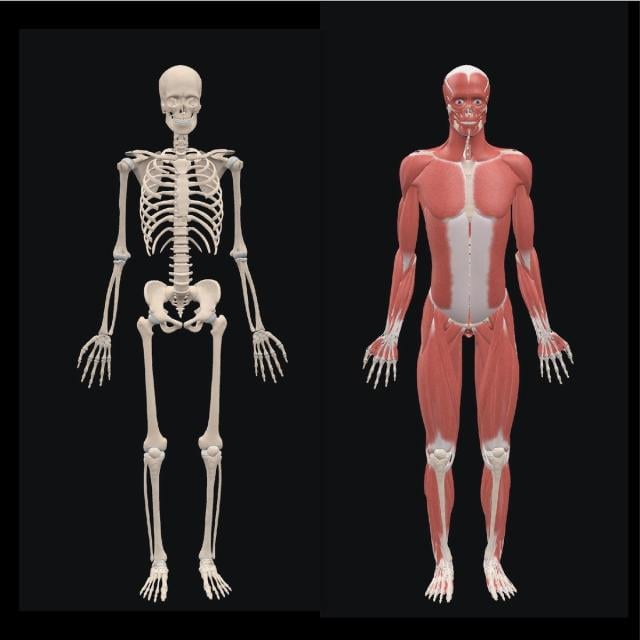
Human body structure basics of muscles, bones and joints, and their working principles

Week 4: Human Movement
Spine and motion, vision and line of sight

Week 5: Posture-Strength relationships
Blix curve, Hand tool design basics considering ergonomics principles

Week 6: Equipment Design
Sports equipment design and Consequences of poor design
Go to Class
MOOC List is learner-supported. When you buy through links on our site, we may earn an affiliate commission.

Related Courses

Understanding the Value of Human-Centered Design (Coursera) Coursera
University of Illinois at Urbana-Champaign

Understanding the Value of Human-Centered Design (Coursera)

Human-centered design is an approach that focuses on human needs, goals, and experiences to frame problems, develop solutions, and coordinate resources. Through a series of videos, activities, and reflection, learners will develop an appreciation for the value and impact of human-centered design as well as begin to understand what investment is required to practice it well. The course prepares learners to collaborate with human-centered design practitioners and deepen their own practice.

Aug 17th 2026
5-12 Weeks
Human Factors in AI (Coursera) Coursera
Duke University

Human Factors in AI (Coursera)

This third and final course of the AI Product Management Specialization by Duke University's Pratt School of Engineering focuses on the critical human factors in developing AI-based products. The course begins with an introduction to human-centered design and the unique elements of user experience design for AI products.

Aug 3rd 2026
4 Weeks
Human-Computer Interaction IV: Evaluation, Agile Methods & Beyond (edX) EdX
Georgia Institute of Technology,GTx

Human-Computer Interaction IV: Evaluation, Agile Methods & Beyond (edX)

Complete your understand of the design life cycle by learning to take interface ideas, prototype them quickly, and evaluate them with real users. Finally, tie principles and methods together and learn the next steps you could take in HCI. This course takes you through the last nine lessons of CS6750: Human-Computer Interaction as taught in the Georgia Tech Online Master of Science in Computer Science program.

Self Paced
Self-Paced
Human-Centered Design for Work at a Distance: Prototype Solutions (edX) EdX
The University of British Columbia,UBCx

Human-Centered Design for Work at a Distance: Prototype Solutions (edX)

Draw from human-centered design tools learned in Human-Centered Design for Work at a Distance: Toolbox Essentials to identify and solve real-world case studies for individuals reinventing their work at a distance. This course builds on the teachings in Human-Centered Design for Work at a Distance: Toolbox Essentials. It must be completed before enrolling in this course.

Self Paced
Self-Paced
Human Anatomy for Stroke (edX) EdX
The Hong Kong Polytechnic University,HKPolyUx

Human Anatomy for Stroke (edX)

The first MOOC to teach Human Anatomy from multiple healthcare professional perspectives through a case-based study of stroke. How is the human body structured? How are the different body systems interconnected with each other? If you are interested but layman to Human Anatomy, if you find the Human Anatomy textbooks are too difficult to read, or if you want to freshen up quickly your anatomy knowledge, this is the course for you.

Self Paced
Self-Paced
Operations Systems Excellence (Coursera) Coursera
University of London

Operations Systems Excellence (Coursera)

The sole task of organisations is to either deliver customers the services that they require, or design, manufacture, and deliver products that customers are after. How do firms and organisations manage the very tasks that they carry out? How can operations themselves give excellence to organisations to enable them to be competitive? Operations management is concerned with the design, planning and control of operating systems for the provision of goods and services. This course will provide an introduction not only into the development of operational systems but more importantly into the how operating methods can help achieve corporate excellence.

Aug 3rd 2026
3 Weeks
Urban Ecology Design (edX) EdX
Delft University of Technology,DelftX

Urban Ecology Design (edX)

Learn how to contribute to a more biodiverse, nature-inclusive and sustainable built environment by using nature-based solutions in your designs and policies. As our urban habitats become increasingly complex, the need to address the challenges of accommodating a growing human population becomes ever more pressing. These challenges, intricately intertwined with the built environment and its wider surroundings, encompass the perils of heat stress, loss of biodiversity, land degradation, flood risks, and the urgent need to adapt to a changing climate.

Self Paced
5-12 Weeks
Groundscape Architecture Lab. Carpark Futures (edX) EdX
École Polytechnique Fédérale de Lausanne,EPFLx

Groundscape Architecture Lab. Carpark Futures (edX)

Developing architectural and design knowledge for the urban underground. ‘Groundscape’ is a new word coined by architect Dominique Perrault to integrate underground spaces into architecture knowledge. The general focus of this course is to provide students with underground design strategies that respond to contemporary urban challenges. Indeed, The underground of cities has become one of the most innovative and radical terrains of experimentation for future urban development by providing much needed spaces capable of optimizing existing city centers, by making them more resilient, responsible, durable and beautiful.

Self Paced
Self-Paced
Stability and Design of Structural Members (edX) EdX
Purdue University,PurdueX

Stability and Design of Structural Members (edX)

Learn fundamental concepts of buckling analysis and design of structural members for stability concerns for beam and column elements. Buckling can be a controlling limit state for many structural elements. This course will cover the intersection of buckling and member design – specifically the behavior of columns and beam elements.

No sessions available
5-12 Weeks