Visualizing the Living Body: Diagnostic Imaging (Coursera)

Offered by Yale University,
Visualizing the Living Body: Diagnostic Imaging (Coursera)

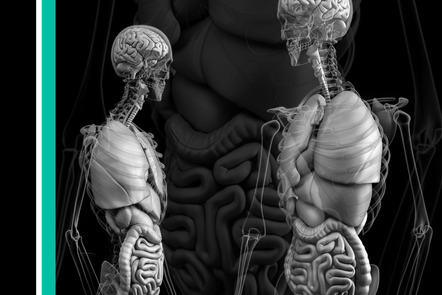
This course teaches learners the underlying principles behind conventional radiography, computerized axial tomography (CT), magnetic resonance imaging (MRI), and ultrasound. The radiology of chest, abdomen, pelvis, extremities, spine and brain are taught in this course using a combination of lectures and extensive practical activities and assessments.

Class Deals by MOOC List - Click here and see Coursera's Active Discounts, Deals, and Promo Codes.

By the end of the course you will be able to:

  • Describe the principles of conventional radiography, CT MRI and ultrasound
  • Describe systematic approaches to imaging interpretation
  • Describe the use of windowing in CT
  • Describe sequences in MRI and their relevance.

Topics covered in the lectures include: Introductions to conventional radiography, computerized tomography (CT), ultrasound, magnetic resonance imaging (MRI), chest radiology, CT of chest, chest radiology: introduction to pathology, normal CT anatomy of the abdomen, renal anatomy, colon cancer, renal neoplasm, normal pelvic imaging, normal male pelvis imaging, normal female pelvis imaging, radiology of the upper extremities, radiology of the lower extremities, musculoskeletal imaging modalities, introduction to spine radiographs, skull radiography, brain CT imaging fundamentals, brain CT imaging pathology, brain: magnetic resonance imaging (MRI), and brain MRI pathology.

Syllabus

WEEK 1
Introduction to Radiology
In this module you'll learn the principles of diagnostic imaging, be introduced to conventional radiography, computerized tomography (CT), ultrasound, and magnetic resonance imaging (MRI)

WEEK 2
Chest Radiology
This module covers chest radiology, CT of chest, and an introduction to chest radiology pathology

WEEK 3
Abdomen Radiology
This module covers normal CT anatomy of the abdomen, renal anatomy, colon cancer, and renal neoplasm

WEEK 4
Pelvis Radiology
This module covers normal pelvic imaging, normal male pelvis imaging, normal female pelvis imaging,

WEEK 5
Extremities Radiology
This module covers radiology of the upper extremities, radiology of the lower extremities, and musculoskeletal imaging modalities

WEEK 6
Skull and Brain Radiology
This module covers skull radiography, brain CT imaging fundamentals, brain CT imaging pathology, brain: magnetic resonance imaging (MRI), and brain MRI pathology

WEEK 7
Spine Radiology
This module covers and introduction to spine radiographs

Go to Class
MOOC List is learner-supported. When you buy through links on our site, we may earn an affiliate commission.

Related Courses

Anatomie du Bois (FUN) FUN
Université de Lorraine

Anatomie du Bois (FUN)

Par ses multiples expériences, l’homme a découvert quelles étaient les meilleures essences de bois pour répondre à chacun de ses besoins en matériaux ou en sources d’énergie. Le premier objectif de ce MOOC est de relier le bois en tant que tissu dans l’arbre et le bois en tant que matériau dans la vie des hommes. A la croisée de ces deux mondes, se trouve l’anatomie, c’est-à-dire la structure cellulaire, qui permet de comprendre presque toutes les propriétés du bois.

Jan 10th 2022
5-12 Weeks
Transmission electron microscopy for materials science (Coursera) Coursera
École Polytechnique Fédérale de Lausanne

Transmission electron microscopy for materials science (Coursera)

Learn about the fundamentals of transmission electron microscopy in materials sciences: you will be able to understand papers where TEM has been used and have the necessary theoretical basis for taking a practical training on the TEM. This course provides a comprehensive introduction to transmission electron microscopy (TEM) in the field of materials science.

Jun 1st 2026
5-12 Weeks
Exploring Anatomy: The Human Abdomen (FutureLearn) FutureLearn
University of Leeds

Exploring Anatomy: The Human Abdomen (FutureLearn)

Explore the anatomy of the human abdomen and appreciate its clinical importance. You will be introduced to the human abdomen and its many complex structures through stimulating discussions on common surgical scenarios and current research. Each week, we will focus on a specific area of the abdomen; starting at the anterior abdominal wall and be able to detail the anatomy of numerous organs including the stomach and liver.

Sep 23rd 2024
3 Weeks
Advanced Neurobiology I (Coursera) Coursera
Peking University

Advanced Neurobiology I (Coursera)

Hello everyone! Welcome to advanced neurobiology! Neuroscience is a wonderful branch of science on how our brain perceives the external world, how our brain thinks, how our brain responds to the outside of the world, and how during disease or aging the neuronal connections deteriorate. We’re trying to understand the molecular, cellular nature and the circuitry arrangement of how nervous system works.

Jun 1st 2026
5-12 Weeks
Developing the SIR Model (Coursera) Coursera
Imperial College London

Developing the SIR Model (Coursera)

Compartmental modelling is a cornerstone of mathematical modelling of infectious diseases and this course will introduce some of the basic concepts in building compartmental models, including how to interpret and represent rates, durations and proportions. You'll learn to place the mathematics to one side and concentrate on gaining intuition into the behaviour of a simple epidemic, and be introduced to further basic concepts of infectious disease epidemiology, such as the basic reproduction number (R0) and its implications for infectious disease dynamics.

Jun 1st 2026
4 Weeks
Vital Signs: Understanding What the Body Is Telling Us (Coursera) Coursera
University of Pennsylvania

Vital Signs: Understanding What the Body Is Telling Us (Coursera)

The vital signs – heart rate, blood pressure, body temperature, respiration rate, and pain – communicate important information about the physiological status of the human body. In this six-part course we explore the anatomy and physiology underlying the vital signs so that you will develop a systematic, integrated understanding of how the body functions.

Jun 1st 2026
5-12 Weeks
Principles of fMRI 2 (Coursera) Coursera
Johns Hopkins University,University of Colorado Boulder

Principles of fMRI 2 (Coursera)

Functional Magnetic Resonance Imaging (fMRI) is the most widely used technique for investigating the living, functioning human brain as people perform tasks and experience mental states. It is a convergence point for multidisciplinary work from many disciplines. Psychologists, statisticians, physicists, computer scientists, neuroscientists, medical researchers, behavioral scientists, engineers, public health researchers, biologists, and others are coming together to advance our understanding of the human mind and brain. This course covers the analysis of Functional Magnetic Resonance Imaging (fMRI) data.

Jun 1st 2026
4 Weeks
Anatomy of the Abdomen and Pelvis; a journey from basis to clinic. (Coursera) Coursera
Leiden University,Leiden University Medical Center

Anatomy of the Abdomen and Pelvis; a journey from basis to clinic. (Coursera)

In this anatomy course you will explore the organs involved in our food digestion and discover the common causes of abdominal and pelvic pain. The latest graphics and animations will help you to find new insights and understanding of this part of the body, that has been the focus of anatomical research for centuries and presently arouses renewed scientific interest. You will explore the 3D anatomy of the organs from a basic level, providing thorough anatomical understanding, to its advanced application in surgical procedures.

May 18th 2026
5-12 Weeks
Anatomy: Gastrointestinal, Reproductive and Endocrine Systems (Coursera) Coursera
University of Michigan

Anatomy: Gastrointestinal, Reproductive and Endocrine Systems (Coursera)

In this anatomy course, part of the Anatomy Specialization, you’ll learn about the various digestive, endocrine, and reproductive organs, their functions, and pathways of nerves and blood vessels serving these organs. Clinical correlations and vignettes will be used to highlight the importance of these anatomical structures and their relationships. Images and videos from cadaveric and artistic materials will be used to illustrate these concepts.

Jun 1st 2026
3 Weeks
Introduction to Neurohacking In R (Coursera) Coursera
Johns Hopkins University

Introduction to Neurohacking In R (Coursera)

Neurohacking describes how to use the R programming language and its associated package to perform manipulation, processing, and analysis of neuroimaging data. We focus on publicly-available structural magnetic resonance imaging (MRI). We discuss concepts such as inhomogeneity correction, image registration, and image visualization.

May 18th 2026
4 Weeks