EdX

Human-Computer Interaction III: Ethics, Needfinding & Prototyping (edX)

Human-Computer Interaction III: Ethics, Needfinding & Prototyping (edX)

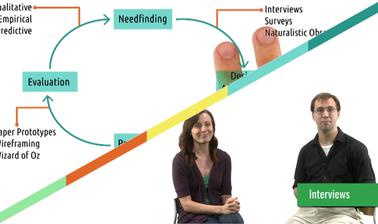
Build on your knowledge of HCI’s core principles by learning to design interfaces in the real world. Begin with the ethics of human subjects research, then learn critical methods for requirements gathering and brainstorming design alternatives. In this course, you’ll begin by learning the design life cycle. This is the process by which we investigate user needs, brainstorm potential designs, create prototypes, and evaluate those prototypes. This life cycle provides the structure for the third and fourth courses in this professional certificate.

Class Deals by MOOC List - Click here and see EdX's Active Discounts, Deals, and Promo Codes.

A key part of the design life cycle, however, is human subjects research. In interface design, this involves asking users for information about what they do and what they need, and then asking them for feedback on the prototypes that you develop. In HCI more broadly, this may involve testing different ideas with users to see what facilitates the best user experience. Whenever we interact with users, though, we need to keep in mind users’ rights to privacy and transparency, and so we begin this course with a discussion of ethics in HCI. This is grounded in the university Institutional Review Board process, but also investigates the role of ethics in HCI in industry as well.
From there, you’ll move on to needfinding and requirements gathering. It is always tempting to jump straight into designing an interface based on our intuitive understanding of a task or need, but successful interface design always starts with an understanding of the users: who are they, what they do, and what they need. This involves both interacting directly with them via surveys and interviews, as well as observing them at a distance or even attempting the tasks ourselves. This concludes with an understanding of the requirements of any interface we create.
From there, you’ll move on to brainstorming design alternatives. Again, it is often tempting to jump straight to the design we have in mind, but successful interface design starts with the results of needfinding and attempts a more grounded investigation of possible solutions. Through this lesson, you’ll learn techniques for managing effective brainstorming sessions and approaches to exploring the ideas that are created including artifacts like user personas, interaction timelines, and storyboards.
Finally, you’ll conclude by learning about prototyping. Implementing an interface is a complicated process, and there is a risk that we may invest lots of time into an interface that is doomed to fail because we do not get user feedback on the idea. The goal of prototyping is to get an idea in front of users as quickly as possible to validate and improve it before we move on to the high pressures of implementation.
By the end of this course, you’ll have an understanding of the design life cycle and its first three major stages: needfinding, brainstorming, and prototyping. You’ll also understand the ethical implications of HCI research and how to safeguard users’ rights.
This course is part of the Human-Computer Interaction Professional Certificate.

What you'll learn

  • The structure of the design life cycle: needfinding, brainstorming, prototyping, and evaluation.
  • The value of research ethics and the importance of emphasizing the user’s rights.
  • The role of Institutional Review Boards in governing university research.
  • The importance of ethics in industry and the mechanisms for ensuring they are maintained.
  • The importance of needfinding in the design life cycle.
  • Mechanisms for active needfinding, including surveys, interviews, and focus groups.
  • Approaches to personal needfinding, including participant observation and apprenticeship.
  • Ways to observe organic interaction, such as naturalistic observation or investigation of hacks and workarounds.
  • The data inventory, a structure for ensuring you understand your user and their problems.
  • Approaches to brainstorming design ideas, both individually and in groups.
  • Methods for further exploring design ideas, such as user personas and storyboards.
  • The spectrum of prototyping, from low-fidelity to high-fidelity.
  • The importance of low-fidelity prototypes in getting early feedback.
  • Approaches to low-fidelity prototyping, such as paper prototypes and Wizard of Oz.
  • Multi-level prototyping, or prototyping at variouslevels of abstraction.

Go to Class
MOOC List is learner-supported. When you buy through links on our site, we may earn an affiliate commission.

Related Courses

Introducción al diseño de hardware con Verilog (edX) EdX
Galileo University,GalileoX

Introducción al diseño de hardware con Verilog (edX)

Aprende el lenguaje de descripción de hardware Verilog, utilizado en la industria en el diseño de hardware digital y microprocesadores a la medida. En la actualidad, el hardware de soporte en sistemas digitales se suele diseñar en un solo circuito integrado FPGA (Field Programmable Gate Array), en parte debido al abundante espacio físico que ocuparía una implementación con varios circuitos integrados dedicados para este fin.

Self Paced
Self-Paced
Human-Computer Interaction I: Fundamentals & Design Principles (edX) EdX
Georgia Institute of Technology,GTx

Human-Computer Interaction I: Fundamentals & Design Principles (edX)

Learn the principles of Human-Computer Interaction to create intuitive, usable interfaces, with established design principles like feedback cycles, direct manipulation, affordances, signifiers, and more. This course takes you through the first eight lessons of CS6750: Human-Computer Interaction as taught in the Georgia Tech Online Master of Science in Computer Science program.

Self Paced
Self-Paced
Research Ethics: a guide for responsible research with human subjects (edX) EdX
KU Leuven University,KULeuvenX

Research Ethics: a guide for responsible research with human subjects (edX)

Learn to identify the key ethical issues in human subjects research, to critically reflect on these, and to practically approach them through experts’ lectures and interviews, case studies, and interesting exercises. Research ethics has become an established and essential part of scientific research with human subjects. In this course, we aim to give you a comprehensive introduction to the topic through the exploration of the main ethical issues that researchers experience in diverse contexts.

Self Paced
Self-Paced
Design Thinking: Prototyping and User Testing (edX) EdX
Rochester Institute of Technology,RITx

Design Thinking: Prototyping and User Testing (edX)

Learn the importance of prototyping and user testing solutions before going to market and how to assess and evaluate solutions post-launch. Creating prototypes puts a proposed solution into action. In this course, you will learn the value of prototypes and user testing as critical components of the design thinking process.

Self Paced
Self-Paced
Introduction to Social Work (edX) EdX
University of Alaska Fairbanks,AlaskaX

Introduction to Social Work (edX)

This course is an introduction to the profession of social work and the human services delivery system. It examines the historical development of social work focusing on the knowledge, values, and skills that characterize the social worker. This course will orient the learner to the context for social work and focus on the foundational frameworks of the profession.

Self Paced
Self-Paced
Ethics in AI Design (edX) EdX
Delft University of Technology,DelftX

Ethics in AI Design (edX)

Learn how to incorporate ethics into the development and implementation of AI systems. AI systems have a great potential to improve society, across a wide range of applications. The challenge is to do so responsibly. AI systems can lead to discrimination, loss of human control and a lack of explainability, to name a few ethical dilemmas they may present. Because of the great impact that AI and Machine Learning has (e.g. ChatGPT by OpenAI, or the use of ML for medical diagnoses), we need to ensure that we design and use them in a way that meets ethical standards.

Self Paced
Self-Paced
The Software Architect Code: Building the Digital World (edX) EdX
Universidad Carlos III de Madrid - UC3M,UC3Mx

The Software Architect Code: Building the Digital World (edX)

An introductory course aimed at helping you to discover and develop your software talents to succeed within the digital world. Enhance your software skills and capabilities from a software innovation perspective. Do you have a career in the software industry? Are you a founder of a technical startup or even a business executive willing to know what kind of qualified job applicants do you need to recruit? Or are you a software developer who want to unveil your skills in order to build innovative software products with added value? Join us for this 8-week course to find out.

Self Paced
Self-Paced
Ethics in Action (edX) EdX
SDGAcademyX,SDG Academy

Ethics in Action (edX)

What do the world’s great religious and secular philosophies have to say about ethical conduct? Which virtues are common across faiths? And what role do religious communities have to play in building a more just and sustainable world? The challenges of sustainable development are more than technical or political—they are also moral, calling on us to examine who we are as human beings, and who we want to be going forward.

Self Paced
Self-Paced
Urban Ecology Design (edX) EdX
Delft University of Technology,DelftX

Urban Ecology Design (edX)

Learn how to contribute to a more biodiverse, nature-inclusive and sustainable built environment by using nature-based solutions in your designs and policies. As our urban habitats become increasingly complex, the need to address the challenges of accommodating a growing human population becomes ever more pressing. These challenges, intricately intertwined with the built environment and its wider surroundings, encompass the perils of heat stress, loss of biodiversity, land degradation, flood risks, and the urgent need to adapt to a changing climate.

Self Paced
5-12 Weeks