EdX

Water quality and the biogeochemical engine (edX)

Water quality and the biogeochemical engine (edX)

Learn about how the quality of water is a direct result of complex bio-geo-chemical interactions, and about how to use these processes to mitigate water quality issues. Interested in environmental issues, but unsure where to start? This is the course for you! High quality water, to be provided for drinking and irrigation purposes to the world’s ever-growing population, is one Great Challenge in the near future.

Class Deals by MOOC List - Click here and see EdX's Active Discounts, Deals, and Promo Codes.

Explore the links between biology, chemistry and soil science that lead to what people often take for granted: good quality water.

This course is an introduction to environmental sciences. Using only basic knowledge from inorganic chemistry and biology, the course will lead you to an exploration of every day issues around the world. We will tackle some basic questions: Why did the “dust bowl” or the Assouan River dam have so profound an impact on soil fertility? How do we explain the mass poisoning affecting tens of millions of people in SE Asian deltas? Why is nitrate, but not potassium, a pollutant linked to agriculture even through NPK fertilizers are used? Besides plants, are there other photosynthetic organisms? Can we reconstruct water quality from centuries ago although no water samples remain? Are biofuel or coal gasification plants viable energy solutions? Why does deforestation result in loss of fertility in the Amazon basin but not in temperate Europe? What critical water issues will be raised by megacities, which will soon represent 2/3 of the world’s population? How has the relationship between humans and water changed over the centuries?
The class will consist of lecture videos, which are between 10 and 15 minutes in length. Every week, you will have related quiz questions and exercises. These optional assignments will not be graded and the solution will be provided the week after the assignment is posted. At the end of weeks 4 & 10, there will be a graded MCQ (each counting for 15% of the final grade). There will also be two peer-graded homework assignments, together with two MCQ, at the end of week 7 and week 13 as mid term and final exams.

What you'll learn

  • Major microbial metabolisms
  • Aquatic chemistry equilibria
  • Biogeochemical cycling
  • Natural water treatment processes

Syllabus

  1. Atmosphere and rainwater
  2. Photosynthesis and C fixation
  3. C cycling and C storage
  4. OM and methane
  5. Weathering and soil formation
  6. Surface chemistry
  7. Anoxic environments
  8. Nitrogen Cycle
  9. Heavy metals and their bioavailability
  10. Mines and contamination
  11. Surface water quality
  12. Urban Metabolism
Go to Class
MOOC List is learner-supported. When you buy through links on our site, we may earn an affiliate commission.

Related Courses

The Challenge of Global Water Security (FutureLearn) FutureLearn
Cardiff University

The Challenge of Global Water Security (FutureLearn)

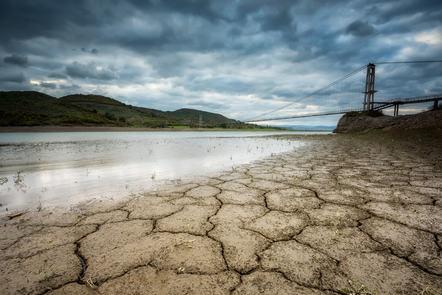
An introduction to the challenges of water security on a local and global scale. How do we achieve water security for everyone? Over the next 30 years it is estimated that 80% of the world’s population will live in areas with high levels of water scarcity. How do we manage this so that we can ensure global water security for both people and ecosystems?

Self Paced
4 Weeks
Artificial Intelligence (AI) for Earth Monitoring (FutureLearn) FutureLearn
EUMETSAT,Copernicus Atmosphere Monitoring Service - CAMS,European Centre for Medium-Range Weather Forecasts - ECMWF,Mercator Ocean International - MOi,European Environment Agency - EEA

Artificial Intelligence (AI) for Earth Monitoring (FutureLearn)

Explore how artificial intelligence (AI) and machine learning (ML) technologies are helping to advance Earth monitoring. Learn to use AI and ML to improve the use of big data in Earth Monitoring. This is a fast-changing and critical time for Earth Observation (EO), especially for those involved in its use for climate and meteorology.

Oct 18th 2021
5-12 Weeks
Statistical Thermodynamics: Molecules to Machines (Coursera) Coursera
Carnegie Mellon University

Statistical Thermodynamics: Molecules to Machines (Coursera)

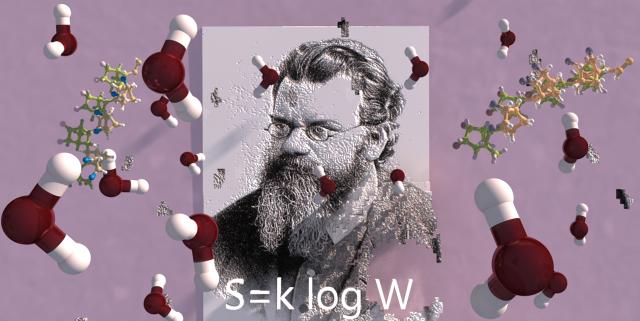
Modern engineering research focuses on designing new materials and processes at the molecular level. Statistical thermodynamics provides the formalism for understanding how molecular interactions lead to the observed collective behavior at the macroscale. This course will develop a molecular-level understanding of key thermodynamic quantities like heat, work, free energy and entropy. These concepts will be applied in understanding several important engineering and biological applications.

Nov 29th 2026
5-12 Weeks
Environmental Engineering: Drinking Water Treatment (edX) EdX
Seoul National University,SNUx

Environmental Engineering: Drinking Water Treatment (edX)

Understand what makes water clean or dirty and what are being done at water treatment facilities to make water safe to drink. This course will cover fundamental science and engineering principles dealing with natural and water environmental systems. First, we focus on what influences water quality and what are sources, characteristics, and effects of water pollutants. Second, we will explore the basic chemical concepts needed to understand how pollutants may change their forms and influence water quality.

Self Paced
Self-Paced
Flight Mechanics - Anemobarometry (Coursera) Coursera
ISAE-SUPAERO

Flight Mechanics - Anemobarometry (Coursera)

This course focuses on the physics of the atmosphere and its consequences on speed and altitude measurements. At the end of this course, you will understand precisely the meaning of the speed and altitude indication available to the pilot of an airplane. You will understand the difference between standard and actual atmosphere and be able to perform basic altitude and speed correction computations.

Nov 16th 2026
3 Weeks
Fundamentals of Neuroscience, Part 1: The Electrical Properties of the Neuron (edX) EdX
HarvardX,Harvard University

Fundamentals of Neuroscience, Part 1: The Electrical Properties of the Neuron (edX)

Learn how electricity makes the neurons in your brain tick. Fundamentals of Neuroscience is a three-courseseries that explores the structure and function of the nervous system—from the inner workings of a single nerve cell to the staggering complexity of the brain and the social interactions they enable.

Self Paced
Self-Paced
Water: an essential resource (POK) Polimi OPEN KNOWLEDGE
Politecnico di Milano

Water: an essential resource (POK)

The challenge of protection from chemical and microbiological hazards. This MOOC wants to communicate the challenge of protecting water and then human health from chemical and microbiological hazards, as well as the multidisciplinarity required by this challenge by providing some key elements about water quality, protection and remediation, sustainable drinking water production, online monitoring, and finally advanced computing for process control.

Available
3 Weeks
Understanding Biological Energy (FutureLearn) FutureLearn
Royal Holloway, University of London

Understanding Biological Energy (FutureLearn)

Get an introduction to energy and explore how humans and other living things obtain and use their biological energy sources. Discover applications of biological energy, from human energy to photosynthesis. On this course, you’ll learn what energy actually is and how living things acquire and convert it.

Self Paced
4 Weeks
Groundwater Contamination (edX) EdX
Purdue University,PurdueX

Groundwater Contamination (edX)

The Earth is blue for its oceans and green for its groundwater. Access to clean freshwater is essential yet human activities deteriorate water quality. This unit describes contaminant transport in aquifers. Groundwater is the water beneath the ground surface. It is a vast freshwater reservoir often overlooked because invisible, yet 1000 times greater than all lakes and rivers. The Earth is blue for its oceans, but green for the freshwater under our feet.

This course is archived
5-12 Weeks
Learn About Weather (FutureLearn) FutureLearn
University of Exeter,Royal Meteorological Society - RMetS,Met Office

Learn About Weather (FutureLearn)

Explore all things weather - from storms to climate - with this course that looks at the basic processes behind the weather. Ever wondered what the difference between a hurricane, cyclone and typhoon is? Or what a ‘front’ is? Or asked how weather warnings are issued? Maybe you’ve even spoken about the weather today. The weather is one of the most popular topics of conversation, yet not many of us actually know how it works.

Sep 27th 2021
4 Weeks