EdX

Groundwater Contamination (edX)

Offered by Purdue University, PurdueX,
Groundwater Contamination (edX)

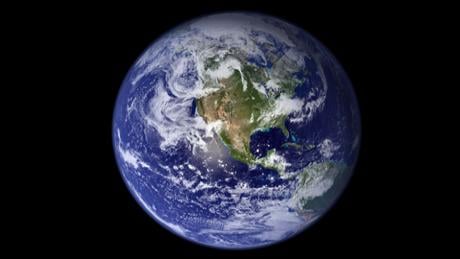
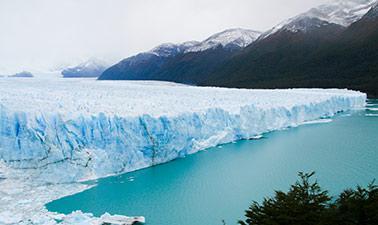
The Earth is blue for its oceans and green for its groundwater. Access to clean freshwater is essential yet human activities deteriorate water quality. This unit describes contaminant transport in aquifers. Groundwater is the water beneath the ground surface. It is a vast freshwater reservoir often overlooked because invisible, yet 1000 times greater than all lakes and rivers. The Earth is blue for its oceans, but green for the freshwater under our feet.

Class Deals by MOOC List - Click here and see EdX's Active Discounts, Deals, and Promo Codes.

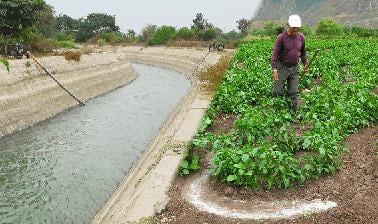
Half of the world’s population rely on groundwater for drinking. Inadequate access to safe freshwater contributes to social, economic and political instability. Human activities can affect the quality of underground freshwater. Storage tanks and sceptic systems can leak, old landfills can seep, road salts can infiltrate the ground.
This course describes the principles of transport in aquifers so that engineers can predict and plan the safe extraction of groundwater for private and public use. Engineers design the treatment of contaminated groundwater in situ or above ground; they understand how to isolate and treat a plume of using the principles of transport processes in porous media. In the United States, the Safe Drinking Water Act directs the Environmental Protection Agency to establish maximum contaminant-level goals (MCLGs) and maximum contaminant levels (MCLs) for drinking water.
How do we know how safe well-water is? How do different contaminants move through aquifers? How do we model contaminant plumes from landfills or other sources?
In this course, we will cover the following topics:
1) The Advection Dispersion Equation: The fluxes of dissolved contaminants are dictated by the mixing of water in the porous media by dispersion and its relocation by advection. We derive and describe these processes both conceptually and mathematically.
2) Methods of Solution: We describe a number of methods to help solve the differential Advection Dispersion Equation. Analytical solutions can help with heuristics, but often more practical numerical methods such as particle tracking and finite differences can help understand the behavior in more complicated, heterogenous formations.
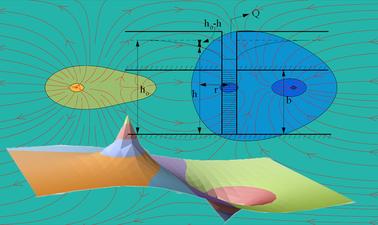
3) Issues with Dimensions (and Boundaries): Unlike streams and channels, aquifers cannot be modeled with one dimensional equation. We focus on two dimensional schemes that treat aquifers as plane from a top view.
4) Notions of Reactive transport: Aquifers process nutrients and other contaminants. The fate of a chemical may be complex but is often described as a simple upscaled process. We describe the assumptions tied to the bulk behavior.
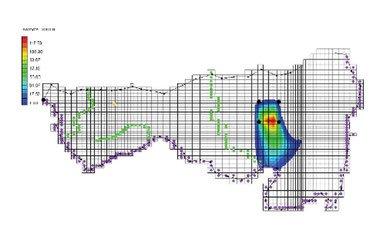
5) Applications: In this last topic, we provide examples of landfill and well contamination and walk through an example of a MODFLOW model

What you'll learn

  • Describe the advection and dispersion transport processes in porous media
  • Explain the difference between diffusion and dispersion
  • Derive the diffusion equations from mass balance
  • Explain advective mass fluxes
  • Define the notion of representative elementary volume
  • Solve the advection and dispersion
  • Explain the difference between a differential equation and its solution
  • Select the appropriate method to estimate transport parameters
  • Compare and contrast the various methods of solution
  • Outline the principle of superposition and convolution
  • Calculate the velocity and dispersion coefficient from observations using the moments method
  • Solve reactive transport problems
  • Contrast the behavior of conservative and reactive solutes
  • Explain linear and non-linear sorption
  • Define the notion of chemical equilibrium and reaction kinetics
  • Sketch the evolution of concentration vs time for a zero and first order reaction
  • Explain why Monod kinetics describe biological remediation better than first order models
  • Apply Transport models to real world problems
  • Illustrate groundwater contamination for different scenarios
  • Model iron oxidation when contacting the atmosphere
  • Use a finite difference scheme to model a heterogeneous aquifer with a landfill and a particle tracking scheme to illustrate a leak.
  • Explain how wells operations can interfere with contaminant transport

Syllabus

Week 1: The Advection Dispersion Equation
The fluxes of dissolved contaminants are dictated by the mixing of water in the porous media by dispersion and its relocation by advection. We derive and describe these processes both conceptually and mathematically.

Week 2: Methods of Solution
We describe a number of methods to help solve the differential Advection Dispersion Equation. Analytical solutions can help with heuristics, but often more practical numerical methods such as particle tracking and finite differences can help understand the behavior in more complicated, heterogenous formations.

Week 3: Issues with Dimensions
Unlike streams and channels, aquifers cannot be modeled with one-dimensional equation. We focus on two-dimensional schemes that treat aquifers as plane from a top view.

Week 4: Notions of Reactive transport
Aquifers process nutrients and other contaminants. The fate of a chemical may be complex but is often described as a simple upscaled process. We describe the assumptions tied to the bulk behavior.

Week 5: Applications
In this last topic, we provide examples of landfill and well contamination and walk through an example of a MODFLOW model.
Go to Class
MOOC List is learner-supported. When you buy through links on our site, we may earn an affiliate commission.

Related Courses

Water Supply and Sanitation Policy in Developing Countries Part 1: Understanding Complex Problems (Coursera) Coursera
University of Manchester

Water Supply and Sanitation Policy in Developing Countries Part 1: Understanding Complex Problems (Coursera)

Our course explores what can be done to solve the complex problem that half a billion people worldwide do not have improved water supplies and two billion do not have improved sanitation. We look forward to you joining us. We want to help you develop the skills you need to address this major global challenge of the 21st century.

Jun 8th 2026
5-12 Weeks
Sustainable Tourism – promoting environmental public health (Coursera) Coursera
University of Copenhagen

Sustainable Tourism – promoting environmental public health (Coursera)

The MOOC introduces learners to key environmental health and natural resources management challenges associated with the rapid growth in international tourist arrivals into low-income countries. Since infrastructural and regulatory capacities in such countries are often limited they are more exposed to the negative implications of such development. The MOOC will present experiences and potential avenues to develop a more sustainable form of tourism.

Jun 8th 2026
3 Weeks
Nitrogen: A Global Challenge (edX) EdX
University of Edinburgh,EdinburghX

Nitrogen: A Global Challenge (edX)

Learn about the global nitrogen challenge, how nitrogen has helped human civilization to develop, and how its misuse now threatens us. It’s a perfect storm. Limited food, water and energy unequally spread between an expanding population, and a warming climate as the bitter icing on the cake. In all these global challenges nitrogen has a leading role to play. Here you will learn just how hard-wired into all of human civilisation nitrogen is, and whether the future will see it as our quiet savior or the toxic villain of the piece.

Self Paced
Self-Paced
Water quality and the biogeochemical engine (edX) EdX
École Polytechnique Fédérale de Lausanne,EPFLx

Water quality and the biogeochemical engine (edX)

Learn about how the quality of water is a direct result of complex bio-geo-chemical interactions, and about how to use these processes to mitigate water quality issues. Interested in environmental issues, but unsure where to start? This is the course for you! High quality water, to be provided for drinking and irrigation purposes to the world’s ever-growing population, is one Great Challenge in the near future.

No sessions available
5-12 Weeks
Religious Symbols of the World (edX) EdX
Seoul National University,SNUx

Religious Symbols of the World (edX)

This course is the third and final course in the series following “Understanding Religious Symbolism” and “Myths, Rituals, and Cosmos.” Through the theories and patterns that you learned in these three courses, I hope that you will be able to interpret the various religious phenomena in different cultures, and through this gain a better understanding of culture and human beings.

Self Paced
Self-Paced
Drinking Water Treatment (edX) EdX
Delft University of Technology,DelftX

Drinking Water Treatment (edX)

Learn about urban water services, focusing on conventional technologies for drinking water treatment. This course focuses on conventional technologies for drinking water treatment. Unit processes, involved in the treatment chain, are discussed as well as the physical, chemical and biological processes involved.

Self Paced
Self-Paced
Urban Sewage Treatment (edX) EdX
Delft University of Technology,DelftX

Urban Sewage Treatment (edX)

Learn about urban water services, focusing on basic sewage treatment technologies. This course will focus on basic technologies for the treatment of urban sewage. Unit processes involved in the treatment chain will be described as well as the physical, chemical and biological processes involved. There will be an emphasis on water quality and the functionality of each unit process within the treatment chain. After the course one should be able to recognise the process units, describe their function and make simple design calculations on urban sewage treatment plants.

Self Paced
Self-Paced
Powering Resilient Communities: A Holistic Approach to Food, Energy, and Water Security (edX) EdX
University of Alaska Fairbanks,AlaskaX

Powering Resilient Communities: A Holistic Approach to Food, Energy, and Water Security (edX)

A research-based course on resilient renewable energy solutions, with an emphasis on microgrids, and Food, Energy, and Water (FEW) security. This course provides research-based and on-the-ground tools for community planners, grid designers, and business leaders to improve and implement stronger and more resilient renewable energy systems in Arctic communities.

Self Paced
Self-Paced
Water and Wastewater Treatment Engineering: Biochemical Technology (edX) EdX
Tsinghua University,TsinghuaX

Water and Wastewater Treatment Engineering: Biochemical Technology (edX)

Learn the basic principles and characteristics of biochemical technology in water and wastewater treatment engineering. Biochemical technology in water and wastewater treatment engineering is essential in the field of water treatment. In this environmental studies course you will learn the basic principles and characteristics of biochemical technology.

Self Paced
Self-Paced