Statistical Thermodynamics: Molecules to Machines (Coursera)

Statistical Thermodynamics: Molecules to Machines (Coursera)

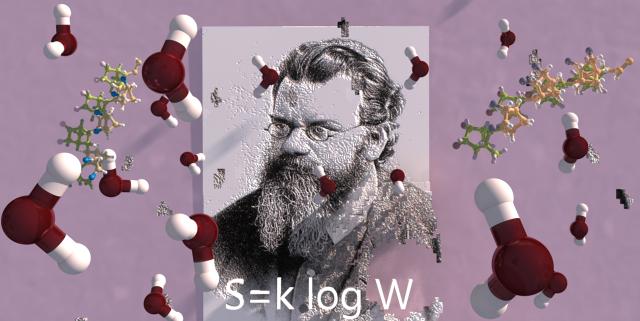
Modern engineering research focuses on designing new materials and processes at the molecular level. Statistical thermodynamics provides the formalism for understanding how molecular interactions lead to the observed collective behavior at the macroscale. This course will develop a molecular-level understanding of key thermodynamic quantities like heat, work, free energy and entropy. These concepts will be applied in understanding several important engineering and biological applications.

Class Deals by MOOC List - Click here and see Coursera's Active Discounts, Deals, and Promo Codes.

Syllabus

Week 1: Theory: Classical Thermodynamics
Week 2: Theory: Introduction to Statistics and Statistical Thermodynamics
Week 3: Theory: Non-interacting systems
Week 4: Theory: Interacting systems
Week 5: Applications: Water, Polymer and Photosynthesis
Week 6: Applications: Photosynthesis, Liquids
Week 7: Application: Adsorption, Electrolytes
Week 8: Thank You
Go to Class
MOOC List is learner-supported. When you buy through links on our site, we may earn an affiliate commission.

Related Courses

Chemical Engineering Thermodynamics 2 (Coursera) Coursera
Korea Advanced Institute of Science and Technology - KAIST

Chemical Engineering Thermodynamics 2 (Coursera)

An appreciation of thermodynamics is required to become a chemical and biomolecular engineer. Thermodynamics can assess the viability of a process and is one of the curriculum's most essential topics. The principles are utilized in following engineering courses (kinetics, mass transfer, design, materials) and are applicable to numerous engineering disciplines. The increased emphasis on energy usage and transformation as a result of rising demand, diminishing supply, and global warming necessitates that the engineers who will tackle these issues have a firm grasp of thermodynamics.

Aug 3rd 2026
5-12 Weeks
Biochemical Principles of Energy Metabolism (Coursera) Coursera
Korea Advanced Institute of Science and Technology - KAIST

Biochemical Principles of Energy Metabolism (Coursera)

Everyone knows that energy is essential for sustaining life. How can you define energy in life? Have ever thought about ways of how carbohydrates like glucose from your diet can be used for extracting energy? A scientific field that focuses on energy production and flow though living cells and organisms is called bioenergetics. Energy metabolism covers various biochemical ways of energy transformation and regulatory mechanisms of over thousands chemical reactions. Without fine control of those metabolic processes, cells and organisms cannot maintain activities linked to life.

Aug 17th 2026
5-12 Weeks
Quantum Mechanics for Scientists and Engineers 2 (edX) EdX
StanfordOnline

Quantum Mechanics for Scientists and Engineers 2 (edX)

This course covers key topics in the use of quantum mechanics in many modern applications in science and technology, introduces core advanced concepts such as spin, identical particles, the quantum mechanics of light, the basics of quantum information, and the interpretation of quantum mechanics, and covers the major ways in which quantum mechanics is written and used in modern practice.

Self Paced
Self-Paced
General Chemistry: Concept Development and Application (Coursera) Coursera
Rice University

General Chemistry: Concept Development and Application (Coursera)

This course will cover the topics of a full year, two semester General Chemistry course. We will use a free on-line textbook, Concept Development Studies in Chemistry, available via Rice’s Connexions project. The fundamental concepts in the course will be introduced via the Concept Development Approach developed at Rice University. In this approach, we will develop the concepts you need to know from experimental observations and scientific reasoning rather than simply telling you the concepts and then asking you to simply memorize or apply them.

Jul 27th 2026
5-12 Weeks
Thermodynamique : applications (Coursera) Coursera
École Polytechnique Fédérale de Lausanne

Thermodynamique : applications (Coursera)

Ce cours complète le MOOC « Thermodynamique : fondements » qui vous permettra de mettre en application les concepts fondamentaux de la thermodynamique. Pour atteindre cet objectif, le Professeur J.-Ph. Ansermet de l’Ecole Polytechnique Fédérale de Lausanne s’est entouré d’experts et de spécialistes des différents domaines d’application provenant de diverses institutions partenaires du réseau RESCIF. Vous pourrez ainsi voir l’usage de la thermodynamique en chimie, en ingénierie et en physique.

Aug 3rd 2026
5-12 Weeks
Basics of thermodynamics (Coursera) Coursera
Novosibirsk State University

Basics of thermodynamics (Coursera)

Our course on the basics of thermodynamics targeting a wide audience includes only what is absolutely necessary, focusing on the most basic issues, excluding less important specialized topics. However, you will learn about unusual phenomena such as stretched liquid and see interesting experiments. A future competent specialist, whose work should be at least somehow connected with physical phenomena, will find this course in thermodynamics useful and necessary.

Aug 1st 2022
5-12 Weeks
Astro 101: Black Holes (Coursera) Coursera
University of Alberta

Astro 101: Black Holes (Coursera)

What is a black hole? Do they really exist? How do they form? How are they related to stars? What would happen if you fell into one? How do you see a black hole if they emit no light? What’s the difference between a black hole and a really dark star? Could a particle accelerator create a black hole? Can a black hole also be a worm hole or a time machine? In Astro 101: Black Holes, you will explore the concepts behind black holes. Using the theme of black holes, you will learn the basic ideas of astronomy, relativity, and quantum physics.

Aug 17th 2026
5-12 Weeks
Dense Gases, Liquids and Solids (Coursera) Coursera
University of Colorado Boulder

Dense Gases, Liquids and Solids (Coursera)

Course 4 of Statistical Thermodynamics addresses dense gases, liquids, and solids. As the density of a gas is increased, intermolecular forces begin to affect behavior. For small departures from ideal gas behavior, known as the dense gas limit, one can estimate the change in properties using the concept of a configuration integral, a modification to the partition function.

Aug 3rd 2026
4 Weeks
Quantum Mechanics (Coursera) Coursera
University of Colorado Boulder

Quantum Mechanics (Coursera)

Course 2 of Statistical Thermodynamics presents an introduction to quantum mechanics at a level appropriate for those with mechanical or aerospace engineering backgrounds. Using a postulatory approach that describes the steps to follow, the Schrodinger wave equation is derived and simple solutions obtained that illustrate atomic and molecular structural behavior. More realistic behavior is also explored along with modern quantum chemistry numerical solution methods for solving the wave equation.

Aug 3rd 2026
3 Weeks
The Discovery of the Higgs Boson (Coursera) Coursera
University of Edinburgh

The Discovery of the Higgs Boson (Coursera)

The discovery of a new fundamental particle at the Large Hadron Collider (LHC), CERN is the latest step in a long quest seeking to answer one of physics’ most enduring questions: why do particles have mass? The experiments’ much anticipated success confirms predictions made decades earlier by Peter Higgs and others, and offers a glimpse into a universe of physics beyond the Standard Model.

Aug 3rd 2026
5-12 Weeks
Non-Equilibrium Applications of Statistical Thermodynamics (Coursera) Coursera
University of Colorado Boulder

Non-Equilibrium Applications of Statistical Thermodynamics (Coursera)

Course 5 of Statistical Thermodynamics explores three different applications of non-equilibrium statistical thermodynamics. The first is the transport behavior of ideal gases, with some discussion of transport in dense gases and liquids. It starts with simple estimates of the transport properties of an ideas gas. It then introduces the Boltzmann Equation and describes the Chapman-Enskog solution of that equation in order to obtain the transport properties. It closes with a discussion of practical sources of transport properties.

Aug 3rd 2026
3 Weeks
The Introduction to Quantum Computing (Coursera) Coursera
Saint Petersburg State University

The Introduction to Quantum Computing (Coursera)

"Quantum Computing" is among those terms that are widely discussed but often poorly understood. The reasons of this state of affairs may be numerous, but possibly the most significant among them is that it is a relatively new scientific area, and it's clear interpretations are not yet widely spread. The main obstacle here is the word "quantum", which refers to quantum mechanics - one of the most counter-intuitive ways to describe our world.

Aug 8th 2022
5-12 Weeks