Theory of Angular Momentum (Coursera)

Theory of Angular Momentum (Coursera)

This course can also be taken for academic credit as ECEA xxxx, part of CU Boulder’s Master of Science in Electrical Engineering degree. This course introduces the quantum mechanical concept of angular momentum operator and its relationship with rotation operator. It then presents the angular momentum operators, their eigenvalues and eigenfunctions. Finally, it covers the theory of angular momentum addition.

Class Deals by MOOC List - Click here and see Coursera's Active Discounts, Deals, and Promo Codes.

At the end of this course learners will be able to:

  1. describe and analyze angular momentum states using quantum mechanically defined angular momentum operators,
  2. solve angular momentum eigenvalue equations and
  3. add angular momenta quantum mechanically.

What You Will Learn

  • Specify the quantum states of the electron in a hydrogen atom.
  • Describe spin states quantum mechanically.
  • Solve eigenvalue equations of angular momentum operators.
  • Add general angular momenta.

Course 2 of 3 in the Quantum Mechanics for Engineers Specialization

Syllabus

WEEK 1
Orbital Angular Momentum and Hydrogen Atom
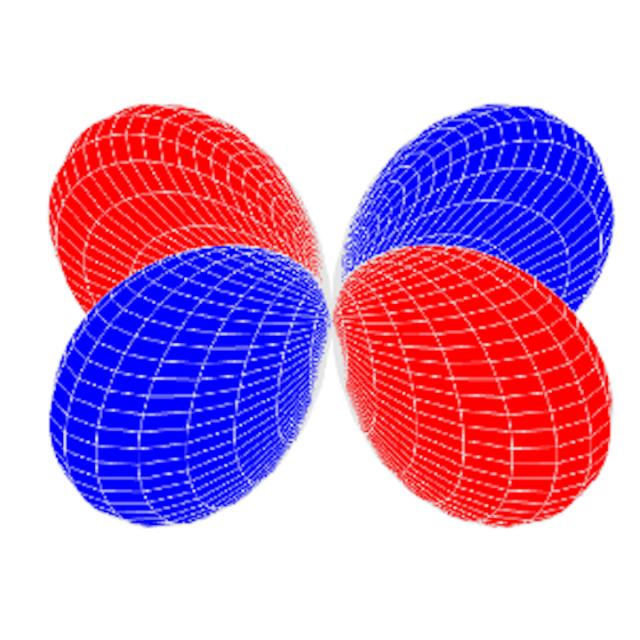
In this module we will introduce the course on the theory of angular momentum and then introduce the quantum mechanical definition of orbital momentum. We will then use the spherical harmonics to express the orbital angular momentum eigenstates and use them to describe the hydrogen atom states.

WEEK 2
Rotation and Angular Momentum
In this module, we introduce the general definition of angular momentum operator based on rotation operator. This general definition allows both orbital and spin angular momentum. We then derive the most fundamental property of angular momentum - commutation relations among their Cartesian components. Finally, we discuss the properties of spin-1/2 system.

WEEK 3
General Theory of Angular Momentum
This module covers the general theory of angular momentum. We start with the commutation relation of angular momentum and define angular momentum eigenstates. We then construct matrix representation of rotation operators using the angular momentum eigenstates as the basis set. Finally, we discuss how to quantum mechanically add angular momenta.
Go to Class
MOOC List is learner-supported. When you buy through links on our site, we may earn an affiliate commission.

Related Courses

Mastering Quantum Mechanics (edX) EdX
MIT,MITx

Mastering Quantum Mechanics (edX)

Learn the foundations of quantum mechanics – wave mechanics, spin one-half, vector spaces and linear operators, the Heisenberg uncertainty principle, quantum dynamics, two-state systems, entanglement, and angular momentum. This course offers a sophisticated view of quantum mechanics and its proper mathematical foundation. Completing the course will give you the tools needed to do research in quantum mechanics and to understand many current developments.

No sessions available
13-24 Weeks
Quantum Mechanics for Scientists and Engineers 2 (Stanford Online) Lagunita Stanford Online
Stanford University

Quantum Mechanics for Scientists and Engineers 2 (Stanford Online)

This course covers key topics in the use of quantum mechanics in many modern applications in science and technology, introduces core advanced concepts such as spin, identical particles, the quantum mechanics of light, the basics of quantum information, and the interpretation of quantum mechanics, and covers the major ways in which quantum mechanics is written and used in modern practice. It follows on directly from the QMSE-01 "Quantum Mechanics for Scientists and Engineers" course and is also accessible to others who have studied some quantum mechanics at the equivalent of a first junior or senior college-level physics quantum mechanics course.

No sessions available
5-12 Weeks
Understanding Modern Physics II: Quantum Mechanics and Atoms (Coursera) Coursera
The Hong Kong University of Science and Technology - HKUST

Understanding Modern Physics II: Quantum Mechanics and Atoms (Coursera)

The 20th century was known as the century of physics. In the past 120 years, concepts such as space, time, energy, entropy and particles were understood to much deeper levels. New paradigms of thinking such as relativity and quantum mechanics emerged. This course is the second course in the Understanding Modern Physics series, which covers an introduction to quantum mechanics, atomic physics and quantum information.

Aug 3rd 2026
4 Weeks
The Einstein Revolution (edX) EdX
HarvardX,Harvard University

The Einstein Revolution (edX)

Traces Albert Einstein’s engagement with relativity, quantum mechanics, Nazism, nuclear weapons, philosophy, the arts, and technology. Albert Einstein has become the icon of modern science. Following his scientific, cultural, philosophical, and political trajectory, this course aims to track the changing role of physics in the 20th and 21st centuries.

Self Paced
Self-Paced
The Introduction to Quantum Computing (Coursera) Coursera
Saint Petersburg State University

The Introduction to Quantum Computing (Coursera)

"Quantum Computing" is among those terms that are widely discussed but often poorly understood. The reasons of this state of affairs may be numerous, but possibly the most significant among them is that it is a relatively new scientific area, and it's clear interpretations are not yet widely spread. The main obstacle here is the word "quantum", which refers to quantum mechanics - one of the most counter-intuitive ways to describe our world.

Aug 8th 2022
5-12 Weeks
The Discovery of the Higgs Boson (Coursera) Coursera
University of Edinburgh

The Discovery of the Higgs Boson (Coursera)

The discovery of a new fundamental particle at the Large Hadron Collider (LHC), CERN is the latest step in a long quest seeking to answer one of physics’ most enduring questions: why do particles have mass? The experiments’ much anticipated success confirms predictions made decades earlier by Peter Higgs and others, and offers a glimpse into a universe of physics beyond the Standard Model.

Aug 3rd 2026
5-12 Weeks