EdX

Selected chapters of quantum mechanics for modern engineering (edX)

Offered by NUST MISIS, MISISx,
Selected chapters of quantum mechanics for modern engineering (edX)

Afraid of reading even the simplest paper in modern research journals? This course is for you! The course is for physics majors. You will learn how to gain insight in contemporary fields in condensed matter physics.

Class Deals by MOOC List - Click here and see EdX's Active Discounts, Deals, and Promo Codes.

The main topics include:

  1. Bose-condensates and selected topics from superconductivity.
  2. Introduction to quantum information theory.
  3. Quantum computing algorithms.
  4. Quantum measurements and entanglement.
  5. Quantum teleportation.
  6. Aharonov-Bohm effect and its modern use.
  7. Eigenstate thermalization hypothesis.

The course instructors are active researchers in a theoretical solid state physics. Armed with the tools mastered while attending the course, the students will have solid understanding of the principles of quantum mechanics, gain insight in contemporary fields in condensed matter physics.

What you'll learn

  1. Basics of quantum mechanics and quantum information theory.
  2. Simple computing algorithms.
  3. Rich physics of Aharonov-Bohm Effect.
  4. Detailed study of quantum measurement theory.

Syllabus

Week 1:
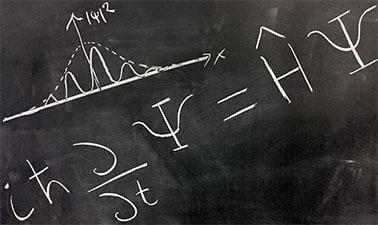
History of quantum mechanics. Wave packet. Schrödinger equation. Properties of wave function, normalization. Averages and operators. Superposition of states, measurement, commutators. Schrödinger equation
Week 2:
Infinite well. Delta-barrier, matching wave functions. Dirac’s bra-ket notation. Operators in Dirac’s notation, Hermitian conjugation. Harmonic oscillator via ladder operators.
Week 3:
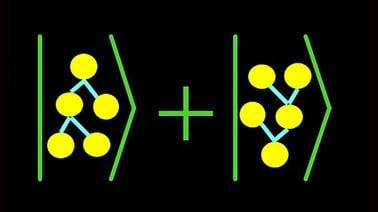
Qubit and Bloch sphere. Quantum superposition of N qubits. Overview of quantum computing algorithms and their advantage as compared to classical algorithms. Quantum teleportation. Quantum decoherence of many-qubit system and quantum error correction. Physical realization of quantum computers: difficulties and advances.
Week 4:
Superconductivity: Discovery. Main Properties, Meissner's and Josephson's effect. Types of supercoductors, Vortices. Applications of superconductivity. Summary and theoretical explanation.
Week 5:
Modeling a realistic quantum system: resonant microwave cavity coupled to qubits array via the gauge-invariant quantum phases. Mapping on the infinitely coordinated Ising spin-chain of spins-½. Holstein-Primakoff representation. 1st-order quantum phase transition into dipolar ordered state. Metastable states of the spin-chain: bound states of light.
Week 6:
Emergence of instantonic ‘pairing boson’ and high-Tc superconductivity. Negative energy of the ‘antiferromagnetic’ instantons. Zero-mode of instantonic ‘crystal’ along Matsubara time axis as the ’pairing boson’ in the Eliasberg-like equations. Why AF instantons behave as a ‘hidden order’. Spin excitations of the instantonic ‘crystal’ — hourglass modes?.
Week 7: Final Exam


Go to Class
MOOC List is learner-supported. When you buy through links on our site, we may earn an affiliate commission.

Related Courses

Quantum Mechanics: Wavefunctions, operators, and expectation values (edX) EdX
MIT,MITx

Quantum Mechanics: Wavefunctions, operators, and expectation values (edX)

Learn about wavefunctions and their probabilistic interpretation, the Schrodinger equation, and the properties of quantum observables. In this quantum physics course you will learn the basics of quantum mechanics. We begin with de Broglie waves, the wavefunction, and its probability interpretation. We then introduce the Schrodinger equation, inner products, and Hermitian operators. We also study the time-evolution of wave-packets, Ehrenfest’s theorem, and uncertainty relations.

No sessions available
5-12 Weeks
Fundamentals of Macroscopic and Microscopic Thermodynamics (Coursera) Coursera
University of Colorado Boulder

Fundamentals of Macroscopic and Microscopic Thermodynamics (Coursera)

Course 1 first explores the basics of both macroscopic and microscopic thermodynamics from a postulatory point of view. In this view, the meaning of temperature, thermodynamic pressure and chemical potential are especially clear and easy to understand. In addition, the development of the Fundamental Relation and its various transformations leads to a clear path to property relations and to the concept of ensembles needed to understand the relationship between atomic and molecular structural properties and macroscopic properties.

Jun 8th 2026
3 Weeks
Statistical Thermodynamics: Molecules to Machines (Coursera) Coursera
Carnegie Mellon University

Statistical Thermodynamics: Molecules to Machines (Coursera)

Modern engineering research focuses on designing new materials and processes at the molecular level. Statistical thermodynamics provides the formalism for understanding how molecular interactions lead to the observed collective behavior at the macroscale. This course will develop a molecular-level understanding of key thermodynamic quantities like heat, work, free energy and entropy. These concepts will be applied in understanding several important engineering and biological applications.

Jun 14th 2026
5-12 Weeks
Quantum Networking (edX) EdX
Purdue University,PurdueX

Quantum Networking (edX)

Learn about the science and engineering of future quantum networks whose security is guaranteed by laws of quantum physics. Applying exotic quantum properties such as entanglement to every-day applications such as communication and computation reveals new dimensions of such applications. Quantum encoding and entanglement distribution provide means to establish fundamentally secure communication links for transfer of classical and quantum data.

Mar 27th 2023
5-12 Weeks
Solid State Devices 1 (edX) EdX
Purdue University,PurdueX

Solid State Devices 1 (edX)

Semiconductor are everywhere in human activities, from your credit card to space exploration. This graduate-level introduction brings aspects of physics, chemistry, and engineering together to understand, analyze, and design transistors and solar cells. This course provides the graduate-level introduction to understand, analyze, characterize and design the operation of semiconductor devices such as transistors, diodes, solar cells, light-emitting devices, and more.

Jan 9th 2023
13-24 Weeks
Fundamentals of Quantum Information (edX) EdX
Delft University of Technology,DelftX

Fundamentals of Quantum Information (edX)

Learn how quantum information is represented mathematically via quantum circuits and how to manipulate quantum entanglement with these circuits. Take away the hardware, and all quantum computers work the same way, through the clever manipulation of quantum information and entanglement. This course provides a deeper understanding of some of the topics covered in our Quantum 101 program, namely, the representation and manipulation of quantum information at the level of abstract quantum circuits.

Self Paced
Self-Paced
Introduction to Quantum Computing (edX) EdX
The University of British Columbia,UBCx

Introduction to Quantum Computing (edX)

This course is an approachable introduction to the weird and complex world of quantum computing. Interested learners can develop an understanding of the physics and computer science behind this new technology. This course introduces students to the fundamentals of quantum computing and helps them understand and create quantum solutions from a computational and from a mathematical perspective.

Self Paced
Self-Paced
Quantum Computing for Your Classroom 10-12 (edX) EdX
The University of British Columbia,UBCx

Quantum Computing for Your Classroom 10-12 (edX)

Quantum Computing for Your Classroom is an activity focused, self-paced course designed to help educators integrate an exciting new field into their physics and computer science classrooms. This course seeks to help bridge that gap by providing activities and knowledge of quantum computing that high school educators can integrate into their existing classrooms, providing the children of today with the future proof skills needed for tomorrow.

Self Paced
Self-Paced
The Einstein Revolution (edX) EdX
HarvardX,Harvard University

The Einstein Revolution (edX)

Traces Albert Einstein’s engagement with relativity, quantum mechanics, Nazism, nuclear weapons, philosophy, the arts, and technology. Albert Einstein has become the icon of modern science. Following his scientific, cultural, philosophical, and political trajectory, this course aims to track the changing role of physics in the 20th and 21st centuries.

Self Paced
Self-Paced