AME

Update on HIV Treatment Options (AME)

Offered by Virology Education,
Update on HIV Treatment Options (AME)

This Online Education Activity is accredited by the European Accreditation Council for Continuing Medical Education (EACCME) for 1 European CME credit (ECMEC®). Welcome to the Update on HIV Treatment Options edition of the Online Meeting Highlights. Here you will learn about the safety profiles of Integrase inhibitors-based regimens, potential drug-drug interactions, and key considerations for future monitoring studies.

A new edition of the Online Meeting Highlights series is available now, providing an update on HIV treatment options.
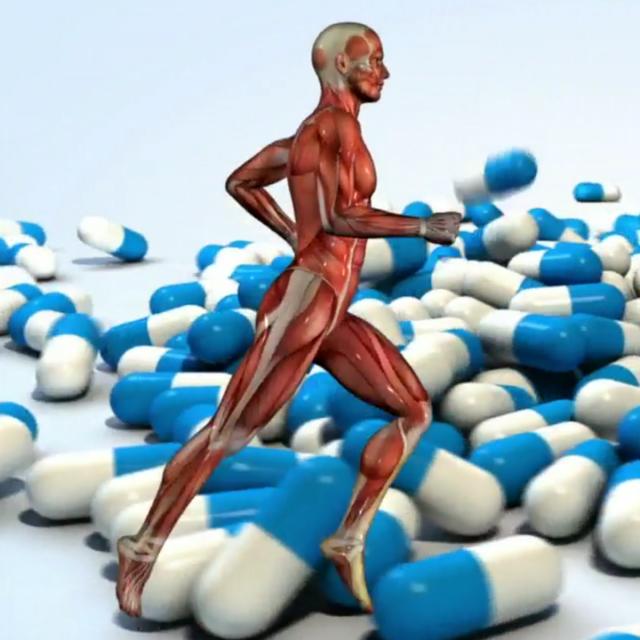
Highly potent and well-tolerated antiretrovirals have transformed HIV into a mostly manageable condition. Integrase inhibitors-based regimens are currently preferred first-line options. Effective and affordable, those drugs also have a high barrier to resistance. Follow this edition and learn more about their safety profiles, potential drug-drug interactions, and key considerations for future monitoring studies.

Compromised adherence, associated in part with a daily pill burden, remains a major obstacle to effective antiretroviral therapy. Designed to tackle this issue, long-acting injectable drugs are opening a new era in HIV prevention and treatment. Find out here about the latest clinical developments and future prospects. Whether these novel drug modalities may offer an alternative solution to a vaccine, and strengthen infection control far beyond HIV that is much needed nowadays?
All modules can be followed independently and at your own pace. Complete the entire course to equip yourself with the knowledge to work towards making a significant impact on the survival and quality of life of your patients faced with these specific circumstances.
After following this eLearning activity, you will be able to:

  • Interpret clinical data on injectable drug formulations for the prevention and treatment of HIV;
  • Understand pharmacological properties, safety profile, and potential drug-drug interactions of integrase inhibitors; and
  • Evaluate the optimal choice of generic versus branded antiretroviral drugs.

To obtain your certificate, you have complete all three modules, passed the relevant assessments and answered the evaluation survey.
Module 1 | Injectable Drugs for HIV Treatment
Module 2 | Update on INSTI Clinical Pharmacology
Module 3 | Considerations in the Use of Generic vs. Branded ARVs
Duration: approximately 20 minutes per module
You can enhance your learning experience by:

  • adding notes to the video modules;
  • consulting the accompanying presentation slides;
  • sharing your questions and observations with other learners in the discussion board; and
  • referring to further literature and other materials provided to you by our experts.

The program is aimed at clinicians from various specialties who occasionally treat HIV patients, such as primary care physicians, family doctors, OBGYN, transgender healthcare clinicians, adolescent medicine professionals, and preventive medicine professionals, as well as public health workers and researchers engaged in HIV related disciplines at varying degrees.


Go to Class
MOOC List is learner-supported. When you buy through links on our site, we may earn an affiliate commission.

Related Courses

The Brain and Space (Coursera) Coursera
Duke University

The Brain and Space (Coursera)

This course is about how the brain creates our sense of spatial location from a variety of sensory and motor sources, and how this spatial sense in turn shapes our cognitive abilities. Knowing where things are is effortless. But “under the hood,” your brain must figure out even the simplest of details about the world around you and your position in it.

Aug 17th 2026
5-12 Weeks
HPV-Associated Oral and Throat Cancer: What You Need to Know (Coursera) Coursera
Icahn School of Medicine at Mount Sinai

HPV-Associated Oral and Throat Cancer: What You Need to Know (Coursera)

This course, offered by the Department of Otolaryngology – Head and Neck Surgery at the Icahn School of Medicine at Mount Sinai, is designed to inform primary care physicians and otolaryngologists (general and head and neck surgeons), as well as medical students, residents, nurses, physician assistants, medical assistants, about HPV-associated oral and throat cancers. It is also applicable to individuals who wish to broaden their knowledge and vernacular about this disease process, especially those who may have been diagnosed with HPV and/or HPV-associated oropharyngeal cancers.

Aug 17th 2026
5-12 Weeks
Update on INSTIs (AME) AME
Virology Education

Update on INSTIs (AME)

This Online Education Activity is accredited by the European Accreditation Council for Continuing Medical Education (EACCME) for 1 European CME credit (ECMEC®). Welcome to the Update on INSTIs edition of the Online Meeting Highlights. Here you will learn about HIV integrase strand transfer inhibitors (INSTI), compiling for you data from relevant clinical trials that have assessed the efficacy, toxicity, and resistance.

Self Paced
Self-Paced
Managing Patients with Limited Treatment Options (AME) AME
Virology Education

Managing Patients with Limited Treatment Options (AME)

This Online Education Activity is accredited by the European Accreditation Council for Continuing Medical Education (EACCME) for 1 European CME credit (ECMEC®).
 Welcome to the Managing Patients with Limited Treatment Options edition of the Online Meeting Highlights. Here you will learn how to define multiclass HIV resistance and interpret resistance test results, understand what are the available treatment options including drugs with novel modes of action, and which basic principle should be followed when selecting a new regimen.

Self Paced
Self-Paced
Chemicals and Health (Coursera) Coursera
Johns Hopkins University

Chemicals and Health (Coursera)

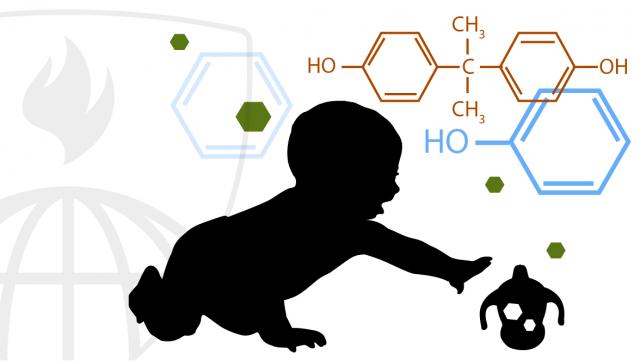
This course covers chemicals in our environment and in our bodies and how they impact our health. It addresses policies and practices related to chemicals, particularly related to how they get into our bodies (exposures), what they do when they get there (toxicology), how we measure them (biomonitoring) and their impact on our health. Most examples are drawn from the US.

Aug 17th 2026
5-12 Weeks
Training and Learning Programs for Volunteer Community Health Workers (Coursera) Coursera
Johns Hopkins University

Training and Learning Programs for Volunteer Community Health Workers (Coursera)

Volunteer community health workers (CHWs) are a major strategy for increasing access to and coverage of basic health interventions. Our village health worker training course reviews the process of training and continuing education of CHWs as an important component of involving communities in their own health service delivery. Participants will be guided through the steps of planning training and continuing education activities for village volunteers. The course draws on real-life examples from community-directed onchocerciasis control, village health worker programs, community case management efforts, peer educators programs and patent medicine vendor training programs, to name a few.

Aug 17th 2026
5-12 Weeks
Medical Neuroscience (Coursera) Coursera
Duke University

Medical Neuroscience (Coursera)

Medical Neuroscience explores the functional organization and neurophysiology of the human central nervous system, while providing a neurobiological framework for understanding human behavior. In this course, you will discover the organization of the neural systems in the brain and spinal cord that mediate sensation, motivate bodily action, and integrate sensorimotor signals with memory, emotion and related faculties of cognition. The overall goal of this course is to provide the foundation for understanding the impairments of sensation, action and cognition that accompany injury, disease or dysfunction in the central nervous system. The course will build upon knowledge acquired through prior studies of cell and molecular biology, general physiology and human anatomy, as we focus primarily on the central nervous system.

Aug 17th 2026
13-24 Weeks
Global Updates on HIV (AME) AME
Virology Education

Global Updates on HIV (AME)

This Online Education Activity is accredited by the European Accreditation Council for Continuing Medical Education (EACCME) for 1 European CME credit (ECMEC®). Welcome to the Global Updates of HIV edition of the Online Meeting Highlights. Here you will learn about the latest updates on novel HIV drugs and their formulation for HIV prevention and treatment.

Self Paced
Self-Paced
Caring for Children and Adolescents Living with HIV (AME) AME
Virology Education

Caring for Children and Adolescents Living with HIV (AME)

This Online Education Activity is accredited by the European Accreditation Council for Continuing Medical Education (EACCME) for 1 European CME credit (ECMEC®). Welcome to the Caring for Children and Adolescents Living with HIV edition of the Online Meeting Highlights. Here you will learn about factors that contribute to the disproportionate success in reducing new HIV infections among the different age groups, and why adolescents are one of the most rapidly growing populations with HIV.

Self Paced
Self-Paced
Identifying and Caring for Multiclass Resistant Patients (AME) AME
Virology Education

Identifying and Caring for Multiclass Resistant Patients (AME)

This Online Education Activity is accredited by the European Accreditation Council for Continuing Medical Education (EACCME) for 1 European CME credit (ECMEC®). Welcome to the Identifying and Caring for Multiclass Resistant Patients edition of the Online Meeting Highlights. Here you will learn more about how to define multiclass HIV drug resistance, factors that determine its frequency, understand pharmacological principles and drug interactions as well as critical steps when designing a salvage regimen.

Self Paced
Self-Paced
Curanderismo: Global & Cultural Influences of Traditional Healing (Coursera) Coursera
University of New Mexico

Curanderismo: Global & Cultural Influences of Traditional Healing (Coursera)

As the last of four courses on Curanderismo, the art of Hispanic/Latino traditional medicine, this course focuses specifically on traditional healing using different techniques of many countries around the world. As an educational and cultural platform, this course will share a number of traditional global perspectives.

Aug 17th 2026
5-12 Weeks