Understanding Memory: Explaining the Psychology of Memory through Movies (Coursera)

Offered by Wesleyan University,
Understanding Memory: Explaining the Psychology of Memory through Movies (Coursera)

Welcome to Understanding Memory. Someone once said that memory is fascinating because sometimes we forget what we want to remember, sometimes we remember what we want to forget, and sometimes we remember events that never happened or never happened the way we remember them. I want to show you how memory works, why it sometimes fails, and what we can do to enhance it. Based on my recent book – Memory and Movies: What Films Can Teach Us About Memory (MIT Press, 2015) – I will provide an introduction to the scientific study of human memory by focusing on a select group of topics that hold widespread appeal.

Class Deals by MOOC List - Click here and see Coursera's Active Discounts, Deals, and Promo Codes.

To facilitate your understanding, I will use clips from numerous films to illustrate different aspects of memory – describing what has been learned about memory in a nontechnical way for people with no prior background in psychology. Many of us love watching movies because they offer an unparalleled opportunity for entertainment, even if entertaining films are not always scientifically accurate. Still, I believe that we can learn a lot about memory from popular films, if we watch them with an educated eye. Welcome once more. I am looking forward to showing you what movies can teach us about memory.

Syllabus

WEEK 1
Memory Processes and Memory Movies
Human memory involves a collection of systems that enable us to remember the past and imagine the future. Films can enhance our understanding of memory by telling us stories about people, illustrating how their present was shaped by their past and how, by watching their stories, we might navigate similar situations in our future.

WEEK 2
Making Long Lasting Memories
Memory’s main purpose is to facilitate future thinking. But to plan successful future actions, effective strategies for learning and retention are needed. Some strategies are highly effective for producing long lasting memories, others are not.

WEEK 3
Autobiographical Memories and Life Stories
Each of us has a life story based on our personal experiences. These autobiographical memories define us and make us unique. But in telling our life story, we have reconstructed a personal narrative, much like a memoir writer. These recollections are generally accurate, but our memories are never a perfect record of the past.

WEEK 4
Understanding the Reality of Amnesia
Amnesia has often been portrayed in film as resulting from a bump on the head and cured by another head bonk. In real life, amnesia can follow physical or emotional trauma, it may be temporary or permanent, and if it resolves, it is never from another blow to the head.

WEEK 5
Senior Moments, Forgetfulness, and Dementia
Changes in memory can occur as we get older. Some changes are normal, whereas others might signal the onset of Alzheimer’s disease or some other form of dementia. Memory loss is worrisome, but there are effective ways to help maintain memory function as we age.
Go to Class
MOOC List is learner-supported. When you buy through links on our site, we may earn an affiliate commission.

Related Courses

Soul Beliefs: Causes and Consequences - Unit 3: How Does It All End? (Coursera) Coursera
Rutgers University

Soul Beliefs: Causes and Consequences - Unit 3: How Does It All End? (Coursera)

Throughout history, the vast majority of people around the globe have believed they have, however defined, a “soul.” While the question of whether the soul exists cannot be answered by science, what we can study are the causes and consequences of various beliefs about the soul and its prospects of surviving the death of the body. Why are soul and afterlife beliefs so common in human history? Are there adaptive advantages to assuming souls exist?

Sep 28th 2026
5-12 Weeks
Healthy Aging and the Future of Cannabis Research (Coursera) Coursera
University of Colorado Boulder

Healthy Aging and the Future of Cannabis Research (Coursera)

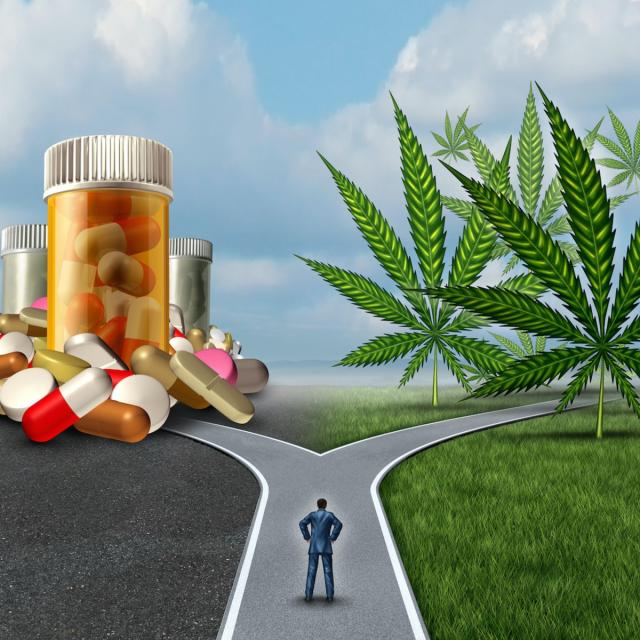
This Healthy Aging and Future of Cannabis Research course is designed to have you think critically about the health effects of cannabis (i.e., marijuana) in the context of inflammation, exercise, and aging. You'll learn how inflammation and the microbiome may be related to the disorders discussed in class, and how cannabis may influence these disorder through modulating inflammation.

Sep 21st 2026
4 Weeks
An Introduction to Consumer Neuroscience & Neuromarketing (Coursera) Coursera
Copenhagen Business School

An Introduction to Consumer Neuroscience & Neuromarketing (Coursera)

How do we make decisions as consumers? What do we pay attention to, and how do our initial responses predict our final choices? To what extent are these processes unconscious and cannot be reflected in overt reports? This course will provide you with an introduction to some of the most basic methods in the emerging fields of consumer neuroscience and neuromarketing. You will learn about the methods employed and what they mean. You will learn about the basic brain mechanisms in consumer choice, and how to stay updated on these topics. The course will give an overview of the current and future uses of neuroscience in business.

Sep 21st 2026
5-12 Weeks
Psicología (Coursera) Coursera
Universidad de Palermo

Psicología (Coursera)

¿Qué estudia la psicología? ¿Qué hacen los psicólogos? ¿La conciencia, qué es? ¿Y el estrés? ¿Cómo aprendemos? La sensación y la percepción ¿son lo mismo? ¿El lenguaje depende de las ideas? ¿O será que nuestro pensamiento es dependiente del lenguaje que hablamos? ¿Querés conocer las respuestas a estos interrogantes? En este curso de Psicología podrás explorar sobre todo esto y mucho más. Al culminar su recorrido no solo vas a haber aprendido sobre las bases del cautivante mundo de la psicología, sino que contarás con herramientas que te permitirán conocerte mejor.

Oct 5th 2026
4 Weeks
Learning, Knowledge, and Human Development (Coursera) Coursera
University of Illinois at Urbana-Champaign

Learning, Knowledge, and Human Development (Coursera)

This course sets out to provide an understanding of theories of learning and development and how these theories relate to educational technology. It has two components. The first is theoretical, in which we attempt to develop an overall frame of reference, locating approaches to the psychology of learning in terms of large paradigm shifts, from ‘behaviorism’ to ‘brain developmentalism’ to ‘social cognitivism’. The second component is practical, in which we will use these theoretical concepts to ‘parse’ a technology-mediated learning environment for its underlying presuppositions.

Sep 21st 2026
4 Weeks
Intellectual Humility: Theory (Coursera) Coursera
University of Edinburgh

Intellectual Humility: Theory (Coursera)

Faced with difficult questions people often tend to dismiss and marginalize dissent. Political and moral disagreements can be incredibly polarizing, and sometimes even dangerous. And whether it’s Christian fundamentalism, Islamic extremism, or militant atheism, religious dialogue remains tinted by arrogance, dogma, and ignorance. The world needs more people who are sensitive to reasons both for and against their beliefs, and are willing to consider the possibility that their political, religious and moral beliefs might be mistaken. The world needs more intellectual humility.

Sep 28th 2026
3 Weeks
Reasoning Across the Disciplines (Coursera) Coursera
University of North Carolina

Reasoning Across the Disciplines (Coursera)

Critical reasoning skills are a key success factor for students entering their first year of college. They must be able to think logically and form arguments. This course, designed with incoming college freshmen in mind but open to anyone, provides an essential grounding in critical reasoning skills. Faculty from multiple disciplines at the University of North Carolina at Chapel Hill offer guidance on applying critical thinking skills in the context of specific disciplines. By developing these skills, students will learn more, enjoy their courses more, and experience greater academic success.

Oct 5th 2026
5-12 Weeks
Film, Images & Historical Interpretation in the 20th Century: The Camera Never Lies (Coursera) Coursera
University of London,Royal Holloway, University of London

Film, Images & Historical Interpretation in the 20th Century: The Camera Never Lies (Coursera)

This course is a short taster on the topic of the use of Images, Film, and their use in historical interpretation in the 20th century. It is primarily provided for those who have a general interest in history that draws on photojournalism as primary evidence, and films based on historical events.

Oct 5th 2026
5-12 Weeks
The Arts and Science of Relationships: Understanding Human Needs (Coursera) Coursera
University of Toronto

The Arts and Science of Relationships: Understanding Human Needs (Coursera)

This course provides an introduction to: 1- Basic concepts of The Strategies and Skills Learning and Development System (SSLD), their relevance for every day relationships and provide advanced concepts for participants who work in fields of social work and health care. 2- Basic practice principles and methods of SSLD, illustrated by relationship management case studies. 3- The SSLD framework for relationship management assessment; N3C (needs, circumstances, characteristics, capacity) and problem translation. 4- Core competencies in the relationship management application of the SSLD system: Observation learning, simulation, real life implementation, review and monitoring.

Oct 5th 2026
5-12 Weeks
Gamification (Coursera) Coursera
University of Pennsylvania

Gamification (Coursera)

Gamification is the application of game elements and digital game design techniques to non-game problems, such as business and social impact challenges. This course will teach you the mechanisms of gamification, why it has such tremendous potential, and how to use it effectively.

Sep 28th 2026
5-12 Weeks