Understanding Dementia (University of Tasmania)

Understanding Dementia (University of Tasmania)

The Understanding Dementia MOOC was developed by the Wicking Dementia Research and Education Centre based in the College of Health and Medicine at the University of Tasmania. This world-leading online course is free, easily accessible and available to everyone with an interest in dementia. This course is free and runs twice a year in February and July.

The ageing of human populations across the globe has contributed to dementia being identified as one of the public health issues of the 21st century. The MOOC curriculum addresses this health issue by drawing upon the expertise of neuroscientists, clinicians and dementia care professionals from both within the Wicking Dementia Research and Education Centre, and beyond.
Since 2013, the Understanding Dementia has received over 330,000 enrolments from all around the world. We invite you to join our community and learn about the diseases that cause dementia, how the condition affects the person with dementia, and how we can provide the best quality care.
Once the course commences, you will be able to log in to engage with the course content and activities, and share perspectives with other participants. The course is scheduled to close on 21st April, 2023 at 5:00pm AEST.
To get the most out of this experience, you should expect to spend approximately 3 hours per week completing the course activities for the 7 weeks of scheduled content. The additional 3 weeks that the course is open is to allow you to catch up or revisit content.
The release of course content will occur at 9:00am (AEST) on the following dates -
Introduction - 7th February, 2023
Module 1: The Brain - 9th February, 2023
Module 2: The Diseases - 23rd February, 2023
Module 3: The Person -9th March, 2023
Completion - 30th March, 2023
You can work through the content at any time of day and at your own pace within this release schedule. This includes revisiting earlier released content as needed.
Once you have completed the course, you will be eligible to download a free, personalised certificate of completion. We also offer paid enhanced certificates options in addition to the free certificate. There will be more information about this in the Completion module.
We look forward to your contribution, as an important member of the Understanding Dementia community.

Course Outline

The Brain
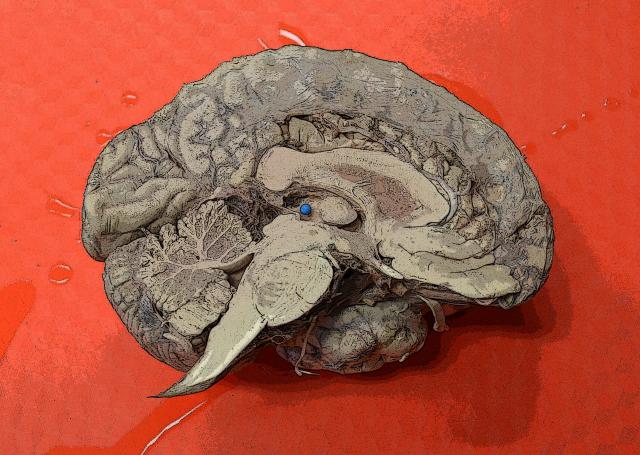
The Brain provides background content on basic nervous system anatomy and function, followed by a discussion of the diseases that cause dementia, current dementia research and future directions.

  • Nervous system anatomy
  • Anatomy with Body Central
  • Pathology of dementia
  • Future directions of dementia research

The Diseases
The Diseases explores differences between normal ageing and dementia, risk factors, issues surrounding diagnosis, as well as medical management.

  • Difference between normal ageing and dementia
  • Risk factors for dementia
  • Domains of dementia
  • Diagnosis of dementia
  • Younger onset dementia
  • Stages of dementia and focusing support
  • Medical management

The Person
The Person addresses difficulties in recognising symptoms, living with dementia, palliation, pain, dementia friendly communities, dementia inclusive design, and non-pharmacological therapies.

  • Insidious onset of dementia
  • Living with dementia
  • Dementia palliation
  • Non-pharmacological therapies
  • Behavioural and psychological symptoms of dementia
  • Pain and dementia
  • Advanced dementia symptoms and management
  • Dementia friendly communities
  • Dementia inclusive design
Go to Class
MOOC List is learner-supported. When you buy through links on our site, we may earn an affiliate commission.

Related Courses

Psychological First Aid (Coursera) Coursera
Johns Hopkins University

Psychological First Aid (Coursera)

Learn to provide psychological first aid to people in an emergency by employing the RAPID model: Reflective listening, Assessment of needs, Prioritization, Intervention, and Disposition. Utilizing the RAPID model (Reflective listening, Assessment of needs, Prioritization, Intervention, and Disposition), this specialized course provides perspectives on injuries and trauma that are beyond those physical in nature. The RAPID model is readily applicable to public health settings, the workplace, the military, faith-based organizations, mass disaster venues, and even the demands of more commonplace critical events, e.g., dealing with the psychological aftermath of accidents, robberies, suicide, homicide, or community violence.

Sep 7th 2026
5-12 Weeks
Introduction to Philosophy (Coursera) Coursera
University of Edinburgh

Introduction to Philosophy (Coursera)

This course will introduce you to some of the main areas of research in contemporary philosophy. Each module a different philosopher will talk you through some of the most important questions and issues in their area of expertise. We’ll begin by trying to understand what philosophy is – what are its characteristic aims and methods, and how does it differ from other subjects? Then we’ll spend the rest of the course gaining an introductory overview of several different areas of philosophy.

Sep 7th 2026
5-12 Weeks
Understanding Traumatic Brain Injury (University of Tasmania) Other Providers
University of Tasmania

Understanding Traumatic Brain Injury (University of Tasmania)

The Understanding Traumatic Brain Injury (TBI) MOOC (Massive Open Online Course) was developed by the Wicking Dementia Research and Education Centre based in the College of Health and Medicine at the University of Tasmania, with support from Connectivity. This online course is free, easily accessible and available to everyone with an interest in TBI, neuroscience or brain health.

Aug 22nd 2022
5-12 Weeks
Focus on Suicidal Behaviours (EPA) Other Providers
European Psychiatric Association

Focus on Suicidal Behaviours (EPA)

The last decades have seen the greatest advances in our knowledge about the causes of suicidal behaviours and in our skills to take care of those at risk and prevent future suicidal events. In this online course, we will give you an overview of these advances through the lenses of some of the world‘s leading experts in the field of suicidology.

Self Paced
Self-Paced
The Bilingual Brain (Coursera) Coursera
University of Houston System

The Bilingual Brain (Coursera)

This course explores the brain bases of bilingualism by discussing literature relevant to differences in age of initial learning, proficiency, and control in the nonverbal, single language and dual-language literature. Participants will learn about the latest research related to how humans learn one or two languages and other cognitive skills.

Sep 7th 2026
5-12 Weeks
Introduction to Systems Biology (Coursera) Coursera
Icahn School of Medicine at Mount Sinai

Introduction to Systems Biology (Coursera)

This course will introduce the student to contemporary Systems Biology focused on mammalian cells, their constituents and their functions. Biology is moving from molecular to modular. As our knowledge of our genome and gene expression deepens and we develop lists of molecules (proteins, lipids, ions) involved in cellular processes, we need to understand how these molecules interact with each other to form modules that act as discrete functional systems.

Sep 7th 2026
5-12 Weeks
Essentials of Global Health (Coursera) Coursera
Yale University

Essentials of Global Health (Coursera)

Essentials of Global Health is a comprehensive introduction to global health. It is meant to introduce you to this topic in well-structured, clear and easy to understand ways. Much of the course will focus on five questions: What do people get sick, disabled and die from; Why do they suffer from these conditions? Which people are most affected? Why should we care about such concerns? What can be done to address key health issues, hopefully at least cost, as fast as possible, and in sustainable ways?

Sep 7th 2026
5-12 Weeks
Whole genome sequencing of bacterial genomes - tools and applications (Coursera) Coursera
Technical University of Denmark - DTU

Whole genome sequencing of bacterial genomes - tools and applications (Coursera)

This course will cover the topic of Whole genome sequencing (WGS) of bacterial genomes which is becoming more and more relevant for the medical sector. WGS technology and applications are high on international political agenda, as the classical methods are being replaced by WGS technology and therefore bioinformatic tools are extremely important for allowing the people working in this sector to be able to analyze the data and obtain results that can be interpreted and used for different purposes.

Sep 7th 2026
5-12 Weeks
Marine Litter MOOC (OU) Other Providers
Open Universiteit

Marine Litter MOOC (OU)

Marine litter is a global problem that affects our oceans. It is an environmental, human health and socio-economic problem that is symptomatic of a throw-away society. With worldwide growth in the amount of solid litter disposed of and slow rates of degradation, the amount of litter present in the marine environment is increasing exponentially. This MOOC is part of the Clean Seas Campaign and contributes to the mission of the Global Partnership on Marine Litter (GPML), which seeks to protect the global marine environment, human well-being and animal welfare by addressing the challenges of marine litter. The MOOC is available in 10 different languages.

No sessions available
2 Weeks
An Introduction to the U.S. Food System: Perspectives from Public Health (Coursera) Coursera
Johns Hopkins University

An Introduction to the U.S. Food System: Perspectives from Public Health (Coursera)

A food system encompasses the activities, people and resources involved in getting food from field to plate. Along the way, it intersects with aspects of public health, equity and the environment. In this course, we will provide a brief introduction to the U.S. food system and how food production practices and what we choose to eat impacts the world in which we live. Through several case studies, we will discuss some key historical and political factors that have helped shape the current food system and consider alternative approaches from farm to fork.

Sep 14th 2026
5-12 Weeks
Advanced Neurobiology II (Coursera) Coursera
Peking University

Advanced Neurobiology II (Coursera)

Hello everyone! Welcome to advanced neurobiology! Neuroscience is a wonderful branch of science on how our brain perceives the external world, how our brain thinks, how our brain responds to the outside of the world, and how during disease or aging the neuronal connections deteriorate. We’re trying to understand the molecular, cellular nature and the circuitry arrangement of how nervous system works.

Sep 7th 2026
5-12 Weeks