Marine Litter MOOC (OU)

Offered by Open Universiteit,
Marine Litter MOOC (OU)

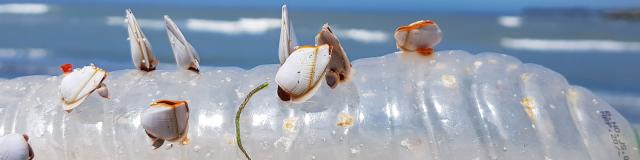
Marine litter is a global problem that affects our oceans. It is an environmental, human health and socio-economic problem that is symptomatic of a throw-away society. With worldwide growth in the amount of solid litter disposed of and slow rates of degradation, the amount of litter present in the marine environment is increasing exponentially. This MOOC is part of the Clean Seas Campaign and contributes to the mission of the Global Partnership on Marine Litter (GPML), which seeks to protect the global marine environment, human well-being and animal welfare by addressing the challenges of marine litter. The MOOC is available in 10 different languages.

Since it began, more than 22 thousand people have signed onto the course to learn more about marine litter and microplastics prevention. The MOOC seeks to inspire people of all ages to take action and leadership, and to provide examples and case studies that will inspire evidence-based, targeted actions and increase awareness of and stimulate creative solutions to this pressing global issue. Moreover, this course will benefit policymakers, practitioners, and managers who wish to connect with other professionals in order to enhance their knowledge of marine litter issues. The study material consists of a series of lectures, case studies and videos.
The MOOC is a free course that will start on October 26, 2020. Registration is open and available in the following languages: the Expert Track is offered in English, Spanish and Russian; the Leadership Track is available in Chinese, Arabic, French, Portuguese, Indonesian, Vietnamese and Thai. After completing one or both tracks you will receive a certificate of participation and free access to all course materials on the 24-hour online Trifork platform.
The Open Universiteit and UN Environment Program have created this MOOC in order to address public interest in capacity building and actionable learning on marine litter, as well as to create opportunities for a wider audience. Over the next five years, we want to bring many more people around the world together, to try and find solutions to this complex challenge, regardless of their academic and professional background or location.
Go to Class
MOOC List is learner-supported. When you buy through links on our site, we may earn an affiliate commission.

Related Courses

Working for a sustainable future: concepts and approaches (Coursera) Coursera
Lund University

Working for a sustainable future: concepts and approaches (Coursera)

In this course, participants are introduced to key notions and concepts evolving in sustainability science that are relevant to all, independent to one's work or field of interest. After having completed the course, participants will have a better understanding of the vocabulary used today and should demonstrate the ability to reflect critically to integrate different perspectives of environmental, social, and economic sustainability to their specific area of interest or research.

Oct 5th 2026
5-12 Weeks
Teaching Science at University (Coursera) Coursera
University of Zurich

Teaching Science at University (Coursera)

This course will prepare you for teaching science in higher education. In this MOOC you will learn to make your knowledge as an excellent researcher accessible to your students. We will show you how to communicate science to novices as well as advanced students in science.

Oct 12th 2026
5-12 Weeks
Designing a multidimensional poverty index (UNDP) Other Providers
University of Oxford,United Nations Development Programme - UNDP,Oxford Poverty and Human Development Initiative - OPHI

Designing a multidimensional poverty index (UNDP)

To leave no one behind for a COVID-19 recovery, it is time to develop poverty metrics beyond income. UNDP and University of Oxford are offering a FREE Massive Open Online Course "Designing a Multidimensional Poverty Index" in English, French, and Spanish on Learning for Nature. Starting 22 February, this six-week course will provide you with the tools to monitor, analyze, and report progress in reducing multidimensional poverty for a COVID-19 recovery in your country.

No sessions available
5-12 Weeks
The Brain and Space (Coursera) Coursera
Duke University

The Brain and Space (Coursera)

This course is about how the brain creates our sense of spatial location from a variety of sensory and motor sources, and how this spatial sense in turn shapes our cognitive abilities. Knowing where things are is effortless. But “under the hood,” your brain must figure out even the simplest of details about the world around you and your position in it.

Oct 12th 2026
5-12 Weeks
Constructivism and Mathematics, Science, and Technology Education (Coursera) Coursera
University of Illinois at Urbana-Champaign

Constructivism and Mathematics, Science, and Technology Education (Coursera)

This course is designed to help participants examine the implications of constructivism for learning and teaching in science, mathematics, and technology focused areas. Course readings, discussions, and assignments will examine constructivist views of learning, research on students' ideas and idea-based interactions, research on instructional approaches taking student ideas into account, and challenges in implementing constructivist perspectives in instruction.

Oct 12th 2026
5-12 Weeks
Structuring Values in Modern China (Coursera) Coursera
The Chinese University of Hong Kong

Structuring Values in Modern China (Coursera)

This sequence of four courses will propose a multi-disciplinary approach to the study of Chinese cultural history conceived of as a succession of modes of rationality (philosophical, bureaucratic, and economic). The focus will be on the moments of paradigm shift from one mode of rationality to another. For each of these moments, cultural facts and artifacts—thought, literature, ritual—will be examined in relationship to changing social, political, and economic systems.

Oct 12th 2026
5-12 Weeks
Philosophy, Science and Religion: Science and Philosophy (Coursera) Coursera
University of Edinburgh

Philosophy, Science and Religion: Science and Philosophy (Coursera)

Philosophy, Science and Religion mark three of the most fundamental modes of thinking about the world and our place in it. Are these modes incompatible? Put another way: is the intellectually responsible thing to do to ‘pick sides’ and identify with one of these approaches at the exclusion of others? Or, are they complementary or mutually supportive? As is typical of questions of such magnitude, the devil is in the details. For example, it is important to work out what is really distinctive about each of these ways of inquiring about the world. In order to gain some clarity here, we’ll be investigating what some of the current leading thinkers in philosophy, science and religion are actually doing.

Oct 5th 2026
5-12 Weeks
Climate Change and Water in Mountains: A Global Concern (Coursera) Coursera
University of Geneva

Climate Change and Water in Mountains: A Global Concern (Coursera)

What is climate change? How are mountain regions affected by the evolution of water resources and their uses? What kind of risks need to be considered? Mountains are recognized as particularly sensitive physical environments where intense and rapid changes have in the past, and may increasingly in the future, place pressure on their resource base.

Oct 5th 2026
5-12 Weeks
Global Arctic (Coursera) Coursera
École Polytechnique Fédérale de Lausanne

Global Arctic (Coursera)

The GlobalArctic MOOC introduces you the dynamics between global changes and changes in the Arctic. This course aims to highlight the effects of climate change in the Polar region. In turn, it will underline the impacts of a warmer Arctic on the planet Earth. For human civilization, the Arctic stands both as a laboratory and a warning for human kind.

Oct 16th 2026
4 Weeks
Introduction to Systems Biology (Coursera) Coursera
Icahn School of Medicine at Mount Sinai

Introduction to Systems Biology (Coursera)

This course will introduce the student to contemporary Systems Biology focused on mammalian cells, their constituents and their functions. Biology is moving from molecular to modular. As our knowledge of our genome and gene expression deepens and we develop lists of molecules (proteins, lipids, ions) involved in cellular processes, we need to understand how these molecules interact with each other to form modules that act as discrete functional systems.

Oct 5th 2026
5-12 Weeks
Introduction to Forensic Science (Coursera) Coursera
Nanyang Technological University

Introduction to Forensic Science (Coursera)

We have all seen forensic scientists in TV shows, but how do they really work? What is the science behind their work? The course aims to explain the scientific principles and techniques behind the work of forensic scientists and will be illustrated with numerous case studies from Singapore and around the world.

Oct 19th 2026
5-12 Weeks