Climate change and migration: predictions, politics and policy (Climate Outreach)

Climate change and migration: predictions, politics and policy (Climate Outreach)

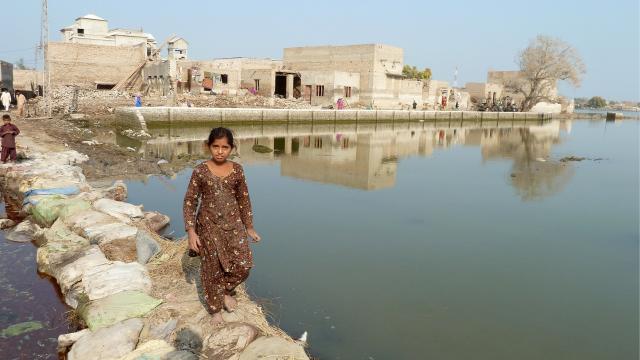
How will climate change reshape migration? And what are governments planning to do about it? This online course examines these questions in depth. Over the space of 10 months, this course examines the major issues around climate-linked migration and displacement. Climate change is set to play a key role in patterns of human settlement and migration in the future. Altered patterns of drought, storms and sea level rise are already creating new patterns of migration.

This course is intended for anyone wishing to tackle a major global issue.
The course is completely online. You can join the sessions via live stream from your computer. The sessions will provide roughly an hour of lecture input, followed by a chance for discussion. If you can’t join the sessions live, you can watch them online anytime, at your own pace. Each session also comes with a collection of recommended reading and watching, so you can investigate the themes and ideas further if you wish.

Course themes

Sessions 1 -3 – getting started
These sessions provide grounding in the links between climate change and migration, as well as research methods used to explore the role of climate change in shaping the human movement.

Sessions 4 -6 – politics
These sessions look at the key political ideas that are shaping how climate migration unfolds, who is impacted and how governments are responding.

Sessions 7 and 8 – policy
These sessions look at the key policy areas where decisions about climate-linked migration are being taken. These sessions look at the major international fora where states negotiate on this issue.

Sessions 9 and 10 – complex crises
These sessions use the tools and learning from the entire course to examine several complex humanitarian crises in which climate change has played a role. They will look at how climate change has created and influenced human movement in and around the impacted areas.
Go to Class
MOOC List is learner-supported. When you buy through links on our site, we may earn an affiliate commission.

Related Courses

Marine Litter MOOC (OU) Other Providers
Open Universiteit

Marine Litter MOOC (OU)

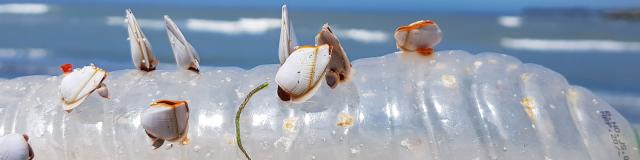
Marine litter is a global problem that affects our oceans. It is an environmental, human health and socio-economic problem that is symptomatic of a throw-away society. With worldwide growth in the amount of solid litter disposed of and slow rates of degradation, the amount of litter present in the marine environment is increasing exponentially. This MOOC is part of the Clean Seas Campaign and contributes to the mission of the Global Partnership on Marine Litter (GPML), which seeks to protect the global marine environment, human well-being and animal welfare by addressing the challenges of marine litter. The MOOC is available in 10 different languages.

No sessions available
2 Weeks
Biosphere 2 Science for the Future of Our Planet (Coursera) Coursera
University of Arizona

Biosphere 2 Science for the Future of Our Planet (Coursera)

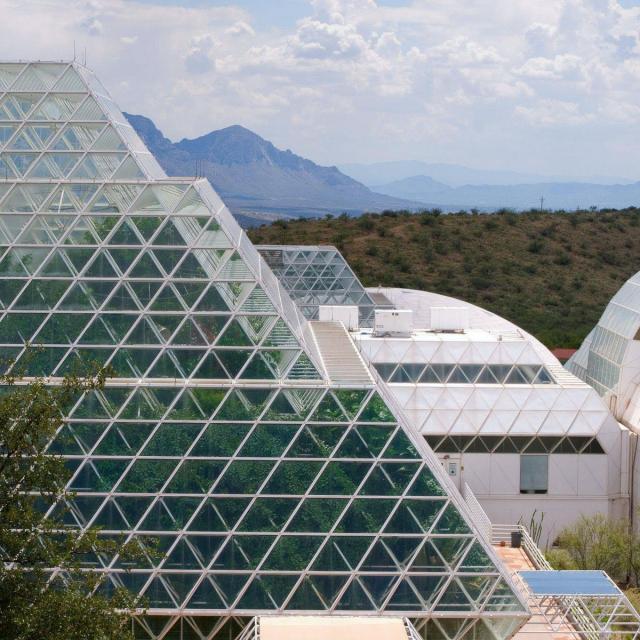
Are you ready to take an incredible journey around Planet Earth and beyond? In this course, you will delve into a world of innovative science and learn from a team of Biosphere 2 and University of Arizona researchers. From plants and soils, to oceans and rainforests, the Moon, Mars, and more, this course is an exciting opportunity for anyone interested in science and Earth stewardship.

Jun 22nd 2026
5-12 Weeks
Global Warming II: Create Your Own Models in Python (Coursera) Coursera
University of Chicago

Global Warming II: Create Your Own Models in Python (Coursera)

This class provides a series of Python programming exercises intended to explore the use of numerical modeling in the Earth system and climate sciences. The scientific background for these models is presented in a companion class, Global Warming I: The Science and Modeling of Climate Change. This class assumes that you are new to Python programming (and this is indeed a great way to learn Python!), but that you will be able to pick up an elementary knowledge of Python syntax from another class or from on-line tutorials.

Jun 15th 2026
5-12 Weeks
The E-waste Challenge MOOC (Climate-KIC) Other Providers
United Nations Environment Programme - UNEP,KU Leuven University,Climate-KIC,World Resources Forum

The E-waste Challenge MOOC (Climate-KIC)

With our growing appetite for electrical and electronic products, combined with rapid innovation and ever-shorter product lifespans, e-waste has now become one of the fast growing waste streams. This course will help the participant to understand why and how we must manage e-waste in an environmentally sound manner and how we can take action on e-waste in their own life, business, or organization.

No sessions available
No Information
An Introduction to the U.S. Food System: Perspectives from Public Health (Coursera) Coursera
Johns Hopkins University

An Introduction to the U.S. Food System: Perspectives from Public Health (Coursera)

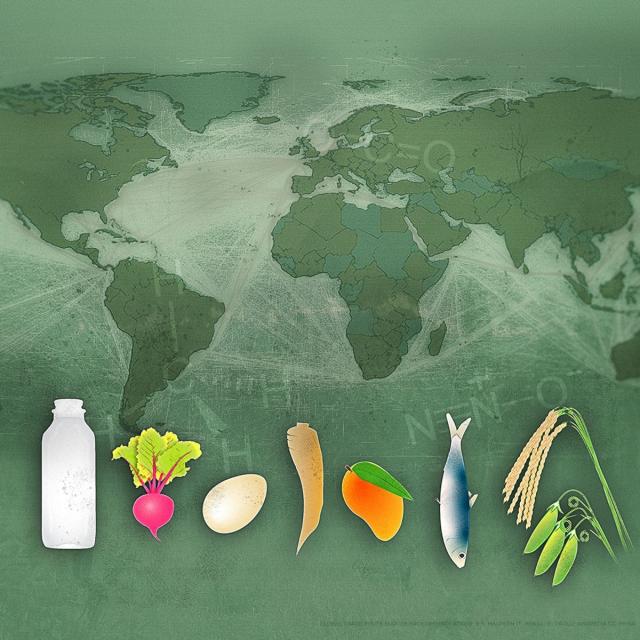
A food system encompasses the activities, people and resources involved in getting food from field to plate. Along the way, it intersects with aspects of public health, equity and the environment. In this course, we will provide a brief introduction to the U.S. food system and how food production practices and what we choose to eat impacts the world in which we live. Through several case studies, we will discuss some key historical and political factors that have helped shape the current food system and consider alternative approaches from farm to fork.

Jun 22nd 2026
5-12 Weeks
Renewable Energy Futures (Coursera) Coursera
University of Colorado Boulder

Renewable Energy Futures (Coursera)

Renewable energy's future is bright, yet uncertain. Will it continue to grow rapidly? Is current growth sufficient to achieve climate stabilization? How do related technologies, like electric vehicles and heat pumps, fit in? This course will shed light on the many confusing and at-times inconsistent claims and predictions for renewable energy.

Jun 22nd 2026
5-12 Weeks
Our Earth's Future (Coursera) Coursera
American Museum of Natural History

Our Earth's Future (Coursera)

Our Earth’s Future is about the science of climate change and how to talk about it. You will learn from scientists in the fields of climatology, oceanography, Earth science, and anthropology who study how climate change is affecting people, populations, and ways of life. Explore the multiple lines of evidence for the human-induced climate change that is happening today, and consider what that means for the future of our planet. At the end of this course you will be able to understand key scientific principles, identify and address misconceptions, and contribute confidently to conversations about climate change.

Jun 15th 2026
5-12 Weeks
Strategy and Sustainability (Coursera) Coursera
IESE Business School

Strategy and Sustainability (Coursera)

Business and environmental sustainability are not natural bedfellows. Business is about making money. Sustainability is about protecting the planet. Business is measured in months and quarters. Sustainability often requires significant short term costs to secure a sometimes uncertain long-term benefit. To some activists, all executives are exploitative, selfish one percenters. To some executives, all activists are irresponsible, unyielding extremists.

Jun 22nd 2026
5-12 Weeks
Climate change and health (Coursera) Coursera
Imperial College London

Climate change and health (Coursera)

Climate change and health is the third and final instalment of the wider Global Health Challenges and Governance specialisation from Imperial College London's Global Master of Public Health (GMPH). The scope and content of this course has been developed from the ground up by a combined team of academics and practitioners in collaboration with experts from Imperial College’s Grantham Institute for Climate Change and the Environment. Through short video lectures, readings and a wide range of interactive activities, learners will be immersed in the intersection of climate change and health.

Jun 22nd 2026
5-12 Weeks
Sustainability and the Circular Economy (Coursera) Coursera
University of Colorado Boulder,Siemens

Sustainability and the Circular Economy (Coursera)

As the world’s population continues to rise toward an expected 10 billion citizens by 2050, it is imperative that business practices change to ensure a high quality of life is possible for all of us, both human and non-human. Today’s learners are very aware of this. Moreover, they are highly motivated and have the extraordinary capacity to create a future that provides both economic success and a more enduring, resilient, and sustainable planet. If you are one of these learners, then Sustainability and the Circular Economy is a course for you.

Jun 22nd 2026
5-12 Weeks
The Influence of Social Context on Health (Coursera) Coursera
University of Michigan

The Influence of Social Context on Health (Coursera)

Why are some groups healthier than others, and how do these differences emerge and persist over the life course? How do social policies (e.g., housing, transportation, employment) relate to health and health inequalities? Why are there health disparities even in countries that have free universal health care? This course will address conceptual models for understanding health disparities in the US and internationally, how population science identifies the main sources of these disparities, and how public health can inform policy efforts to address these disparities.

Jun 22nd 2026
4 Weeks