Understanding Traumatic Brain Injury (University of Tasmania)

Understanding Traumatic Brain Injury (University of Tasmania)

The Understanding Traumatic Brain Injury (TBI) MOOC (Massive Open Online Course) was developed by the Wicking Dementia Research and Education Centre based in the College of Health and Medicine at the University of Tasmania, with support from Connectivity. This online course is free, easily accessible and available to everyone with an interest in TBI, neuroscience or brain health.

Once the course commences, you will be able to log in to engage with the course content and activities, and meet other participants.
To get the most out of this experience, you should expect to spend approximately 2 hours per week completing the course activities for the 5 weeks of scheduled content.
The release of course content will occur at 9:00am AEST on the following dates:
Introduction - 22nd August, 2022
Module 1: Brain science and TBI pathology - 24th August, 2022
Module 2: TBI from mild to severe - 31st August, 2022
Module 3: TBI across the lifespan - 14th September, 2022
Module 4: Life after TBI - 21st September, 2022
Completion - 28th September, 2022
You can work through the content at any time of day and at your own pace. This includes revisiting earlier released content as needed up until the course close on 14th October, 2022 at 5:00pm AEDT.
Once you have completed the course, you will be eligible to download a free, personalised certificate of completion. We will also offer paid enhanced certificates options in addition to the free certificate. There will be more information about this in the Completion module.
We look forward to your contribution, as an important member of the Understanding TBI community.

Course Outline

Module 1 – Brain Science and TBI Pathology

  • What is a brain injury?
  • Introduction to the brain and brain anatomy and brain function
  • Biomechanics of TBI
  • Primary vs Secondary Injury

Module 2 – TBI from Mild to Severe

  • Mild TBI/concussion and symptoms and modes of concussion
  • Moderate to Severe TBI
  • Primary Damage in Focal TBI
  • Secondary Injury Cascades
  • Diffuse Brain Injury
  • Oedema
  • Imaging for diagnosis/prognosis
  • Link between brain injury, cognition and behaviour

Module 3 – TBI across the Lifespan

  • Paediatric TBI
  • TBI across age groups
  • TBI in older adults
  • Chronic Traumatic Encephalopathy (CTE)
  • Consequences outside the brain

Module 4 – Life after TBI

  • Impairments and Outcomes
  • Rehabilitation
  • Life for family members after TBI
  • Support after TBI
  • Personal traits: coping style
  • Personal traits: resilience
  • Sourcing reliable information

Go to Class
MOOC List is learner-supported. When you buy through links on our site, we may earn an affiliate commission.

Related Courses

Dopage : Sports, Organisations et Sciences (Coursera) Coursera
University of Lausanne

Dopage : Sports, Organisations et Sciences (Coursera)

L'objectif du cours est de permettre une compréhension distanciée du dopage. C’est pour atteindre cet objectif que le cours s’appuie sur une approche pluridisciplinaire qui constitue une opportunité d'observer comment diverses disciplines abordent un même objet, selon différents angles et de manière complémentaire. Il s'agit également de donner des repères permettant d'appréhender le dopage dans sa complexité.

Oct 12th 2026
4 Weeks
Focus on Suicidal Behaviours (EPA) Other Providers
European Psychiatric Association

Focus on Suicidal Behaviours (EPA)

The last decades have seen the greatest advances in our knowledge about the causes of suicidal behaviours and in our skills to take care of those at risk and prevent future suicidal events. In this online course, we will give you an overview of these advances through the lenses of some of the world‘s leading experts in the field of suicidology.

Self Paced
Self-Paced
Diabetes - a Global Challenge (Coursera) Coursera
University of Copenhagen

Diabetes - a Global Challenge (Coursera)

Diabetes and obesity are growing health problems in rich and poor countries alike. With this course you will get updated on cutting-edge diabetes and obesity research including biological, genetic and clinical aspects as well as prevention and epidemiology of diabetes and obesity. All lectures are provided by high-profile scientists from one the world's leading universities in diabetes research.

Oct 12th 2026
5-12 Weeks
CPR/AED Course (American BLS) Other Providers
American BLS

CPR/AED Course (American BLS)

Learn Cardiopulmonary Resuscitation (CPR) techniques and AED use through our comprehensive CPR Course Online. You will learn conventional CPR techniques (Chest Compressions & rescue Breaths) as well as hands-only CPR (Chest Compressions only) for Adult, Child and Infant care. You will also learn how to properly use an Automated External Defibrillator (AED).

Self Paced
Self-Paced
Stories of Infection (Coursera) Coursera
Stanford University

Stories of Infection (Coursera)

This course introduces learners to a variety of infectious diseases using a patient-centered, story-based approach. Through illustrated, short videos, learners will follow the course of each patient’s illness, from initial presentation to resolution. Integrating the relevant microbiology, pathophysiology and immunology, this course aims to engage and entice the learner towards future studies in microbiology, immunology and infectious diseases.

Oct 12th 2026
5-12 Weeks
Disease Screening in Public Health (Coursera) Coursera
University of Geneva

Disease Screening in Public Health (Coursera)

Current and future public health is characterized by the increase of chronic and degenerative diseases, corresponding to the worldwide ageing of the population. The increasing prevalence of these conditions together with the long incubation period of the chronic diseases and the restless technological innovations, offer new opportunities to develop strategies for early diagnosis.

Oct 12th 2026
5-12 Weeks
Sleep: Neurobiology, Medicine, and Society (Coursera) Coursera
University of Michigan

Sleep: Neurobiology, Medicine, and Society (Coursera)

The objective of this course is to give students the most up-to-date information on the biological, personal, and societal relevance of sleep. Personal relevance is emphasized by the fact that the single best predictor of daytime performance is the quality of the previous night's sleep. The brain actively generates sleep, and the first section of the course is an overview of the neurobiological basis of sleep control.

Oct 12th 2026
5-12 Weeks
The Social Context of Mental Health and Illness (Coursera) Coursera
University of Toronto

The Social Context of Mental Health and Illness (Coursera)

Learn how social factors promote mental health, influence the onset and course of mental illness, and affect how mental illnesses are diagnosed and treated. This course explores how our understanding of mental health and illness has been influenced by social attitudes and social developments in North America and around the world. The course begins by situating our contemporary mental health practices in historical context, then looks at different aspects of mental health, mental illness and mental health services and their connections to what’s going on in our social environment.

Oct 12th 2026
5-12 Weeks
Computational Neuroscience (Coursera) Coursera
University of Washington

Computational Neuroscience (Coursera)

This course provides an introduction to basic computational methods for understanding what nervous systems do and for determining how they function. We will explore the computational principles governing various aspects of vision, sensory-motor control, learning, and memory. Specific topics that will be covered include representation of information by spiking neurons, processing of information in neural networks, and algorithms for adaptation and learning.

Oct 12th 2026
5-12 Weeks
Feeding the World (Coursera) Coursera
University of Pennsylvania

Feeding the World (Coursera)

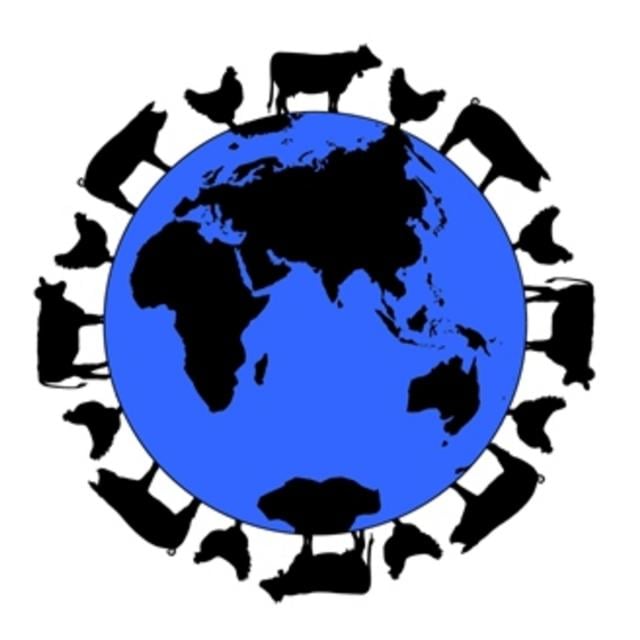
This course will explore the concepts driving current food production science (population growth, urbanization, emerging affluence, resource constraints, and underlying biological limits) with the main focus on livestock production. Each of the major food animal species (dairy, swine, beef, and poultry) will be covered in terms of their universal life cycles, constraints to production and emerging societal issues.

Oct 12th 2026
5-12 Weeks
Epidemiology: The Basic Science of Public Health (Coursera) Coursera
University of North Carolina

Epidemiology: The Basic Science of Public Health (Coursera)

Often called “the cornerstone” of public health, epidemiology is the study of the distribution and determinants of diseases, health conditions, or events among populations and the application of that study to control health problems. By applying the concepts learned in this course to current public health problems and issues, students will understand the practice of epidemiology as it relates to real life and makes for a better appreciation of public health programs and policies. This course explores public health issues like cardiovascular and infectious diseases – both locally and globally – through the lens of epidemiology.

Oct 12th 2026
5-12 Weeks