From Climate Science to Action (Coursera)

Offered by The World Bank,
From Climate Science to Action (Coursera)

Showcasing the most recent scientific evidence, explaining the different regional impacts and divulging climate action strategies, along with interactive tools such as a Carbon Footprint Tracker and (I) NDC Platform, this MOOC provides some opportunities, where you can take action on climate change.

Class Deals by MOOC List - Click here and see Coursera's Active Discounts, Deals, and Promo Codes.

Each part of the world faces specific vulnerabilities to climate change and has different opportunities to mitigate the effects and build resilience in the 21st century. With the ratification of the Paris Agreement, many countries have acceded to act in combatting climate change. Indeed, without climate action, decades of sustainable development is at risk, thus making this a ‘make or break’ point in time.
This action-oriented MOOC gives you the opportunity to learn about regional climate change impacts and sector-specific strategies to increase resilience and move towards a low-carbon future. You will have the opportunity to explore these issues in depth and tailor your learning experience for one or more of the following regions:
• Latin America and Caribbean
• Sub-Saharan Africa
• Middle East and North Africa
• Eastern Europe and Central Asia
• East Asia and Pacific
• South Asia
In this endeavor, the MOOC brings together renowned scientists and policymakers to provide a synthesis of the most recent scientific evidence on climate change, regional low emissions and climate resilient development strategies across sectors. A team of expert Instructors will lead discussions around the Paris Agreement, reflections from COP22 and the progress on Nationally Determined Contributions (NDCs).

Syllabus

WEEK 1
Climate Change in the 21st Century
• Historical and projected observed changes in the climate system, leading up to the end of the 21st century
• The potential of Intended Nationally Determined Contributions (INDCs) submitted at COP 21 from 187 countries to induce climate action
• Trends in climate change impacts, including loss of Arctic sea ice, melting glaciers, increased heat waves and extreme temperatures, and drought and aridity
• Possible responses from natural systems, explaining how warming could result in sea-level rise, heat waves and extreme temperatures, and ocean acidification

WEEK 2
Sectoral and Regional Impacts
• Impacts on key development sectors—from warming above pre-industrial temperatures and projected climate trends—across each of the world’s regions
• Sectoral impacts focusing on agricultural production, water resources, ecosystem services, and coastal vulnerability for affected populations
• Importance of risks with the potential to reverse hard-won development gains and potentially trap millions in poverty, illustrating the need for urgent action now

WEEK 3
From Science to Action on Climate Change
• Region-specific discussions on mitigation actions needed to reduce emissions while decreasing vulnerability to climate change impacts through adaptation and by building climate resilience
• Perspectives from regional experts on their experiences in strategies and actions proposed in each region to help transition towards a low-emissions, climate-resilient development path
• Discussions on the progress of the Nationally Determined Contributions (NDCs), outcomes of the Paris Agreement and reflections from the Conference of Parties (COP)22

WEEK 4
What You Can Do
• Transformative impact of day-to-day changes when brought to a global scale
• The rationale for acting now, acting together and acting differently
• Examples and expected benefits of mitigation and adaptation policies, considering both contributions to global emission reductions and local development opportunities
In addition to the core resources and assignments, you may choose to go further, engaging in fun optional exercises, networking, discussion, and diving deeper into our rich selection of supplemental resources. You will have the opportunity to explore these issues in depth and tailor your learning experience for one or more of the following regions:
• Latin America and Caribbean
• Sub-Saharan Africa
• Middle East and North Africa
• Eastern Europe and Central Asia
• East Asia and Pacific
• South Asia


Go to Class
MOOC List is learner-supported. When you buy through links on our site, we may earn an affiliate commission.

Related Courses

Renewable Energy Futures (Coursera) Coursera
University of Colorado Boulder

Renewable Energy Futures (Coursera)

Renewable energy's future is bright, yet uncertain. Will it continue to grow rapidly? Is current growth sufficient to achieve climate stabilization? How do related technologies, like electric vehicles and heat pumps, fit in? This course will shed light on the many confusing and at-times inconsistent claims and predictions for renewable energy.

Jun 22nd 2026
5-12 Weeks
Sustainable Business: Big Issues, Big Changes (Coursera) Coursera
University of Colorado System

Sustainable Business: Big Issues, Big Changes (Coursera)

This is class 3 in the MOOC specialization, Become a Sustainable Business Change Agent. This class looks at the big issues companies are fixing - climate change, water, worker satisfaction and supply chain issues. You will learn tools to help your company address these issues intelligently. The class ends with an assignment to set a science-based carbon reduction target for a small company. Tis is absolutely cutting edge material. Only about 300 companies in the whole world are doing this as of July 2017. You could put your company in the elite group!

Jun 15th 2026
5-12 Weeks
Planning for Climate Change in African Cities (Coursera) Coursera
Erasmus University Rotterdam,United Cities and Local Governments of Africa,African Local Government Academy,Institute for Housing and Urban Development

Planning for Climate Change in African Cities (Coursera)

Climate change poses a threat to economic growth and long-term prosperity of many countries around the world. Africa is not an exception, considering the actual and potential impacts of climate change and climate variability that will threaten its vulnerable sectors and human populations. African countries are projected to experience changing rainfall patterns, rising sea levels, and higher temperatures that will affect food security, agricultural production, water availability, and public health, among others. These climate change impacts and climate variability can further produce social and political problems, such as rural-urban migration and water resource disputes.

Jun 22nd 2026
5-12 Weeks
An Introduction to the U.S. Food System: Perspectives from Public Health (Coursera) Coursera
Johns Hopkins University

An Introduction to the U.S. Food System: Perspectives from Public Health (Coursera)

A food system encompasses the activities, people and resources involved in getting food from field to plate. Along the way, it intersects with aspects of public health, equity and the environment. In this course, we will provide a brief introduction to the U.S. food system and how food production practices and what we choose to eat impacts the world in which we live. Through several case studies, we will discuss some key historical and political factors that have helped shape the current food system and consider alternative approaches from farm to fork.

Jun 22nd 2026
5-12 Weeks
Climate and Climate Change in New Jersey (Coursera) Coursera
American Museum of Natural History

Climate and Climate Change in New Jersey (Coursera)

Welcome to the American Museum of Natural History's (AMNH) primer called Climate and Climate Change in New Jersey! This primer includes numerous elements that will provide you with an understanding of our climate system and climate change in New Jersey, and encourage you to think about viable solutions for climate change impacts. It is divided into four parts, which may be completed sequentially as it was designed or in your sequence. We estimate that it will take approximately 2.5 hours to complete. We are also happy to inform you that you can receive 2.5 professional development hours and a Certificate of Attendance upon successful completion of this course.

Jun 15th 2026
4 Weeks
Biosphere 2 Science for the Future of Our Planet (Coursera) Coursera
University of Arizona

Biosphere 2 Science for the Future of Our Planet (Coursera)

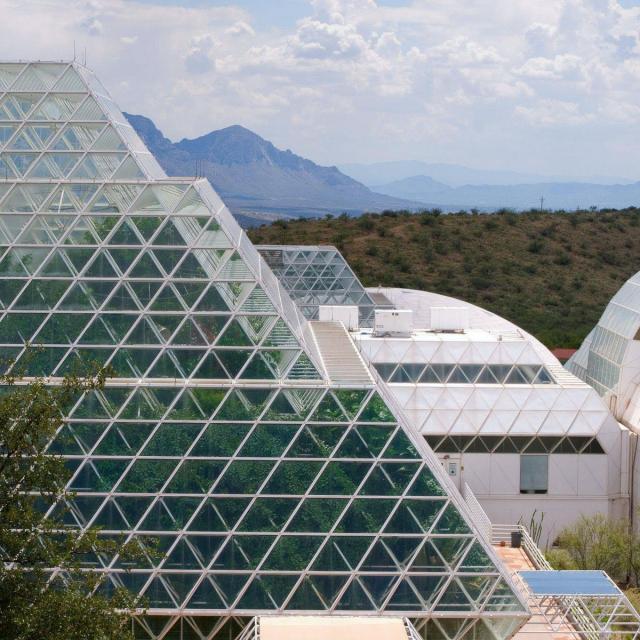
Are you ready to take an incredible journey around Planet Earth and beyond? In this course, you will delve into a world of innovative science and learn from a team of Biosphere 2 and University of Arizona researchers. From plants and soils, to oceans and rainforests, the Moon, Mars, and more, this course is an exciting opportunity for anyone interested in science and Earth stewardship.

Jun 22nd 2026
5-12 Weeks
Beyond the Sustainable Development Goals (SDGs): Addressing Sustainability and Development (Coursera) Coursera
University of Michigan

Beyond the Sustainable Development Goals (SDGs): Addressing Sustainability and Development (Coursera)

We’re excited you’re here! This course, “Beyond the Sustainable Development Goals (SDGs): Addressing Sustainability and Development,” is the first course in the upcoming Sustainability and Development MasterTrack Certificate program (Fall 2020), but you can also take this course as a stand-alone learning opportunity.

Jun 24th 2026
5-12 Weeks
The Arctic as a System (Coursera) Coursera
University of Colorado Boulder

The Arctic as a System (Coursera)

In this course you will first learn about the Arctic as a geographic region, the peoples the Arctic, and the long history of Arctic settlement and exploration. Attention then turns to key features of the Arctic environment – its climate and weather, features of the ocean, sea ice, lands and the Greenland Ice Sheet, and some of the rapid changes being observed.

Jun 22nd 2026
5-12 Weeks
Corporate Sustainability. Understanding and Seizing the Strategic Opportunity (Coursera) Coursera
Università Bocconi

Corporate Sustainability. Understanding and Seizing the Strategic Opportunity (Coursera)

In this course, thought leaders in a wide variety of management and economics fields illustrate how to assess and seize the opportunities offered by these global emergencies. They will offer new ways to understand the purpose and the logic of success of the business enterprise in this new context, providing ideas and examples on how to manage the transition process to realize the value creation potential from corporate sustainability for all involved stakeholders.

Jun 15th 2026
5-12 Weeks
Global Warming II: Create Your Own Models in Python (Coursera) Coursera
University of Chicago

Global Warming II: Create Your Own Models in Python (Coursera)

This class provides a series of Python programming exercises intended to explore the use of numerical modeling in the Earth system and climate sciences. The scientific background for these models is presented in a companion class, Global Warming I: The Science and Modeling of Climate Change. This class assumes that you are new to Python programming (and this is indeed a great way to learn Python!), but that you will be able to pick up an elementary knowledge of Python syntax from another class or from on-line tutorials.

Jun 15th 2026
5-12 Weeks
Climate change education: sustainable environments (Coursera) Coursera
Inter-American Development Bank - IDB

Climate change education: sustainable environments (Coursera)

In this course, we explore the components of landscapes and natural disasters. We emphasize human actions that impact the environment, both in terms of modification and preservation. Additionally, we explore concepts related to cities, megacities, and sustainable environments. The course also delves into the connection between the environment, health, and diseases.

Jun 22nd 2026
3 Weeks