Teaching and Learning in Multicultural Contexts (POK)

Offered by Politecnico di Milano,
Teaching and Learning in Multicultural Contexts (POK)

Enhancing teachers’ intercultural skills and practices to foster global citizens and to fulfill the contribution of higher education to society. The growth of human mobility together with globalization are shaping the demography of many societies and of many interactive contexts, including new ways of learning and of working modalities. Thus, the possibility to face intercultural relationships, even without moving, is today very frequent. And in the academic contexts, the internationalization of higher education makes the issue of teaching and learning in multicultural contexts, in presence or online, relevant and essential to be learnt and managed effectively.

This MOOC is composed of six weeks. It is addressed mainly to university’s teachers, with the aim to enhance their intercultural and global citizens skills and practices, thus that they can consciously foster their students’ same skills. This MOOC is also open to anyone who is willing to understand cultural diversity, thus to better co-live together and collaborate in multicultural contexts.

The course is structured in 6 Weeks:
Week 1 – Teaching and Learning in Multicultural Contexts
Week 2 – The need for Intercultural and Global Citizens Skills Development
Week 3 – Developing Intercultural and Global Citizens Skills: Teachers first
Week 4 – Understanding Cultural Diversity
Week 5 – Valorise Classrooms' Cultural Diversity
Week 6 – Practices and Tools for an Intercultural Pedagogy

By actively participating in this MOOC, you will achieve different intended learning outcomes (ILOs).

Week 1
Define what a multicultural teaching and learning context is
Recognise some of the main challenges that a teacher can face in multicultural classroom
Describe how layers of cultural identity can influence interactions in multicultural contexts
Recognise how the use of English as lingua franca can impact on classroom interactions and on reciprocal perception in multicultural contexts and deal with them
Identify and deal with conflicts and challenges caused by stereotyping and discrimination in multicultural classroom

Week 2
Explain what global citizens skills are and why they are needed
Engage with intercultural and global skills development
Explain what intercultural competence is and what are its components
Analyze your intercultural competence development, through a practical exercise
Develop intercultural and global skills

Week 3
Recognize the value of international exposure and explain how it can help teachers to develop the competence useful to teach in multicultural classroom
Explain the most common reasons for teacher’s lack of international exposure
Indicate possible solutions for teachers to internationalize their own career
Explain how you, as a teacher, can go out from your comfort zone and search for diverse contexts even at home, thus to exercise and develop your intercultural and global skills

Week 4
Describe the impact culture can have on your and other people’s perceptions, feelings and behaviors
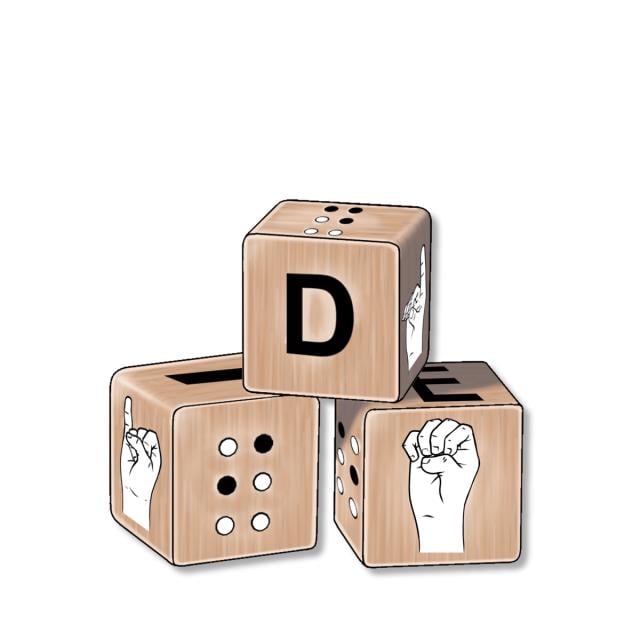
Explain how to use the DIE model to suspend judgements about diverse people and to take in consideration different cultural perspectives
Describe the differences between your and other people’s diversity experience
Indicate possible ways to become more interculturally sensitive and therefore interculturally competent

Week 5
Recognise and describe how cultural value differences can impact on teaching and learning style
Develop a positive attitude towards these differences in order to accept and value them without condemning or penalizing them
Describe cross-cultural dimensions frameworks with their strength and weaknesses and their applications in education contexts across cultures
Identify and approach ethical dilemmas that can arise in multicultural teaching environments

Week 6
Select and implement intercultural pedagogical practices and tools (including ethical game design, content, and dynamics) into classroom’s didactic
Explain how these can support the students’ learning process and the development of their intercultural and global citizens’ skills
Describe how to leverage classroom diversity for developing intercultural competences
Use activities aimed at helping students to learn from each other how our culture influences our worldviews and how we can bridge those differences through intercultural dialogue

Go to Class
MOOC List is learner-supported. When you buy through links on our site, we may earn an affiliate commission.

Related Courses

Race and Cultural Diversity in American Life and History (Coursera) Coursera
University of Illinois at Urbana-Champaign

Race and Cultural Diversity in American Life and History (Coursera)

Learners will deepen their understanding and appreciation of ways in which race, ethnicity and cultural diversity have shaped American institutions, ideology, law, and social relationships from the colonial era to the present. Race and ethnicity are ideological and cultural categories that include all groups and individuals. Hence, this course is designed in significant part to take a broad look at the ideology of race and cultural diversity in America’s past and present.

Aug 10th 2026
4 Weeks
To Flip Or Not To Flip - Discover the flipped classroom methodology (POK) Polimi OPEN KNOWLEDGE
Politecnico di Milano

To Flip Or Not To Flip - Discover the flipped classroom methodology (POK)

To flip or not to flip? That is the question! Let’s walk together this path: how does flipped learning works? How to adopt this approach in teaching day life? What is flipped learning? According to the Flipped Learning Network, it is a “pedagogical approach in which direct instruction moves from the group learning space to the individual learning space, and the resulting group space is transformed into a dynamic, interactive learning environment where the educator guides students as they apply concepts and engage creatively in the subject matter.”

Available
5-12 Weeks
Becoming a Language Friendly Teacher (Coursera) Coursera
Erasmus University Rotterdam

Becoming a Language Friendly Teacher (Coursera)

Attention teachers worldwide! Get ready to embark on an exciting journey into the world of language diversity in classrooms. As the global landscape changes, more and more children are speaking languages different from the ones used for instruction. You might have already noticed the rich tapestry of languages spoken by your students and their families, creating a wonderfully diverse environment within your school.

Aug 10th 2026
5-12 Weeks
Introducción al Aprendizaje Universitario (Coursera) Coursera
Pontificia Universidad Católica de Chile

Introducción al Aprendizaje Universitario (Coursera)

Este es un MOOC introductorio al aprendizaje universitario, a través del cual, el estudiante podrá conocer aspectos fundamentales que intervienen en el aprendizaje y rendimiento académico universitario. Representa a la vez una oportunidad para reflexionar sobre el propio quehacer académico como estudiante, así como una instancia para conocer distintas herramientas que promueven mejores prácticas en el contexto del estudio.

Aug 10th 2026
5-12 Weeks
Valutare e giudicare nel Debate (POK) Polimi OPEN KNOWLEDGE
Politecnico di Milano

Valutare e giudicare nel Debate (POK)

Sei un docente che usa la metodologia del Debate con i propri studenti, un professionista che sta pensando di applicarla in ambiti extra-scolastici o un giudice di Debate che vuole approfondire alcuni aspetti di questo non semplice ruolo? Hai finora dibattuto e adesso ti piacerebbe anche giudicare i dibattiti? Ti sei già accorto dell’importanza e della complessità della valutazione nel Debate, oltre che delle difficoltà ad essa connesse? Se sei incuriosito dalle potenzialità di questo aspetto centrale e fondamentale per il Debate, questo corso fa per te.

Available
5-12 Weeks
Tinkering Fundamentals: Circuits (Coursera) Coursera
Exploratorium

Tinkering Fundamentals: Circuits (Coursera)

The Tinkering Fundamentals course will offer educators and enthusiasts an opportunity to develop a practice of tinkering and making. We see tinkering as a serious endeavor -- one that is generalizable across content and especially good at interweaving disciplines in a way that leads to complex projects and individualized learning opportunities.

Aug 10th 2026
5-12 Weeks
Uncommon Sense Teaching (Coursera) Coursera
Deep Teaching Solutions

Uncommon Sense Teaching (Coursera)

Do your students spend too much (or too little) time learning, with disappointing results? Do they procrastinate in their study because it’s boring and they’re easily distracted? Are you working to make your teaching even more inclusive? Uncommon Sense Teaching will give you practical new insights that will help you solve these goals and challenges, and many more.

Aug 10th 2026
4 Weeks
Assessing Achievement with the ELL in Mind (Coursera) Coursera
Arizona State University

Assessing Achievement with the ELL in Mind (Coursera)

In this course, you will learn how to design assessments around the needs of your ELL students and their language level. You will learn how to incorporate language and content requirements for both formative and summative assessment types. You will learn to assess your ELL students through the use of project and task-based assignments.

Aug 10th 2026
5-12 Weeks
Introduzione al Debate (POK) Polimi OPEN KNOWLEDGE
Politecnico di Milano

Introduzione al Debate (POK)

Cos’è il Debate e come praticarlo al meglio in classe? Quali sono le sue regole? Come valutarlo? In questo corso potrai trovare non solo valide risposte a questi interrogativi, ma anche pratiche raccomandazioni e suggerimenti da parte di docenti esperti.

Available
5-12 Weeks
ADHD: Everyday Strategies for Elementary Students (Coursera) Coursera
University at Buffalo,The State University of New York

ADHD: Everyday Strategies for Elementary Students (Coursera)

This course will provide an overview of ADHD diagnosis and treatment. Course participants can expect to learn about ADHD as a developmental disorder that begins early in childhood, and participants will also learn about evidence-based approaches for diagnosing ADHD. Following that, two evidence-based treatment approaches (the Daily Report Card and Parenting Strategies) will be introduced. (Note these course activities are informational and are not intended to replace working with a licensed/trained professional).

Aug 3rd 2026
4 Weeks