Sustainable Regional Principles, Planning and Transportation (Coursera)

Sustainable Regional Principles, Planning and Transportation (Coursera)

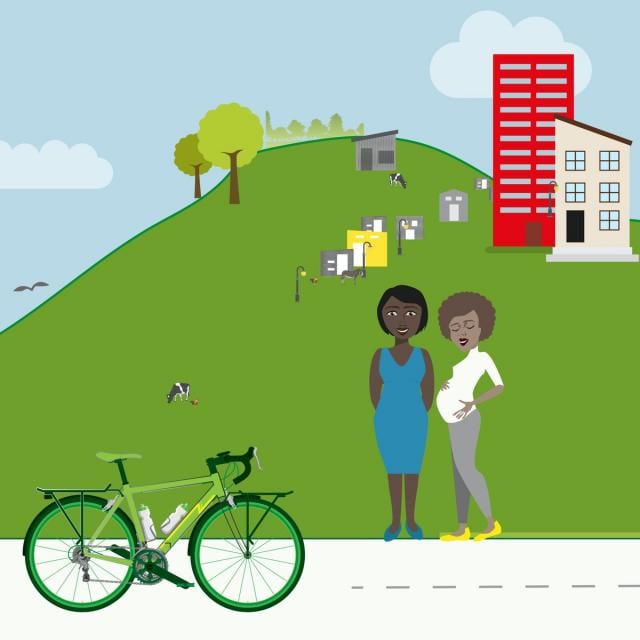
This course will provide students with an introduction to sustainable regional principles, regional planning concepts and evaluate regional transportation system issues. This will be achieved through dynamic video lectures, practical case studies and the evaluation of practices for success. These will include discussions of the importance of the regional plan, how to engage community involvement, the importance of understanding a development transect and others.

Class Deals by MOOC List - Click here and see Coursera's Active Discounts, Deals, and Promo Codes.

Strategies for growth priorities, along with consideration of available housing and food security will also be addressed. The concepts of providing a rural preserve and a rural reserve will be evaluated and mapping of key aspects of the region, such as neighborhoods and districts will be explained. Evaluation of regional transportation systems will be addressed including multi-mobile balance and building choices into the transportation system modes. The considerations for including a regional railway system along with accommodating user mobility and accessibility will be explored.
By the end of this course, you will be able to:

  • Formulate the relationship between regional principles, smart growth, and sustainability.
  • Evaluate growth priorities, community involvement and scale of governance to achieve sustainable smart growth.
  • Evaluate and explain regional mapping of rural preserves, rural reserves, neighborhoods, and districts as important tools in regional smart growth planning.
  • Describe the implications of mapping corridors and regional centers to the overall smart growth planning at the regional level.

This course is for :

  • Government Officials involved planning, designing, monitoring, enforcement, and assessment of sustainable project developments at the local, state, and federal level.
  • Private sector companies in the transportation and municipal design and construction business.
  • Architects interested in advancing sustainable concepts for cities and communities.
  • Foundations, associations, and other NGOs that support smart growth strategies.
  • Academic faculty and students studying and researching community sustainability and resilience.
  • Private citizens interested in improving their communities and living conditions.

The following list identifies background knowledge that will help you succeed in this course.

  • helpful to have a general understanding of how public/private projects are planned and implemented
  • have a strong interest or experience in planning and developing regional sustainable development plans
  • familiar with how government organizations function in the areas of transportation planning and project development
  • served as a volunteer committee member or leader on regional transportation projects and/or regional policy development initiatives
  • have a background and interest in environmental protection plans and projects
  • a general knowledge of regional transportation project planning and implementation
  • general knowledge or experience in public participation in governmental policy development
  • a strong interest and/or experience in improving the urban environment for the benefit of its citizens
  • have a general knowledge of legal and policy issues involved in sustainable development
  • have experience or general knowledge of social equity issues

Course 1 of 4 in the Sustainable Cities Specialization

Syllabus

WEEK 1
Sustainable Regional Fundamentals
This module will evaluate important regional issues that provide part of the foundation for a sustainable city. Regional principles will be evaluated in the context of developing a regional plan for sustainability.

WEEK 2
Regional Planning Including Developmental Priorities
This module will address issues related to neighborhood strategies for protecting the natural context of the neighborhood as well as the importance of the different, opponents necessary to have a welcoming and functional neighborhood. Structures will also be evaluated as an important part of the character of the neighborhood.

WEEK 3
Regional Transportation System and the Land – Use Connection
This module will evaluate sustainable options for the important physical, components for the transportation infrastructure within the region.

WEEK 4
Case Study of the Fairfax County, Virginia Comprehensive Transportation Plan
This module will evaluate sustainable options for the important physical, components for the transportation infrastructure within the Fairfax County Virginia Comprehensive Transportation Plan.

Go to Class
MOOC List is learner-supported. When you buy through links on our site, we may earn an affiliate commission.

Related Courses

The Effect of Fires on People, Property and the Environment (Coursera) Coursera
University of Maryland, College Park

The Effect of Fires on People, Property and the Environment (Coursera)

Fires impact people, property and the environment in all countries around the world. In some cases, the resulting losses are extraordinary, causing hundreds of deaths, widespread damage to property and contents and significant impacts on the environment. More often, fires may cause a single casualty or affect a single home, though the effects are still highly significant to those affected and collectively are substantial. This course will provide an overview of the challenges posed by fire as well as the fire safety solutions that are available to meet those challenges.

Aug 17th 2026
5-12 Weeks
Our Earth's Future (Coursera) Coursera
American Museum of Natural History

Our Earth's Future (Coursera)

Our Earth’s Future is about the science of climate change and how to talk about it. You will learn from scientists in the fields of climatology, oceanography, Earth science, and anthropology who study how climate change is affecting people, populations, and ways of life. Explore the multiple lines of evidence for the human-induced climate change that is happening today, and consider what that means for the future of our planet. At the end of this course you will be able to understand key scientific principles, identify and address misconceptions, and contribute confidently to conversations about climate change.

Aug 10th 2026
5-12 Weeks
Climate Change Mitigation in Developing Countries (Coursera) Coursera
University of Cape Town

Climate Change Mitigation in Developing Countries (Coursera)

This course challenges you to consider how one might lift societies out of poverty while also mitigating greenhouse gas emissions. We explore the inherent complexity of developing country governments wanting to grow their economies in a climate friendly way. You will be introduced to an approach with which to address this challenge. The approach consists of a facilitated process whereby academic researchers and high-level influential actors within society co-produce knowledge. You will track this process in four Latin American countries - Brazil, Chile, Colombia, Peru, and South Africa. You will hear from various professionals about their contexts and the different challenges and opportunities the process includes.

Aug 24th 2026
5-12 Weeks
Global Health Security, Solidarity and Sustainability through the International Health Regulations (Coursera) Coursera
University of Geneva

Global Health Security, Solidarity and Sustainability through the International Health Regulations (Coursera)

Welcome to the MOOC "Global Health Security, Solidarity and Sustainability through the International Health Regulations". We are very excited to have you on board and hope you will enjoy the course! In the coming 6 weeks, you will learn about the International Health Regulations (IHR), history of its creation and evolution, its major principles and implementation procedures, as well as challenges and future opportunities.

Aug 17th 2026
5-12 Weeks
Ressources minérales et transition (Coursera) Coursera
Institut Mines-Telecom

Ressources minérales et transition (Coursera)

Ce MOOC sur les ressources minérales et les transitions invite à se questionner sur la soutenabilité de nos choix technologiques. Les transitions énergétiques et numériques sont en effet confrontées aux enjeux d'approvisionnement des ressources minérales et aux impacts que leur cycle de vie génère sur l’environnement et la société.

Aug 17th 2026
4 Weeks
Introduction to Faecal Sludge Management (Coursera) Coursera
École Polytechnique Fédérale de Lausanne

Introduction to Faecal Sludge Management (Coursera)

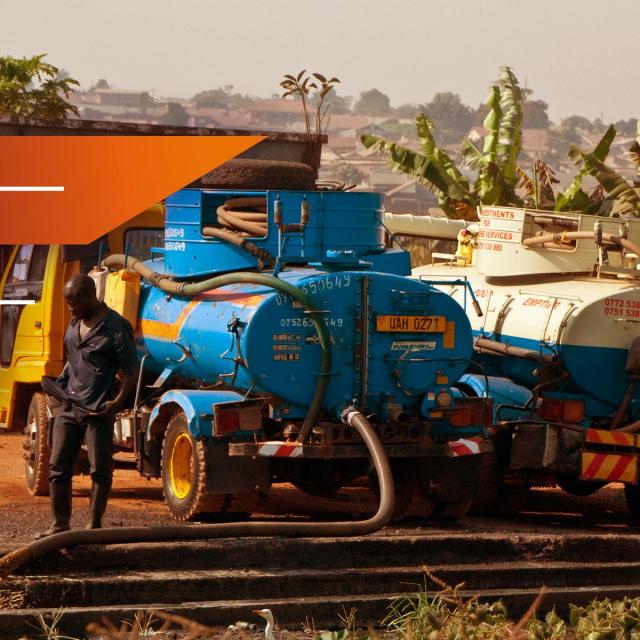
Do you want learn how to apply concepts of sustainable faecal sludge management (FSM) on a city-wide scale? This course starts with an overview of what faecal sludge is and an introduces you to the engineering fundamentals and required information for the design and selection of technologies. Sanitation solutions are prone to failure if an integrated planning approach that includes stakeholder involvement and the development of appropriate institutional, management and financial arrangements is not implemented.

Aug 10th 2026
5-12 Weeks
Strategic Public Relations Planning (Coursera) Coursera
Starweaver

Strategic Public Relations Planning (Coursera)

In the realm of modern public relations, practitioners face evolving challenges due to shifting media dynamics, new tools, and emerging opportunities. This course provides a comprehensive exploration of strategic PR planning within corporate communication, covering foundational concepts, measurement analysis, ethics, and execution. Real-world examples offer context and insights to reinforce key concepts.

Aug 17th 2026
4 Weeks
A Business Approach to Sustainable Landscape Restoration (Coursera) Coursera
Erasmus University Rotterdam

A Business Approach to Sustainable Landscape Restoration (Coursera)

Integrated landscape management and large-scale landscape restoration should be in every company’s business strategy because in order to reach the Sustainable Development Goal on Land Degradation Neutrality (SDG Number 15.3) scaling up and acceleration of business-driven landscape restoration is urgently needed.

Aug 10th 2026
5-12 Weeks
Becoming a changemaker: Introduction to Social Innovation (Coursera) Coursera
University of Cape Town

Becoming a changemaker: Introduction to Social Innovation (Coursera)

This free 6 week course is for anyone who wants to make a difference. Whether you are already familiar with the field of social innovation or social entrepreneurship, working for an organization that wants to increase its social impact, or just starting out, this course will take you on a journey of exploring the complex problems that surround us and how to start thinking about solutions.

Aug 10th 2026
5-12 Weeks
Sustainable Vikings: Sustainability & Corporate Social Responsibility in Scandinavia (Coursera) Coursera
Copenhagen Business School

Sustainable Vikings: Sustainability & Corporate Social Responsibility in Scandinavia (Coursera)

This course gives you immediate access to the world leading sustainability and corporate social responsibility (CSR) practices. Scandinavian firms dominate the major sustainability and CSR performance indicators including the Dow Jones Sustainability Index (DJSI). In this course we explore the concepts of sustainability and CSR and focus attention on how Scandinavian firms, like Novo Nordisk, have achieved superior sustainability and CSR performances.

Aug 17th 2026
5-12 Weeks