Smart Cities - Management of Smart Urban Infrastructures (Coursera)

Smart Cities - Management of Smart Urban Infrastructures (Coursera)

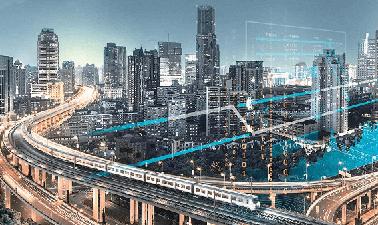
Learn about Smart Cities within the context of management of urban infrastructures. The introduction of Smart urban technologies into legacy infrastructures has resulted in numerous challenges and opportunities for contemporary cities and will continue to do so. This course will help you to understand how to make the best of these smart technologies in your cities’ legacy infrastructures.

Class Deals by MOOC List - Click here and see Coursera's Active Discounts, Deals, and Promo Codes.

Over the past few years, advances in the Information and Communication Technologies (ICTs) have significantly challenged the traditionally stable land scape of urban infrastructure service provision. This has resulted in increasing interest from both technology vendors and public authorities in the transition of cities towards so-called “Smart Cities”. Although such “Smart technologies” can provide immense opportunities for citizens and service providers alike, the ICTs often act as disruptive innovators of urban infrastructure service provision.
In this MOOC, you will gain a thorough understanding of the challenges and opportunities associated with the Smart urban infrastructures, namely Smart urban transportation and Smart urban energy systems. Over the journey of this 5-week online course you will learn about the most important principles for the management of Smart urban infrastructures as well as the applications of these principles in the transportation and energy sectors.
This course does not have any prerequisites. However, to take the most away from of this MOOC, we strongly encourage you to enroll in our other MOOC on the Management of Urban Infrastructures, which has been widely praised by learners.
Through this course, you will:

  • Gain a deep understanding of the nature of disruptive innovations (smart technologies) in urban infrastructure systems;
  • Learn about state-of-the-art strategies for effectively managing the transition from legacy infrastructures to smart urban systems;
  • Study the management of the transition phase from legacy infrastructure systems to smart cities by supporting innovations while avoiding early lock-in; and
  • Understand potential applications of the materials learned in this course within the context of the management of smart urban transportation systems as well as smart urban energy systems.

Syllabus

WEEK 1
Introduction to Smart Urban Infrastructures and Smart Cities
‘Smart City’ is a notion that is widely, and sometimes not appropriately, used by urbanists across the globe. This week will help you to get a more clear understanding of this notion by using a rigorous conceptual framework, which is based on the systems theory. In this week, we will explain the concept of Smart Cities by reviewing different conceptual approaches to Smart Cities and discussing the pros and cons of each approach.

WEEK 2
Smart Urban Energy Systems
Smart Energy Systems are one of the top priorities on the agenda of local governments, nation states and technology suppliers. In this week, we deep dive into the energy sector to explore some of the most important managerial considerations in the transition phase and operation of Smart Urban Energy Systems.

WEEK 3
Smart Urban Transportation Systems
Many Smart Transportation Technologies are already tested on the roads and in cities across the globe. Driverless vehicles as well as car and ride sharing solutions are not anymore futuristic visions for urban transportation systems; but realities that pose significant opportunities and threads for legacy urban transportation systems. In this week, we deep dive into the urban transportation sector and discuss some of the most important managerial considerations to facilitate the transition phase, and operation of Smart Urban Transportation Systems, thanks to availability of data.

WEEK 4
Towards Smart Cities: part 1
The transition of legacy cities to Smart Cities is not a spontaneous process. To get the transition process right, and to the benefit of citizens, cities have to adopt effective management and governance approaches to successfully deal with numerous complexities of this process. This week will help you to understand the most important factors in the transition phase of legacy cities to Smart cities and their managerial implications.

WEEK 5
Towards Smart Cities: part 2
Management of Smart Cities calls for different approaches from conventional urban management approaches. In this week, we focus on the role of city government in the network of actors who play an important role in management of Smart Cities.

Go to Class
MOOC List is learner-supported. When you buy through links on our site, we may earn an affiliate commission.

Related Courses

Sustainable Urban Water Systems (POK) Polimi OPEN KNOWLEDGE
Politecnico di Milano

Sustainable Urban Water Systems (POK)

Solutions for Sustainable Water Management in Resilient Smart Cities. The MOOC “Sustainable Urban Water Systems” aims to provide knowledge about modern and sustainable solutions for urban water management in water-sensitive cities. The focus is on stormwater control and water supply strategies for the mitigation of effects on the water cycles due to human settlements and climate change. In particular, the integration of Nature-based Solutions (NbS) into urban drainage systems, the use of alternative water resources, and the reduction of losses and waste, make cities more resilient and add benefits to both the environment and community.

Available now
3 Weeks
Technological challenges of participatory smart cities (FUN) FUN
INRIA

Technological challenges of participatory smart cities (FUN)

The course is a high level introduction to the constituents of the smart cities’ digital infrastructures, from the network up to the software layers. The proposed survey highlights the technical aspects to be taken into account to create practical services and to develop smarter cities involving citizen participation. In particular, it will impart information on privacy and interoperability aspects.

Mar 30th 2019
5-12 Weeks
Beyond the Sustainable Development Goals (SDGs): Addressing Sustainability and Development (Coursera) Coursera
University of Michigan

Beyond the Sustainable Development Goals (SDGs): Addressing Sustainability and Development (Coursera)

We’re excited you’re here! This course, “Beyond the Sustainable Development Goals (SDGs): Addressing Sustainability and Development,” is the first course in the upcoming Sustainability and Development MasterTrack Certificate program (Fall 2020), but you can also take this course as a stand-alone learning opportunity.

Jun 3rd 2026
5-12 Weeks
Smart Cities, Management of Smart Urban Infrastructures (edX) EdX
École Polytechnique Fédérale de Lausanne,EPFLx

Smart Cities, Management of Smart Urban Infrastructures (edX)

In the era of Smart Cities, learn the principles of urban infrastructure management and find ways to incorporate smart technologies into legacy infrastructures. Over the past few years, advancements in the Information and Communication Technologies (ICTs) have significantly challenged the traditionally stable landscape of urban infrastructure services. The result is an increasing interest in the transitioning of cities towards so-called “smart cities” – an interest expressed both by technology vendors and public authorities.

Self-Paced
Self-Paced
Management of Urban Infrastructures – part 1 (Coursera) Coursera
École Polytechnique Fédérale de Lausanne

Management of Urban Infrastructures – part 1 (Coursera)

Sustainability, Resilience and Efficiency are fundamental considerations for city managers in managing urban infrastructures. Today, more than 3.9 billion people, making up more than 54% of the global population, live in cities. Urbanization is expected to continue in the coming years, raising the urban population to 6.0 billion by 2045. This dramatic increase in urban populations will inevitably increase the demand for energy, mobility (transportation), water, and other urban services in every city around the world. Without functional governance and management structures that ensure efficient, resilient and sustainable performance in cities, the current urbanization growth might become a catastrophic risk threatening the quality of life of the humanity.

May 25th 2026
5-12 Weeks
Smart Grids for Smart Cities: Towards Zero Emissions (FutureLearn) FutureLearn
KIC InnoEnergy,Homuork,SmartGrid.cat

Smart Grids for Smart Cities: Towards Zero Emissions (FutureLearn)

Find out how smart grids and big data can help citizens, companies and cities understand energy use and reduce carbon footprint. This online course provides a technological and behavioural framework to help citizens, companies and cities to reduce their carbon footprint.

No sessions available
5-12 Weeks
Enhancing the Quality of Urban Life: Fifteen Winning Projects of the Aga Khan Award for Architecture (FutureLearn) FutureLearn
Aga Khan Trust for Culture,Center for the Study of the Built Environment - CSBE

Enhancing the Quality of Urban Life: Fifteen Winning Projects of the Aga Khan Award for Architecture (FutureLearn)

Find out how we can improve life for people in cities by looking at award-winning architecture projects from across the globe. This open online course looks at the challenges of enhancing the quality of urban life as they have been addressed by projects from across the world that have received the Aga Khan Award for Architecture. All of these projects have benefited Muslim communities, but the messages they communicate are universal.

No sessions available
5-12 Weeks
O Futuro das Cidades, os Cidadãos e a UE: uma Construção com o Poder Local (NAU) NAU
Instituto Nacional de Administração - INA

O Futuro das Cidades, os Cidadãos e a UE: uma Construção com o Poder Local (NAU)

Aprenda a otimizar recursos como a mobilidade, a água ou a energia, tornando-os mais eficazes, mas também mais baratos e úteis. Uma das missões do Horizonte Europa (próximo programa-quadro da UE para a investigação e a inovação) e das linhas do Pacto Ecológico Europeu é a aposta em cidades inteligentes e com impacto neutro no clima. É nesse contexto que é importante saber o que é uma cidade inteligente e conhecer os instrumentos que permitem à administração local e aos cidadãos participar neste processo de transformação do ambiente urbano. Conheça o papel que a Administração Local pode desempenhar, no contexto da integração europeia, para promover uma cidadania ativa (local e europeia) e consolidar a construção de cidades inteligentes e verdes.

No sessions Available
Self-Paced
Villes du monde en système (FUN) FUN
Université Paris 1 Panthéon-Sorbonne

Villes du monde en système (FUN)

Les villes regroupent déjà la moitié de la population mondiale et en concentreront les trois quarts avant la fin de ce siècle. C’est donc là que les sociétés doivent résoudre les problèmes majeurs pour leur durabilité, tant en matière de développement économique, de transition écologique, que d’équité sociale. Une bonne compréhension de la diversité des villes et de ce qui la cause est essentielle pour la réussite de ces évolutions nécessaires.

No sessions available
5-12 Weeks
Foundations of Virtual Instruction (Coursera) Coursera
University of California, Irvine

Foundations of Virtual Instruction (Coursera)

Welcome to Foundations of Virtual Instruction! This course will help you 'up' your game and develop the advanced skills and techniques that elude even some of the most experienced virtual teachers in the K-12 space. Examine pitfalls and learn how to overcome them by focusing on the fundamentals that have the most significant impact on student learning in a blended or online environment.

Jun 1st 2026
5-12 Weeks
Urban Transit for Livable Cities (edX) EdX
University of Pennsylvania,PennX

Urban Transit for Livable Cities (edX)

City livability depends on urban transit. Learn about transit systems and their critical role for the character of cities and quality of life. The goal of urban transit is to achieve an intermodal transportation balance. Ideally, each mode is used in its optimal role, in order to create a people-friendly environment. But how exactly can that be accomplished?

Self Paced
Self-Paced