Rome: a Virtual Tour of the Ancient City (FutureLearn)

Offered by University of Reading,
Rome: a Virtual Tour of the Ancient City (FutureLearn)

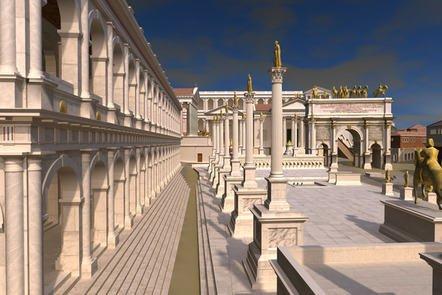
Explore the architecture and history of Rome, walking around a 3D digital model of the ancient city, with this free online course. Explore ancient Rome through a unique, historically accurate 3D model. Take a guided tour around ancient Rome with expert Professor Matthew Nicholls, using his detailed and award-winning 3D digital model of the city.

Class Deals by MOOC List - Click here and see FutureLearn's Active Discounts, Deals, and Promo Codes.

Explore Rome’s architecture and how it was used - how did Romans worship their gods and meet their political masters? How was drinking water supplied to the city’s million inhabitants? Moving seamlessly between footage of contemporary Rome and the digital model (including interactive elements), you’ll explore these questions and much more.
Use this insight to inform your own encounters with the eternal city and the study of ancient history more generally.

Syllabus

Week 1: Location and infrastructure
Week 2: Political architecture
Week 3: Religious architecture
Week 4: Life and death in ancient rome
Week 5: Bread and circuses

What will you achieve?

  • Explore different categories of building within the city, and the functions they housed
  • Investigate a range of evidence including archaeological remains, coins, literary texts, and inscriptions to learn how we can understand and interpret the ancient past
  • Discuss the way the rulers of Rome used architecture to adorn the city and keep it functioning
  • Experience digital modeling as a way of presenting the ancient past, exploring models on screen and in videos and discussing what they can show us

Who is the course for?
This course is open to anyone with an interest in discovering more about ancient Rome. You might be: planning a visit to the Italian capital; an avid watcher of documentaries on Roman history; or considering studying archaeology, classics or history at university.
Go to Class
MOOC List is learner-supported. When you buy through links on our site, we may earn an affiliate commission.

Related Courses

Arch of Titus: Rome and the Menorah (Coursera) Coursera
Yeshiva University

Arch of Titus: Rome and the Menorah (Coursera)

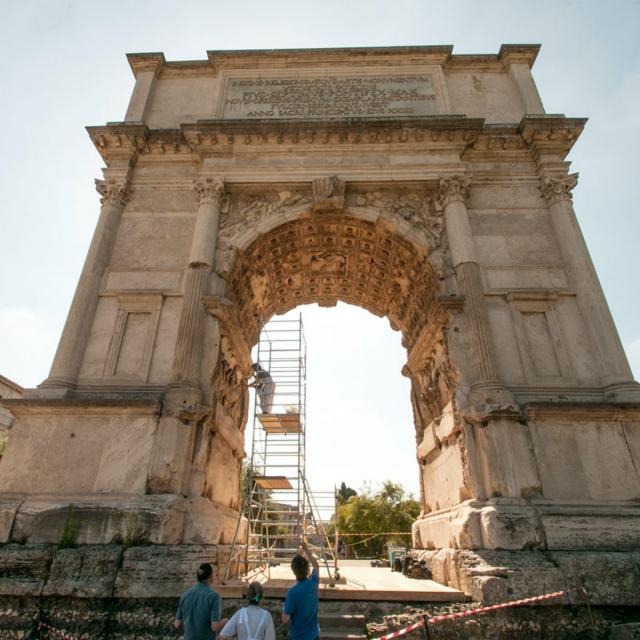
The Arch of Titus: Rome and the Menorah explores one of the most significant Roman monuments to survive from antiquity, from the perspectives of Roman, Jewish and later Christian history and art. The Arch of Titus commemorates the destruction of Jerusalem by the emperor Titus in 70 CE, an event of pivotal importance for the history of the Roman Empire, of Judaism, of Christianity and of modern nationalism. Together with your guide, Professor Steven Fine, you will examine ancient texts and artifacts, gaining skills as a historian as you explore the continuing significance of the Arch of Titus from antiquity to the very present.

Nov 23rd 2026
5-12 Weeks
Plagues, Witches, and War: The Worlds of Historical Fiction (Coursera) Coursera
University of Virginia

Plagues, Witches, and War: The Worlds of Historical Fiction (Coursera)

A unique and exciting introduction to the genre and craft of historical fiction, for curious students, aspiring authors--anyone with a passion for the past. Read classics of the genre, encounter bestselling writers of historical fiction, and discover your own historical archive while interacting with a global community of interested readers.

Nov 9th 2026
5-12 Weeks
Early Modern Scottish Palaeography: Reading Scotland's Records (FutureLearn) FutureLearn
University of Glasgow

Early Modern Scottish Palaeography: Reading Scotland's Records (FutureLearn)

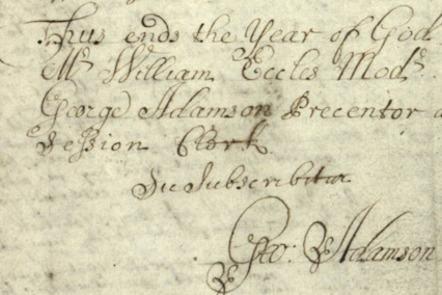
Travel back in time through Scottish history by examining early modern Scottish handwriting. Explore Scottish history and learn more about using historical sources. Palaeography is the study of ancient handwriting and a vital skill in the historian’s toolkit. It is essential when conducting research on early modern Scotland – a period of profound political, religious and social change the effects of which can still be felt today.

Self Paced
3 Weeks
Christianisme et philosophie dans l’Antiquité (edX) EdX
Sorbonne University

Christianisme et philosophie dans l’Antiquité (edX)

Présentation des relations entre le christianisme et la philosophie dans l’Antiquité grecque et romaine. Le christianisme s’oppose-t-il à la raison philosophique ? Ce questionnement d’ordre général peut trouver une première réponse dans l’étude historique de la confrontation entre christianisme et philosophie dans l’Antiquité. Cette confrontation a joué un rôle très important dans la constitution de la doctrine chrétienne.

No sessions available
5-12 Weeks
History of Roman Law (edX) EdX
University of Naples Federico II,FedericaX

History of Roman Law (edX)

Explore Roman Law, its History, its Juridical Scienceand Codes, and see how relevant it could be for international legal culture today! “ Globalisation is paving the way for the increasingly international legal transactions and disputes. As a result, solicitors [and lawyers] are required to work across numerous jurisdictions. Knowledge not only of languages but also of some of the relevant legal concepts of these jurisdictions is beneficial. Due to the fact that the French, German, Italian and a vast number of other legal systems have kept alive many of the Roman legal rules and principles , studying Roman law gives students a solid grounding in the fundamental principles of these jurisdictions.…

Self Paced
Self-Paced
Art of Ancient Greece and Rome (saylor.org) Saylor Academy
Saylor.org

Art of Ancient Greece and Rome (saylor.org)

In this course, we will study the art of Classical Antiquity. The different units of the course reflect the main chronological stages in art development in Ancient Greece and Rome, from the coming together of the Greek city-state and the emergence of “geometric art” (around 900 B.C.) to the fourth century A.D. shift that took place within Roman culture and art due to the growing influence of Christianity.

Legacy Course
Self-Paced
Modellazione digitale 3D: strumenti operativi per iniziare (POK) Polimi OPEN KNOWLEDGE
Politecnico di Milano

Modellazione digitale 3D: strumenti operativi per iniziare (POK)

Valutare e gestire i principali dispositivi per la modellazione e la grafica digitale in architettura. Il corso si propone di fornire indicazioni utili per la valutazione e la gestione dei principali dispositivi impiegati nell’ambito della modellazione e della grafica digitale in architettura. Ci si soffermerà in particolare sulla configurazione del PC e sull’installazione di software in ambiente Windows e MacOS.

Available
2 Weeks
Greek and Roman Mythology (Coursera) Coursera
University of Pennsylvania

Greek and Roman Mythology (Coursera)

Myths are traditional stories that have endured over a long time. Some of them have to do with events of great importance, such as the founding of a nation. Others tell the stories of great heroes and heroines and their exploits and courage in the face of adversity. Still others are simple tales about otherwise unremarkable people who get into trouble or do some great deed. What are we to make of all these tales, and why do people seem to like to hear them? This course will focus on the myths of ancient Greece and Rome, as a way of exploring the nature of myth and the function it plays for individuals, societies, and nations. We will also pay some attention to the way the Greeks and Romans themselves understood their own myths.

Nov 16th 2026
5-12 Weeks
Roman Art and Archaeology (Coursera) Coursera
University of Arizona

Roman Art and Archaeology (Coursera)

The objective of this course is to provide an overview of the culture of ancient Rome beginning about 1000 BCE and ending with the so-called "Fall of Rome". We will look at some of the key people who played a role in Rome, from the time of the kings through the Roman Republic and the Roman Empire. We will also focus on the city of Rome itself, as well as Rome's expansion through Italy, the Mediterranean, and beyond.

Nov 16th 2026
5-12 Weeks
Archaeology of Portus: Exploring the Lost Harbour of Ancient Rome (FutureLearn) FutureLearn
University of Southampton

Archaeology of Portus: Exploring the Lost Harbour of Ancient Rome (FutureLearn)

Learn how ancient artefacts, written evidence, excavation and digital technologies are transforming understanding of this harbour. The Roman harbour city of Portus lay at the heart of an empire that extended from Scotland to Iraq. Established by Claudius and enlarged by the emperor Trajan with spoils of the Dacian wars, the port was the conduit for everything the city of Rome required from its Mediterranean provinces: the food and, particularly grain, that fed the largest urban population of the ancient world, as well as luxuries of all kinds, building materials, people and wild animals for the arena.

No sessions available
5-12 Weeks