Roman Architecture (saylor.org)

Offered by Saylor.org,
Roman Architecture (saylor.org)

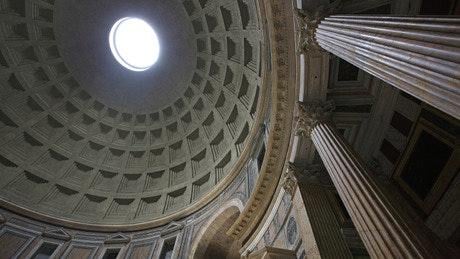
In this course, we will study the architecture of Ancient Rome, beginning with its origins in the eighth century BC, and continuing through the fourth century AD with the move of the Roman capital to Constantinople.

The course of lectures and readings outlined below will familiarize you with the major building methods and styles used in Roman architecture. In addition, interior decoration (including the very important topic of Roman wall painting) will be addressed. By the end of the course, you will be able to identify some of the most important works of Roman architecture and discuss the historical and cultural conditions that informed their production.
An important theme throughout the first half of the course is the relationship between Ancient Rome and Greek and Etruscan cultures, which were highly influential in the formation of a distinctive Roman architecture. Understanding the role that Roman architecture played in the eastern and western Roman provinces is also significant to this course, as it draws Roman architecture into a broader geographical and cultural context. Roman art and culture were tremendously important for Western culture after the fall of the Roman Empire; by completing this course, you will be well-prepared for study of later Western architecture.

Requirements: have completed Art Appreciation and Techniques, Introduction to Western Art History—Pre-historic to High Gothic, Introduction to Western Art History—Proto-Renaissance to Contemporary Art, and four 200-level ARTH courses.
Go to Class
MOOC List is learner-supported. When you buy through links on our site, we may earn an affiliate commission.

Related Courses

ART of the MOOC: Activism and Social Movements (Coursera) Coursera
Duke University,Creative Time

ART of the MOOC: Activism and Social Movements (Coursera)

This course is for activists, artists, and thinkers who wish to better understand and participate in social change. We will focus on the prolific and exciting overlap between socially engaged art and cultural practices generated by recent social movements around the world. Rather than assess the political efficacy of activities like mourning, listening, organizing, dancing, or partying, the lectures examine such cultural activities next to, and within, contemporary art practice.

Aug 17th 2026
5-12 Weeks
ART of the MOOC: Public Art and Pedagogy (Coursera) Coursera
Duke University,Creative Time

ART of the MOOC: Public Art and Pedagogy (Coursera)

Students of this course may try their hand at their own public art interventions, or simply focus on learning from the theory of public practice and its recent history. Designed by artist and Duke professor, Pedro Lasch, and co-taught by Creative Time artistic director, Nato Thompson, this course presents public culture and art in their radically reinenvented contemporary forms. The lectures link major developments of recent decades to wider topics like spatial politics, everyday social structures, and experimental education.

Aug 17th 2026
5-12 Weeks
Arts of Latin America (saylor.org) Saylor Academy
Saylor.org

Arts of Latin America (saylor.org)

A chronological and thematic survey of the major themes and developments in the history of Latin American art, this course traces the evolution of visual culture over approximately four millennia. Organized into three parts, the course begins with the pre-Columbian period (1800 BC to AD 1492), moves into the years of European contact and conquest (AD 1492 to 1800), and concludes with an overview of modern and contemporary art across the Americas.

Legacy Course
Self-Paced
African Art (saylor.org) Saylor Academy
Saylor.org

African Art (saylor.org)

This course will introduce you to the art and architecture of Africa from a Western art historical perspective. This Western perspective is influenced by developments in modern European art, which have claimed African art as an inspiration for more “primitive,” intuitive art forms.

Legacy Course
Self-Paced
A Global History of Architecture (edX) EdX
MIT,MITx

A Global History of Architecture (edX)

Learn about humanity’s rich architectural history on this journey around the globe – from 100,000 BCE to ca. 1,600 CE. How do we understand architecture? One way of answering this question is by looking through the lens of history, beginning with First Societies and extending to the 16th century. This course in architectural history is not intended as a linear narrative, but rather aims to provide a more global view, by focusing on different architectural "moments."

Oct 18th 2023
5-12 Weeks
Archaeology of Portus: Exploring the Lost Harbour of Ancient Rome (FutureLearn) FutureLearn
University of Southampton

Archaeology of Portus: Exploring the Lost Harbour of Ancient Rome (FutureLearn)

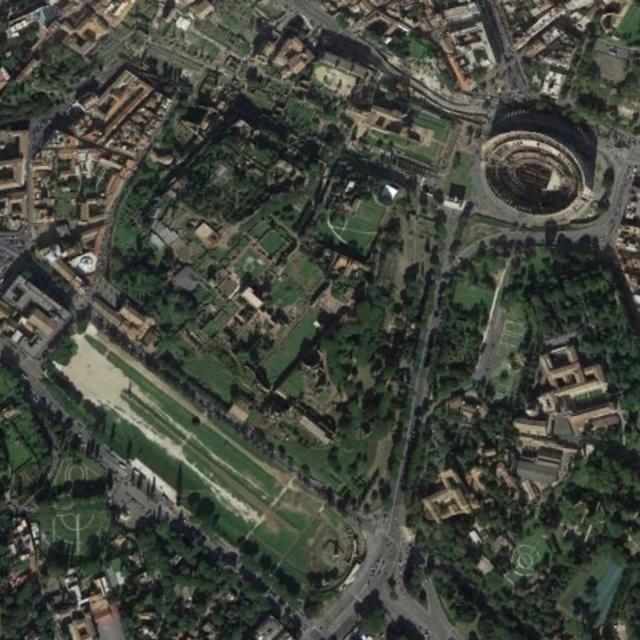
Learn how ancient artefacts, written evidence, excavation and digital technologies are transforming understanding of this harbour. The Roman harbour city of Portus lay at the heart of an empire that extended from Scotland to Iraq. Established by Claudius and enlarged by the emperor Trajan with spoils of the Dacian wars, the port was the conduit for everything the city of Rome required from its Mediterranean provinces: the food and, particularly grain, that fed the largest urban population of the ancient world, as well as luxuries of all kinds, building materials, people and wild animals for the arena.

No sessions available
5-12 Weeks
Health and Wellbeing in the Ancient World (FutureLearn) FutureLearn
The Open University

Health and Wellbeing in the Ancient World (FutureLearn)

Use literary and archaeological evidence to see how ancient Greeks and Romans approached health, well-being and societal issues. What did being healthy in ancient Rome or Greece look like? How can we tell what well-being meant in ancient times? This online course will help you investigate these questions, using both literary and archaeological evidence, to uncover details of real life in ancient societies.

Self Paced
5-12 Weeks
Christianisme et philosophie dans l’Antiquité (edX) EdX
Sorbonne University

Christianisme et philosophie dans l’Antiquité (edX)

Présentation des relations entre le christianisme et la philosophie dans l’Antiquité grecque et romaine. Le christianisme s’oppose-t-il à la raison philosophique ? Ce questionnement d’ordre général peut trouver une première réponse dans l’étude historique de la confrontation entre christianisme et philosophie dans l’Antiquité. Cette confrontation a joué un rôle très important dans la constitution de la doctrine chrétienne.

No sessions available
5-12 Weeks
How Music Can Change Your Life (Coursera) Coursera
University of Melbourne

How Music Can Change Your Life (Coursera)

Did you ever wonder how music works? This course provides free video, audio and journal resources that explain six basic principles about how music can influence individual and community health and wellbeing. From biology and neuroscience, to psychotherapy and politics, the ways we engage with music can make all the difference. Music has always played an integral role in the lives of individuals and communities all around the globe.

Aug 17th 2026
5-12 Weeks
ART of the MOOC: Arte Público y Pedagogía (Coursera) Coursera
Duke University,Creative Time

ART of the MOOC: Arte Público y Pedagogía (Coursera)

Los alumnos de este curso aprenderán a hacer sus propias obras de arte social y público si así lo desean, o podrán simplemente estudiar la teoría e historia reciente del medio. Diseñado por el artista y profesor de Duke, Pedro Lasch, e impartido con el director artístico de Creative Time, Nato Thompson, este curso presenta el arte y la cultura pública en sus formas contemporáneas radicalmente re-inventadas. Las conferencias enlazan acontecimientos claves de las últimas décadas en este campo con temas más amplios como la política espacial, estructuras sociales cotidianas y la educación experimental.

Aug 17th 2026
5-12 Weeks
Early Christian and Byzantine Art (saylor.org) Saylor Academy
Saylor.org

Early Christian and Byzantine Art (saylor.org)

In this course, we will study the history of Eastern (Orthodox) Christian art. The course begins with an overview of the emergence of Christianity in the Late Antique period and the formation of the Christian visual language that grew out of the Classical tradition. The course then follows the development of Christian art after the fall of the Roman Empire and the emergence of a “new Rome” in the East: the Byzantine Empire.

Legacy Course
Self-Paced