Introduction to Western Art History: Pre-historic to High Gothic (saylor.org)

Offered by Saylor.org,
Introduction to Western Art History: Pre-historic to High Gothic (saylor.org)

In this course, we will study the history of Western art, beginning with the first objects created by prehistoric humans around 20,000 years ago and ending with the art and architecture of the High Gothic period in fourteenth-century Europe.

The information presented in this course will provide you with the tools to recognize important works of art and historical styles, as well as to understand the historical context and cultural developments of Western art history through the end of the medieval period. Introductory readings paired with detailed lectures will provide you with a well-rounded sense of the history, art, and culture of the West up through the medieval period.
At the end of this course, you will be able to identify key works of art and artistic periods in Western history. You will also be able to discuss the development of stylistic movements and relate those developments to important historical events.
Upon successful completion of this course, the student will be able to:

  • Demonstrate an understanding of the general arc of the history of the Western world, from Prehistory through the end of the medieval period.
  • Identify the major historical events in Western history and the roles of various religious and political leaders in these events.
  • Demonstrate an understanding of the vital role that imagery played as various cultures have sought to perpetuate religious, political, and cultural ideologies.
  • Understand the relationships between various cultures over time—how cultures build on the traditions of older cultures to create something new.
  • Identify the major stylistic developments in Western art from Prehistory through the end of the Medieval period.
  • Discuss the different techniques used by Western artists from the Prehistoric through the Medieval periods and understand which techniques were favored by which cultures.
  • Demonstrate an understanding of how technological developments over the course of history changed the appearance, function, and reception of works of art.
  • Identify the culture and art-historical period in which works of art were created, based on an understanding of distinctive stylistic features.
  • Demonstrate an understanding of how cultures coexisting in different geographical regions related to one another, and how artistic styles were transmitted from one region to another.
  • Identify specific monuments and be able to provide basic identifying information: title, date, location, artists, patrons, and art-historical period (i.e. Prehistoric, Egyptian, Ancient Near East, Gothic, etc).

Course Requirements:
Have completed Art Appreciation and Techniques from “The Core Program” of the Art History discipline.
Go to Class
MOOC List is learner-supported. When you buy through links on our site, we may earn an affiliate commission.

Related Courses

Historia del Arte: Del Barroco al Arte Posmoderno (Coursera) Coursera
Universidad de Palermo

Historia del Arte: Del Barroco al Arte Posmoderno (Coursera)

El arte deriva de un deseo de la persona para comunicarse con otros” (Edvard Munch). Y es desde la prehistoria que el humano ha dejado impresas sus huellas a través del arte. ¿Qué características tienen esas huellas artísticas? ¿Qué nos comunican sobre el periodo de tiempo al que pertenecen? Sumergite en la historia del arte recorriendo este curso, partiendo desde la construcción del Arte Moderno y realizando un camino por los diferentes sistemas de representación dominantes de distintos períodos hasta llegar a la Muerte del Arte.

Sep 7th 2026
4 Weeks
Western and Chinese Art: Masters and Classics (edX) EdX
Tsinghua University,TsinghuaX

Western and Chinese Art: Masters and Classics (edX)

From da Vinci to Zhang Xu, Wu Daozi and Warhol, explore immortal works of Western and Chinese art and gain an appreciation of culture, history and civilization. Throughout human history, art has served as a window into current events, traditions, societies and culture. And, Chinese and Western civilizations have produced some of the most famous artworks by world-renowned artists.

Self Paced
Self-Paced
African Art (saylor.org) Saylor Academy
Saylor.org

African Art (saylor.org)

This course will introduce you to the art and architecture of Africa from a Western art historical perspective. This Western perspective is influenced by developments in modern European art, which have claimed African art as an inspiration for more “primitive,” intuitive art forms.

Legacy Course
Self-Paced
Art of Ancient Greece and Rome (saylor.org) Saylor Academy
Saylor.org

Art of Ancient Greece and Rome (saylor.org)

In this course, we will study the art of Classical Antiquity. The different units of the course reflect the main chronological stages in art development in Ancient Greece and Rome, from the coming together of the Greek city-state and the emergence of “geometric art” (around 900 B.C.) to the fourth century A.D. shift that took place within Roman culture and art due to the growing influence of Christianity.

Legacy Course
Self-Paced
O Real Paço Mafra: do Magnânimo ao Clemente (UAb) Universidade Aberta
Universidade Aberta

O Real Paço Mafra: do Magnânimo ao Clemente (UAb)

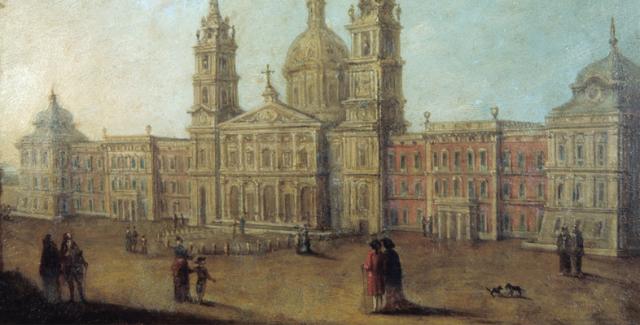
Erguido numa lógica de afirmação do poder real, o Real Paço de Mafra está intimamente ligado à figura de D. João V. Mas a adaptação a novos tempos, a evolução do gosto, o terramoto de 1755 e as campanhas de Napoleão vão determinar a forma como o Paço vai sendo (ou não) habitado ao longo do século XVIII. Outro monarca, D. João VI, deixará também a sua marca neste que era um dos seus Paços favoritos. Conheça neste curso esta e outras dimensões da história do Palácio.

Self Paced
Self-Paced
Women in Arts: From 1900 until today (FutureLearn) FutureLearn
Centre Pompidou

Women in Arts: From 1900 until today (FutureLearn)

Discover the women creators who shaped modern and contemporary art and those who continue to make huge impacts today. Delve into art history through the extraordinary works of women artists. On this seven-week course, you’ll journey through an alternative history of modern and contemporary art – one that is centred on the brilliant women creators in the movement.

Nov 15th 2021
5-12 Weeks
Words Spun Out of Images: Visual and Literary Culture in Nineteenth Century Japan (Coursera) Coursera
The University of Tokyo

Words Spun Out of Images: Visual and Literary Culture in Nineteenth Century Japan (Coursera)

In their ambition to capture “real life,” Japanese painters, poets, novelists and photographers of the nineteenth century collaborated in ways seldom explored by their European contemporaries. This course offers learners the chance to encounter and appreciate behavior, moral standards and some of the material conditions surrounding Japanese artists in the nineteenth century, in order to renew our assumptions about what artistic “realism” is and what it meant.

Sep 7th 2026
4 Weeks
American Art (saylor.org) Saylor Academy
Saylor.org

American Art (saylor.org)

This course surveys art of America from the colonial era through the post-war 20th century. We will consider broad stylistic tendencies in various regions and periods and examine specific artists and works of art in historical and social contexts, with emphasis on the congruent evolution of contemporary American multi-cultural identity.

Legacy Course
Self-Paced