EdX

Robotics (edX)

Robotics (edX)

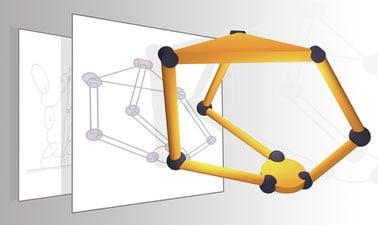
Learn the core techniques for representing robots that perform physical tasks in the real world. We think of Robotics as the science of building devices that physically interact with their environment. The most useful robots do it precisely, powerfully, repeatedly, tirelessly, fast, or some combinations of these. The most interesting robots maybe even do it intelligently. This course will cover the fundamentals of robotics, focusing on both the mind and the body.

Class Deals by MOOC List - Click here and see EdX's Active Discounts, Deals, and Promo Codes.

We will learn about two core robot classes: kinematic chains (robot arms) and mobile bases. For both robot types, we will introduce methods to reason about 3-dimensional space and relationships between coordinate frames. For robot arms, we will use these to model the task of delivering a payload to a specified location. For mobile robots, we will introduce concepts for autonomous navigation in the presence of obstacles.
Class projects will make use of ROS - the open-source Robot Operating System widely used in both research and industry. Computer requirements for working on the projects will include a computer set up with Ubuntu Linux and high bandwidth internet access for downloading and installing ROS packages.
This course is part of the Artificial Intelligence MicroMasters Program.

What you'll learn:

  • Represent 2D and 3D spatial relationships, homogeneous coordinates
  • Manipulate robot arms: kinematic chains, forward and inverse kinematics, differential kinematics
  • Program and navigate mobile robots: robot and map representations, motion planning
  • Plan complete robot systems
  • Develop present and future applications for robots

Course Syllabus

Week 1
Introduction to Robotics
Homogenous coordinates and transform representations

Week 2
Kinematic chains
Forward kinematics

Week 3
Inverse kinematics: analytical methods

Week 4
Differential kinematics: Jacobian computation, singular configurations

Week 5
Configuration space operation

Week 6
Mobile robots
Differential drive kinematics

Week 7
Motion planning in robotics

Prerequisites:

  • College-level introductory linear algebra (vector spaces, linear systems, matrix decomposition)
  • College-level introductory calculus (partial derivatives, function gradients)
  • Basic knowledge of computer programming (variables, functions, control flow)
  • Projects will be carried out in the Python language, with C++ as an option

Go to Class
MOOC List is learner-supported. When you buy through links on our site, we may earn an affiliate commission.

Related Courses

Forensic Engineering: Learning from Failures (edX) EdX
Delft University of Technology,DelftX

Forensic Engineering: Learning from Failures (edX)

Don’t let good failures go to waste! Identify the causes of failure and use this knowledge to enhance safety and improve performance. What do collapsed buildings, infected hospital patients, and crashed airplanes have in common? If you know the causes of these events and conditions, they can all be prevented. In this course, you will learn how to use the TU Delft mind-set to investigate the causes of such events so you can prevent them in the future.

Self Paced
Self-Paced
The Basics of Transport Phenomena (edX) EdX
Delft University of Technology,DelftX

The Basics of Transport Phenomena (edX)

Learn the basic framework to work on a broad spectrum of engineering problems concerning transfer of heat, mass and momentum. Learn through examples of everyday processes at home, in the lab and in industry. Have you ever wondered why ventilation helps to cool down your hot chocolate? Do you know why a surfing suit keeps you warm? Why iron feels cold, while wood feels warm at room temperature? Or how air is transferred into aqueous liquids in a water treatment plant? How can we sterilize milk with the least amount of energy? How does medicine spread in our tissue? Or how do we design a new cooling tower of a power plant? All these are phenomena that involve heat transfer, mass transfer or fluid flow.

Self Paced
Self-Paced
Dynamics and Control (edX) EdX
Universitat Politècnica de València,UPValenciaX

Dynamics and Control (edX)

This is an interactive course about the basic concepts of Systems, Control and their impact in all the human activities. First, the basic concepts of systems, dynamics, structure and control are introduced. Then, looking at many examples in Nature and human made devices, we will realize that the dynamic behavior of most systems can be modified by adding a control system. Later we will see how knowing how to evaluate the dynamic behavior of a system and measure its performance will provide the tools to design new controlled systems fulfilling some requirements.

Self Paced
Self-Paced
A System View of Communications: From Signals to Packets (Part 1) (edX) EdX
The Hong Kong University of Science and Technology - HKUST,HKUSTx

A System View of Communications: From Signals to Packets (Part 1) (edX)

Explore the tradeoffs in designing communication systems like mobile phones, and the engineering tools to handle them. Have you ever wondered how information is transmitted using your mobile phone or a WiFi hotspot? This introductory course seeks to enable you to understand the basic engineering tools used and tradeoffs encountered in the design of these systems.

Self Paced
Self-Paced
Decision-Making for Autonomous Systems (edX) EdX
Chalmers University of Technology,ChalmersX

Decision-Making for Autonomous Systems (edX)

Learn effective tactics for making key decisions when working with autonomous, self-driving vehicles. In autonomous vehicles such as self-driving cars, we find a number of interesting and challenging decision-making problems. Starting from the autonomous driving of a single vehicle, to the coordination among multiple vehicles. This course will teach you the fundamental mathematical model for many of these real-world problems.

Self Paced
Self-Paced
Software Engineering: Introduction (edX) EdX
The University of British Columbia,UBCx

Software Engineering: Introduction (edX)

Learn how to apply engineering principles, such as Agile, to build a full-stack software system. You will learn software engineering principles that are applicable to the breadth of large-scale software systems. The course explores topics such as agile development, REST and Async programming, software specification, design, refactoring, information security, and more.

Self Paced
Self-Paced
Modeling and Simulation of Multibody Systems - Part I (edX) EdX
LouvainX,Université Catholique de Louvain - UCL

Modeling and Simulation of Multibody Systems - Part I (edX)

Vehicles, bicycles, cranes, human body and robots are multibody systems. Learn how to model them and compute their kinematic and dynamic characteristics, such as velocities, accelerations and forces. This course aims at acquainting you with the modeling and simulation of complex articulated mechanical systems, denoted as multibody systems, such as vehicles, merry-go-rounds, motorbikes, cranes, human bodies, suspensions, robot manipulators, mechanical transmissions, etc.

Self Paced
Self-Paced
Modeling and Simulation of Multibody Systems - Part II (edX) EdX
LouvainX,Université Catholique de Louvain - UCL

Modeling and Simulation of Multibody Systems - Part II (edX)

90% of daily life multibody systems contain loops of bodies, e.g. vehicle or bike suspensions, parallel manipulators or robots, and musculoskeletal systems. They can also include joint constraints. In this second course about multibody systems, learn how to model them and how to deal with more advanced numerical analyses.

Self Paced
Self-Paced
Introducción a la Ingeniería del Software (edX) EdX
Universidad Autonoma de Madrid,UAMx

Introducción a la Ingeniería del Software (edX)

Conoce las distintas fases de desarrollo por las que pasa un proyecto informático, así como las actividades de gestión necesarias para lograr finalizar el proyecto con éxito. ¿Alguna vez te has preguntado qué es y para qué sirve la Ingeniería de Software? ¿Quieres saber por qué es tan necesaria esta disciplina y por qué se utiliza tanto en entornos tecnológicos? ¿O cuál es el motivo de que muchos proyectos informáticos no finalizan en tiempo y coste o con la calidad deseada?

Self Paced
Self-Paced