EdX

Viscoelasticidad y comportamiento mecánico-dinámico de materiales poliméricos. Modelización (edX)

Viscoelasticidad y comportamiento mecánico-dinámico de materiales poliméricos. Modelización (edX)

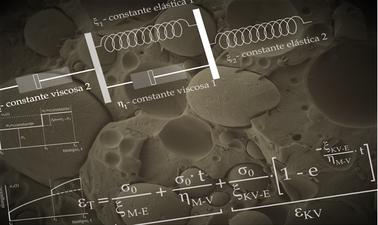
Aprende sobre el comportamiento viscoelástico de polímeros para el diseño de componentes con materiales poliméricos. Los materiales poliméricos se caracterizan por tener un comportamiento viscoelástico lo cual implica que sus propiedades mecánicas surgen de la combinación de unas propiedades elásticas y viscosas.

Class Deals by MOOC List - Click here and see EdX's Active Discounts, Deals, and Promo Codes.

Estos también se caracterizan por tener un comportamiento diferente cuando la aplicación de esfuerzos es a corto plazo o en cambio se prolonga a lo largo del tiempo. Por este motivo, para el diseño de componentes con materiales poliméricos se debe de tener en consideración el comportamiento viscoelástico.

Prerequisites:
Los conocimientos que se recomiendan para un correcto seguimiento son los siguientes:

  • Fundamentos básicos de Ciencia de Materiales.
  • Propiedades elásticas (módulos) y deformaciones de materiales
  • Conceptos básicos de CAE (Computer Aided Engineering).

What you'll learn
En este curso, aprenderás los diferentes modelos de comportamiento que surgen para cuantificar el comportamiento de los polímeros, así como la respuesta de los sólido viscoelástico ante la acción de diferentes esfuerzos.

Syllabus

  1. Introducción al comportamiento viscoelástico
  2. Modelos de viscoelasticidad simplificados
  3. Modelos de viscoelasticidad avanzados
  4. Respuesta de materiales viscoelásticos en condiciones dinámicas

Go to Class
MOOC List is learner-supported. When you buy through links on our site, we may earn an affiliate commission.

Related Courses

Engineering Drawing | 工程制图 (edX) EdX
Tsinghua University,TsinghuaX

Engineering Drawing | 工程制图 (edX)

“Engineering Drawing” is a fundamental course of engineering technology, including two parts: basic theories and advanced practices. The first part will introduce the theory of projection and its application on drawings. The second part is to give students general experience in producing a variety of mechanical drawings.

Self Paced
Self-Paced
Railway Engineering: An Integral Approach (edX) EdX
Delft University of Technology,DelftX

Railway Engineering: An Integral Approach (edX)

Discover the science and complexity behind the exciting world of metro, tram and railway systems. Have you ever wondered what it takes to get your train on the right platform at the scheduled time every day? Understanding the complexity behind today’s sophisticated railway systems will give you a better insight into how this safe and reliable transportation system works. We will show you the many factors which are involved and how multiple people, behind the scenes, have a daily task that enables you to get from home to work. Journey with us into the world of rail - a complex system that connects people, cities and countries.

Oct 14th 2026
5-12 Weeks
The Engineering of Structures Around Us (edX) EdX
DartmouthX,Dartmouth College

The Engineering of Structures Around Us (edX)

Explore how engineers design bridges and buildings in our communities and iconic structures around the world. In this introductory course, you’ll learn some engineering principles that can be applied to structural systems everywhere: in nature, in furniture, in mechanical and aerospace systems, and in any solid object that resists a load. Together we’ll explore how structures work, why they were designed the way they were designed, how they support loads, and where forces flow through them.

Self Paced
Self-Paced
Introducción a la Ingeniería del Software (edX) EdX
Universidad Autonoma de Madrid,UAMx

Introducción a la Ingeniería del Software (edX)

Conoce las distintas fases de desarrollo por las que pasa un proyecto informático, así como las actividades de gestión necesarias para lograr finalizar el proyecto con éxito. ¿Alguna vez te has preguntado qué es y para qué sirve la Ingeniería de Software? ¿Quieres saber por qué es tan necesaria esta disciplina y por qué se utiliza tanto en entornos tecnológicos? ¿O cuál es el motivo de que muchos proyectos informáticos no finalizan en tiempo y coste o con la calidad deseada?

Self Paced
Self-Paced
A System View of Communications: From Signals to Packets (Part 1) (edX) EdX
The Hong Kong University of Science and Technology - HKUST,HKUSTx

A System View of Communications: From Signals to Packets (Part 1) (edX)

Explore the tradeoffs in designing communication systems like mobile phones, and the engineering tools to handle them. Have you ever wondered how information is transmitted using your mobile phone or a WiFi hotspot? This introductory course seeks to enable you to understand the basic engineering tools used and tradeoffs encountered in the design of these systems.

Self Paced
Self-Paced
Introduction to Water and Climate (edX) EdX
Delft University of Technology,DelftX

Introduction to Water and Climate (edX)

Water is a crucial element in climate and for society. Find out about the latest engineering interventions for water management in rivers, coasts and the urban environment. Water is essential for life on Earth and of crucial importance for society. Water also plays a major role in affecting climate. Its natural cycle, from ocean to atmosphere by evaporation, then by precipitation back to land returning via rivers and aquifers to the oceans, has a decisive impact on regional and global climate patterns.

Self Paced
Self-Paced
Water and Wastewater Treatment Engineering: Biochemical Technology (edX) EdX
Tsinghua University,TsinghuaX

Water and Wastewater Treatment Engineering: Biochemical Technology (edX)

Learn the basic principles and characteristics of biochemical technology in water and wastewater treatment engineering. Biochemical technology in water and wastewater treatment engineering is essential in the field of water treatment. In this environmental studies course you will learn the basic principles and characteristics of biochemical technology.

Self Paced
Self-Paced
Introduction to Discrete Choice Models (edX) EdX
École Polytechnique Fédérale de Lausanne,EPFLx

Introduction to Discrete Choice Models (edX)

The course introduces the theoretical foundations to choice modeling and describes the steps of operational modeling. Human behavior is complexand unpredictable. Or is it? The focus of this course is methods for predicting the behavior using mathematical models. More specifically, we'll explore choice modeling in order to obtain disaggregate demand models.

Self Paced
Self-Paced
Data Science: Capstone (edX) EdX
HarvardX,Harvard University

Data Science: Capstone (edX)

Show what you’ve learned from the Professional Certificate Program in Data Science. To become an expert data scientist you need practice and experience. By completing this capstone project you will get an opportunity to apply the knowledge and skills in R data analysis that you have gained throughout the series. This final project will test your skills in data visualization, probability, inference and modeling, data wrangling, data organization, regression, and machine learning.

Self Paced
Self-Paced
Forensic Engineering: Learning from Failures (edX) EdX
Delft University of Technology,DelftX

Forensic Engineering: Learning from Failures (edX)

Don’t let good failures go to waste! Identify the causes of failure and use this knowledge to enhance safety and improve performance. What do collapsed buildings, infected hospital patients, and crashed airplanes have in common? If you know the causes of these events and conditions, they can all be prevented. In this course, you will learn how to use the TU Delft mind-set to investigate the causes of such events so you can prevent them in the future.

Self Paced
Self-Paced
Model-Based Automotive Systems Engineering (edX) EdX
Chalmers University of Technology,ChalmersX

Model-Based Automotive Systems Engineering (edX)

Learn how to model and simulate system dynamics in automotive engineering. Modeling, control design, and simulation are important tools supporting engineers in the development of automotive systems, from the early study of system concepts (when the system possibly does not exist yet) to optimization of system performance. This course provides a theoretical basis to model-based control design with the focus on systematically develop mathematical models from basic physical laws and to use them in control design process with specific focus on automotive applications.

Self Paced
Self-Paced