Robotic Vision (QUT)

Robotic Vision (QUT)

How can we make robots see like we do? Learn how we make robots perceive the world around them in this exciting six-week course, delivered by Professor Peter Corke. Robotic Vision introduces you to the field of computer vision and the mathematics and algorithms that underpin it. You'll learn how to interpret images to determine the colour, size, shape and position of objects in the scene.We'll work with you to build an intelligent vision system that can recognise objects of different colours and shapes.

A newer version of this course is available here:
Robotic Vision: Principles of Vision

This course is delivered over six weeks. Each week will include two video lectures, as well as quizzes and MATLAB exercises.
Week 1: Robot vision and getting images into a computer
Week 2: Image processing and spatial operators
Week 3: Feature extraction and what is colour?
Week 4: Image formation and image geometry
Week 5: 3D vision and advanced image processing operations
Week 6: Vision and motion.
To complete the MOOC you should know some basic programming (either of MATLAB or of an object-oriented programming language) and some of the following areas of maths: matrices, vectors and spaces, eigenvalues and eigenvectors. We’ve included links to Khan Academy on these topics. We believe this knowledge will be necessary to complete the course, and recommend that you view these before Week 1 begins, but you might prefer to watch them on an ‘as needed’ basis after you view our content.

  • Vectors
  • Matrices:

. basic matrix operations including multiplication and inversion
. zero and identity matrices
. vector transformations with matrices
. familiarity with the concepts of eigenvalues and eigenvectors.

Note: This course is currently not available.

Related Courses

Introduction to Physical Chemistry (Coursera) Coursera
University of Manchester

Introduction to Physical Chemistry (Coursera)

Chemical reactions underpin the production of pretty much everything in our modern world. But, what is the driving force behind reactions? Why do some reactions occur over geological time scales whilst others are so fast that we need femtosecond-pulsed lasers to study them? Ultimately, what is going on at the atomic level? Discover the answers to such fundamental questions and more on this course in introductory physical chemistry.

Jun 29th 2026
5-12 Weeks
Energy Transition Selection (IFP School) Other Providers
IFP School

Energy Transition Selection (IFP School)

This module is intended either for students and professionals interested in the energy transition challenges and innovative solutions to reduce CO2 emissions. But more specifically it is intended for those willing to gain knowledge about developing a decarbonized energy mix based on both renewables and natural gas, underground CO2 and energy storage, energy efficiency and CO2 abatements in processes, biofuels. In general, for those who are convinced that climate change is really a challenge that can also be sustained through concrete solutions and societal awareness. **ENERGY TRANSITION SELECTION WILL BE AVAILABLE UNTIL MARCH 31ST.**

Available Now
1 Week
Microwave engineering and antennas (Coursera) Coursera
Eindhoven University of Technology

Microwave engineering and antennas (Coursera)

This unique Master-level course provides you with in-depth know-how of microwave engineering and antennas. The course combines both passive and active microwave circuits as well as antenna systems. Future applications, like millimeter-wave 5G/beyond-5G wireless communications or automotive radar, require experts that can co-design highly integrated antenna systems that include both antennas and microwave electronics. We will provide you with the required theoretical foundation as well as hands-on experience using state-of-the-art design tools. The web lectures are supported by many on-line quizzes in which you can practice the background theory.

Jul 6th 2026
5-12 Weeks
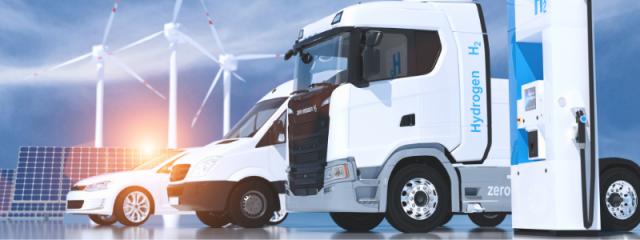
Hydrogen for Mobility (IFP School) Other Providers
IFP School

Hydrogen for Mobility (IFP School)

Hydrogen is a hot topic nowadays. Why? Because society must find solutions to reduce its impact on climate change and because there is now a political will (in Europe) to develop a hydrogen economy. The mobility sector, and in particular the heavy mobility, is concerned by this transformation. After some general information about hydrogen production and the hydrogen economy, you will gain a deep understanding of the hydrogen solution for mobility. We will explore both the fuel cells and the hydrogen thermal engine solutions as a mean to reduce the environmental footprint of heavy mobility.

Jan 16th 2023
1 Week
Introduction to Engineering Mechanics (Coursera) Coursera
Georgia Institute of Technology

Introduction to Engineering Mechanics (Coursera)

This course is an introduction to learning and applying the principles required to solve engineering mechanics problems. Concepts will be applied in this course from previous courses you have taken in basic math and physics. The course addresses the modeling and analysis of static equilibrium problems with an emphasis on real world engineering applications and problem solving.

Jun 29th 2026
5-12 Weeks
Modern Robotics, Course 6: Capstone Project, Mobile Manipulation (Coursera) Coursera
Northwestern University

Modern Robotics, Course 6: Capstone Project, Mobile Manipulation (Coursera)

The capstone project of the Modern Robotics specialization is on mobile manipulation: simultaneously controlling the motion of a wheeled mobile base and its robot arm to achieve a manipulation task. This project integrates several topics from the specialization, including trajectory planning, odometry for mobile robots, and feedback control. Beginning from the Modern Robotics software library provided to you (written in Python, Mathematica, and MATLAB), and software you have written for previous courses, you will develop software to plan and control the motion of a mobile manipulator to perform a pick and place task.

Jul 6th 2026
4 Weeks
Engineering of Structures: Compression (Coursera) Coursera
Dartmouth College

Engineering of Structures: Compression (Coursera)

This course deals with compression. When we push an object, it compresses. Compression is what's going to hold up our building. Arches, vaults, domes, and anti-funicular forms help resist compression. In this course, you will learn about different columns and arches and their role in resisting compression. You'll also build anti-funicular forms.

Jul 6th 2026
3 Weeks
Oral Communication for Engineering Leaders (Coursera) Coursera
Rice University

Oral Communication for Engineering Leaders (Coursera)

Taught by Rice University communication faculty from the Rice Center for Engineering Leadership (RCEL). This course covers core topics in oral communication: Communication strategy, content, data visualization, and delivery. You’ll learn key principles in: Creating a communication strategy; Developing a clear message and organizing persuasive content; Creating strong visual support; Presenting data effectively; Presenting professionally and confidently; Handling formal presentations, giving pitches, speaking extemporaneously, managing online presentations, and lowering public speaking anxiety.

Jun 29th 2026
5-12 Weeks
Fundamentals of Robotics & Industrial Automation (Coursera) Coursera
L&T EduTech

Fundamentals of Robotics & Industrial Automation (Coursera)

The "Fundamentals of Robotics & Industrial Automation" course is tailored to provide a comprehensive understanding of essential concepts and practical skills necessary for excelling in the field of collaborative robotics. Through three dynamic modules, participants will explore the intricacies of sensors & transducers in machine tools & robots, servo systems, and interfacing and simulation techniques.

Jul 6th 2026
3 Weeks
Robotics Engineering & Applications (Coursera) Coursera
L&T EduTech

Robotics Engineering & Applications (Coursera)

The "Robotics Engineering & Applications" course stands as a beacon of innovation and opportunity in the realm of collaborative robotics. Comprising three dynamic modules, participants embark on a transformative journey delving into the essentials of robotic engineering, advanced programming techniques, and the integration of vision systems in designing and building robots for real-world applications.

Jul 6th 2026
3 Weeks